IG4 Braskem Raízen Push: Regulator Clears One Offer as a Second Bid Nears
Brazil · Business
Key Facts
- —What happened Braskem said on 21 September 2026 that the securities regulator had cleared a tender offer by its IG4-advised controller.
- —What minorities get The same payment Novonor received: two NSP Investimentos debentures of one series and one of another per share, not cash.
- —The second front Estadão’s Broadcast news agency reported IG4 will make a binding offer for Raízen creditors’ claims within three weeks.
- —The catch The Braskem auction date is not yet set, and US-based holders, including ADS owners, are excluded from the offer.
- —Who will control Raízen Once the court-approved plan closes, creditors are expected to hold about 80% to 83%, and Shell about 13%.
- —Why it matters The IG4 Braskem and Raízen deals would leave IG4 co-controlling Braskem and possibly the leading shareholder in Raízen.
A Brazilian-founded private-equity firm now co-controls Brazil’s petrochemical champion and is circling its biggest sugar and ethanol group. Both deals build control out of debt, but the mechanics differ.
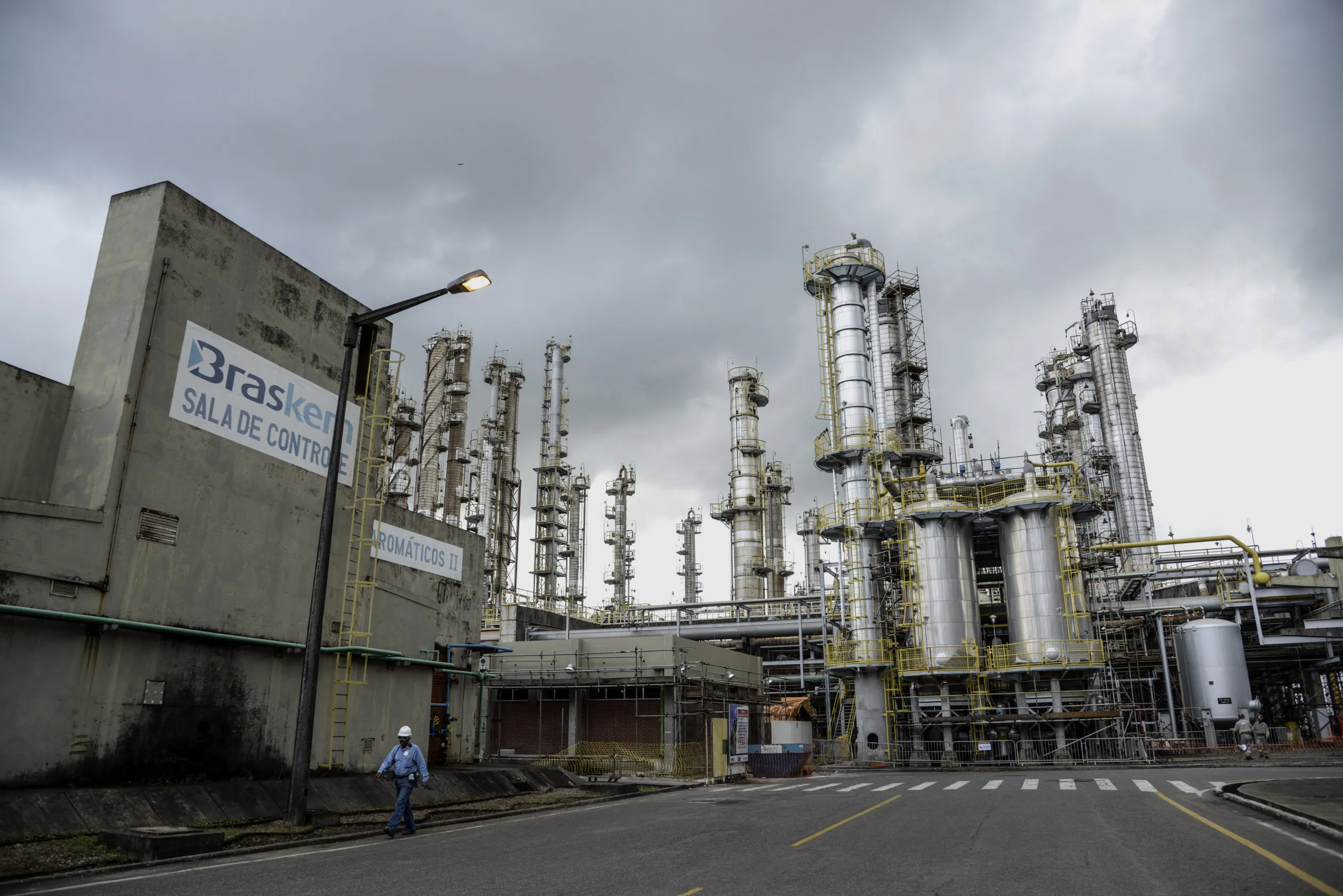
The IG4 Braskem Raízen story moved on two fronts within a few days. IG4 Capital, a Brazilian-founded private-equity firm, already co-controls Braskem, Brazil’s petrochemical group.
On Monday 21 September 2026, Braskem said the securities regulator had cleared the fund’s mandatory offer to minority shareholders. Days earlier, Estadão’s Broadcast news agency reported IG4 was preparing a binding bid aimed at Raízen.
Raízen is the sugar, ethanol and fuel group jointly owned by Cosan and Shell. The two moves are separate deals with separate mechanics.
Braskem: what the regulator cleared
The regulator is the Comissão de Valores Mobiliários (CVM), Brazil’s equivalent of the US Securities and Exchange Commission. It granted registration of the tender offer, known in Brazil as an OPA.
Braskem disclosed on 21 September 2026 that it had received notice of the decision from the fund.
The B3, the São Paulo stock exchange, has also authorised the auction. The auction date will appear in a formal notice still to be published, Money Times reported.
The offer covers all ordinary and preferred shares in free float. According to Seu Dinheiro, that float equals 2.86% of voting capital and 29.35% of total capital.
The offer will not be registered in the United States. It will not be directed at US-based holders, including owners of Braskem’s American Depositary Shares.
No cash price, but debentures
The offer carries no cash price per share. Minorities will receive exactly what Novonor, the former Odebrecht group, received for its controlling stake.
Braskem’s April filing sets that at two first-series and one second-series debenture per share. The bonds were issued by NSP Investimentos, the Novonor holding company now in court-supervised recovery.
The buyer is Shine I, an investment fund managed by Vórtx Capital and advised by IG4. It closed the purchase on 3 June 2026, taking 50.1% of voting shares and 34.3% of total capital.
Shine I had first bought the bank loans secured on those shares. InvestNews put the debt it took over at around R$20 billion (about US$3.9 billion).
Live Company IntelligenceBraskem S.A — the full investor dossier
Valuation & profitability
Price & risk
$3.5252-wk high
$13.78
Revenue trend · 6y
Ownership
Dividend
Why the offer is mandatory
Brazilian company law gives minority holders of voting shares a tag-along right when control is sold. Braskem’s bylaws add their own tag-along clause.
The fund cited both rules, plus a CVM resolution, when it committed to the offer in April. It also said it does not intend to delist Braskem.
Petrobras stays as co-controller
Petrobras, the state-controlled oil company, is the other major shareholder. It holds 47.03% of voting capital and 36.15% of total capital, Seu Dinheiro reported.
Petrobras did not use its right of first refusal or its own tag-along right, a course its board first set in February. A new shareholders’ agreement took effect on 3 June 2026.
It requires consensus between Petrobras and the fund on every board and shareholder decision. Each side appoints the same number of directors and executives.
Braskem itself filed for extrajudicial restructuring in August, covering about US$10.9 billion of financial debt. It has until 22 November 2026 to win over creditors holding more than half.

Raízen: a bid for the creditors, not the founders
The Raízen move targets creditors, not Cosan or Shell. Estadão’s Broadcast news agency reported on 18 September 2026 that IG4 will present a binding offer for Raízen’s debt within three weeks.
IG4 has already set up a fund to buy the claims, the report said. Creditors who prefer not to sell could instead hold stakes through an IG4-managed vehicle.
Times Brasil likened that second route to the Braskem deal.
IG4 declined to comment to Broadcast. In June it sent non-binding offers to creditors through their advisers, Moelis and Journey, InfoMoney reported.
Rubens Ometto, Raízen’s chairman and Cosan’s founder, dismissed that talk in a Reuters interview on 22 June.
“This is a financial-market rumour. Market people are very creative, but there is nothing to it,” he said.
Why the creditors hold the key
A São Paulo bankruptcy court approved Raízen’s extrajudicial restructuring on 30 July 2026. It covers about R$65 billion (about US$12.6 billion) of debt.
Under the main option, creditors will convert 45% of their claims into shares at R$0.25 (about US$0.05). Shell will inject R$3.5 billion (about US$680 million) at the same price.
The shares convert and Shell’s money goes in only when the plan closes. Until then, Cosan and Shell still own Raízen.
Seu Dinheiro put the creditors’ future stake at 80% under the main option; UBS BB estimated about 83%. Creditors will also name four of seven directors, including the chair.
Earlier this year, when talks with Cosan broke down, Shell was expected to take control. The approved plan instead makes it the largest single shareholder, with about 13% (XP), while creditors together receive the large majority.
That dispersed creditor majority is what IG4 wants to assemble. Times Brasil reported the approved plan restricts the entry of a new controller, which is why IG4 is talking to Shell.
IG4 aims to complete the deal by the end of March 2027, its executives told Reuters in June. Its plan depends on creditors backing it.
Who is IG4
IG4 Capital was founded in 2016 by Paulo Mattos, a lawyer and former director at BNDES, the national development bank. He now chairs the firm from London.
Its best-known turnaround is Iguá Saneamento, a sanitation company it bought as CAB Ambiental in 2017 and exited in 2024. The firm specialises in buying distressed companies.
It is also pursuing Oncoclínicas, a cancer-care chain in extrajudicial restructuring. In July IG4 made a non-binding offer to invest R$500 million (about US$97 million) there.
Currency conversions use the Central Bank of Brazil’s reference rate of 5.16 to the US dollar on 18 September 2026.
Why it matters
The IG4 Braskem and Raízen deals share one idea: building control out of debt. The mechanics differ.
At Braskem, IG4’s fund bought bank loans secured on Novonor’s shares, then bought the shares in a court-supervised sale paid in debentures. At Raízen, it is trying to buy or pool creditors’ claims that the plan converts into equity.
If the Raízen bid succeeds, IG4 would co-control Braskem with Petrobras and could become the leading shareholder in Raízen. Neither company’s restructuring is finished.
More: Brazil coverage, every day from The Rio Times.
Frequently Asked Questions
What price will Braskem minority shareholders receive?
There is no cash price. The IG4-advised Shine I fund must offer minorities the same consideration Novonor received for control. Braskem’s filings put that at two first-series and one second-series NSP Investimentos debenture for each share. The auction date will be set in a formal notice that has not yet been published.
Is IG4 buying Raízen from Shell and Cosan?
No. The IG4 Braskem Raízen playbook runs through debt. Once Raízen’s court-approved plan closes, creditors who convert their claims are expected to hold about 80% to 83% of the company. IG4 wants to buy those claims, or manage them in a fund, to build a majority. It is also in talks with Shell.
Will Shell take control of Raízen?
Earlier this year, when talks with Cosan broke down, Shell was expected to take control. The plan approved on 30 July 2026 instead makes it the largest single shareholder once the deal closes. Shell will inject R$3.5 billion (about US$680 million) for about 13%, according to XP. Creditors together are expected to receive the large majority and name four of the seven directors, including the chair.
Who is Paulo Mattos?
He founded IG4 Capital in 2016 and chairs it. A lawyer by training, he was previously a director at the national development bank BNDES and worked at GP Investments. The firm specialises in distressed companies.
Sources: Money Times on the CVM clearance, Seu Dinheiro on Braskem’s shareholding and debt, Braskem material fact of 20 April 2026, Braskem notice on the 3 June closing, InvestNews on Petrobras’s decision, Estadão Broadcast report on the Raízen bid, Times Brasil on the Shell talks, InfoMoney on the Raízen plan terms, Seu Dinheiro on the court approval, InfoMoney on the June non-binding offers, InfoMoney on Rubens Ometto’s response, AgFeed profile of Paulo Mattos, Seu Dinheiro on the Oncoclínicas offer
This article was produced by The Rio Times’ automated newsroom system. How we use AI · Report an error
Read More from The Rio Times