How wheat could become Brazil’s new export commodity
RIO DE JANEIRO, BRAZIL – In one of the country’s largest agricultural cooperatives, Cotrijal, in the most Southern state Rio Grande do Sul, wheat is keeping producers busier than ever.
After a summer of severe drought that affected soybean and corn crops in the state, the lands of nearly 19,000 member farms are preparing for winter planting, with an expected growth of at least 20% of the area dedicated to cereals.
“The most important thing that influences the grower’s decision is the market. We are less dependent on the government, and the wheat market suggests attractive prices,” said Gelson Melo de Lima, head of crop production at Cotrijal in the city of Não-Me-Toque.

The interest is related to the rise of the commodity in the international market. The price, which had been rising since last year, skyrocketed after Russia’s military operation in Ukraine in late February.
According to the FOA (Food and Agriculture Organization of the United Nations), the price is 78% higher than a year ago.
According to the FAO, the war brought instability to the entire wheat chain, which is the third most consumed grain in the world after rice and corn.
The drop in supply of Ukrainian wheat and the slowdown in shipments from Russia, a significant supplier, have disrupted the market and roiled the sector in Brazil.
“We live in a new era of wheat,” says Pedro Tombini, a producer and commercial manager of a seed company. “Four years ago, the bag sold for R$30 (US$5.90). Today, the producer sells them for at least R$94″, explains the gaucho.
After years of decline and instability, cereal acreage in Brazil is expected to increase. Besides the states of Rio Grande do Sul, Paraná, and Santa Catarina, all in the South of the country, which account for 90% of national production, São Paulo and Minas Gerais are other important centers.
Conab (National Supply Company) monitors the expansion trend but points out that it is too early to pin down the numbers. Wheat sowing starts in May and lasts until June, and harvesting until October. Before sowing began, Conab estimated that at least 7.9 million tons would be harvested by 3% more than the previous crop by the end of the year.
FROM STATE CONTROL TO FOREIGN DEPENDENCE
Originally from Southeast Asia, wheat arrived in Brazil with the colonizers around 1530. Being a grass that requires cooler temperatures, generally, between 10ºC and 19ºC, production was concentrated in the south of the country.
Although it was practically eradicated in 1822 due to rust disease, cultivation resumed in the 20th century and became a state priority. From 1967 to 1990, the federal government regulated the production chain with subsidies to growers and guaranteed selling prices.
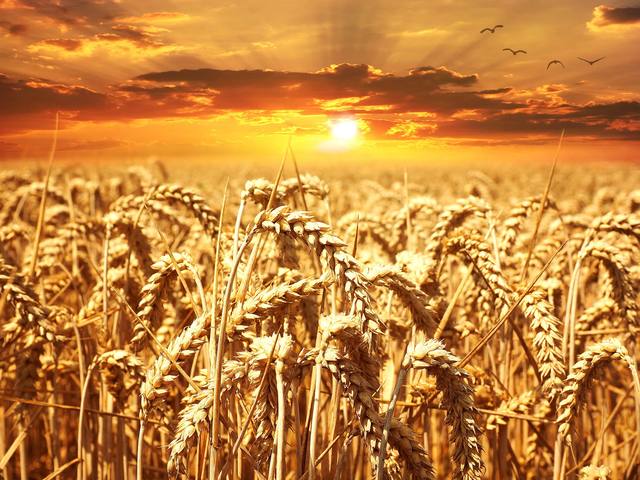
With the end of government intervention, the area under cultivation shrank from 3.91 million hectares in 1986 – the largest ever recorded in the country – to 1 million hectares in 1995, a period that coincided with the creation of Mercosur, which increased competition and made Argentina one of Brazil’s leading suppliers.
“We are concerned about the vulnerability of Brazil’s dependence on domestic market supplies. We import 60% of the flour we consume, mainly from Argentina, the United States, and other Mercosur countries,” said Rubens Barbosa, executive president of Abitrigo, an organization representing the milling industry.
EXPANSION
Embrapa (Brazilian Society for Agricultural Research) estimates that there is potential for up to 22 million hectares of additional acreage nationwide. Moving the crop to the Cerrado is seen as an alternative to meet domestic demand.
“In the Cerrado, there is a good potential of 1 to 2 million hectares for the next decade. This means an increase in area of up to 100% compared to today,” explains Álvaro Dossa, an analyst at Embrapa Trigo.
If the plans are successful, the country should go from being an importer to a major exporter, Barbosa estimates. “This will even classify Brazil as a possible international supplier. We produce almost 8 million, and consumption is 12 million. If the area under cultivation and production increase in the coming years, there will be a surplus for export,” he adds.
In 2021, Brazilian wheat production was 7.7 million tons, while another 6.2 million tons were imported. Due to international prices, not all of what is produced in Brazil stays in the country-1.1 million tons went to countries such as Saudi Arabia, Vietnam, and Indonesia.
Impact and uncertainty
More wheat is expected to be grown in the southern states, where much land is not used in the winter. “The acreage for summer planting, especially soybeans, is about five to seven times greater than winter planting,” explains Embrapa’s Dossa.
“We can’t close our industry, which operates in the open air, for four or five months. You have to make better use of the land. Wheat is necessary for us,” says Gelson Melo de Lima of Cotrijal.
In the Cerrado, wheat would not take up new land but would enter into rotation with other crops – especially soybeans. “This means that it does not compete with soybeans or beans. Wheat helps break the cycle of certain pests. But it requires certain requirements, such as altitude and temperature,” Dossa explains.
Despite expectations, the scenario also raises fears. For Edegar de Oliveira, director of ecosystem conservation and restoration at WWF-Brazil, the trend needs to be watched very closely.
“The increasing demand for land and production in the Cerrado could encourage further deforestation. We need to take care of degraded land and put it to nobler uses and adopt more effective control measures,” argues Oliveira, adding that encouraging the expansion of cultivation will increase pressure on land values and real estate speculation.
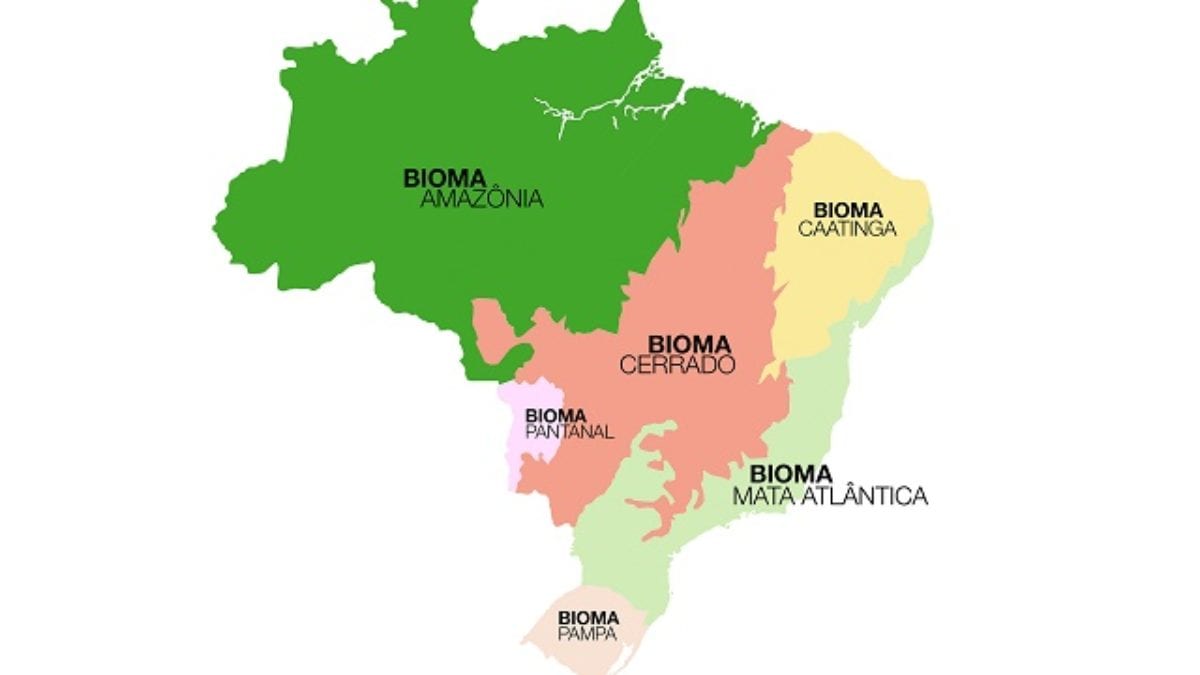
From August 2020 to July 2021, the Cerrado lost 8,500 km² of native vegetation, an increase of almost 8% over the previous period, according to Prodes Cerrado data coordinated by Inpe (National Institute for Space Research).
However, monitoring the country’s second-largest biome had come to a virtual standstill in April due to a lack of funding from the federal government.
“The issue of food security, made more salient by the pandemic and the war in Ukraine, should not be used to justify expanding acreage at the expense of environmental protection. We cannot separate food security and climate security. Otherwise, we are doomed to failure,” Oliveira says.
With information from Poder360
More: Brazil news in English, every day from The Rio Times.
This article was produced by The Rio Times’ automated newsroom system. How we use AI · Report an error · Editorial responsibility: Matthias Camenzind, Editor-in-Chief