The Held Breath: Why So Much Power Now Waits on Courts, Central Banks, and Numbers
Deep Analysis · Global
Key Facts
—The court. The US Supreme Court barred President Trump from removing Fed governor Lisa Cook, yet let him fire an FTC commissioner, overturning a 1935 precedent.
—The bank. In his first meeting as Fed chair, Kevin Warsh held rates steady and stripped out hints of cuts, tilting toward a possible hike.
—The number. Canada reported a second straight quarter of contraction, a technical recession economists openly disputed.
—The courtroom. Spain’s Supreme Court sentenced Prime Minister Pedro Sánchez’s former deputy to 24 years for a pandemic-era kickback scheme, as inquiries reached his wife and brother.
—The pattern. In Washington, Ottawa and Madrid, the weightiest questions were settled by referees, not by elected leaders.
—The Latin America read. A region scarred by leaders who overruled courts and raided central banks knows the price of pushing referees aside.
There are days when the most powerful people in a country wait on courts and central banks rather than act. June 29, 2026 was one of them, and the waiting stretched across half the world.
In Washington, the government and the country held still for the Supreme Court to hand down opinions and for the next economic figures to settle a quarrel about whether a recession had begun. In Madrid, a prime minister’s survival was being decided in a courtroom rather than a chamber.
Everywhere, money waited on a central bank that had just turned stern.
This is the quiet feature of mature democracies that rarely makes a headline. The biggest questions are increasingly settled not by the people who win elections, but by the referees those systems appoint to stand apart from elections.
When courts and central banks speak
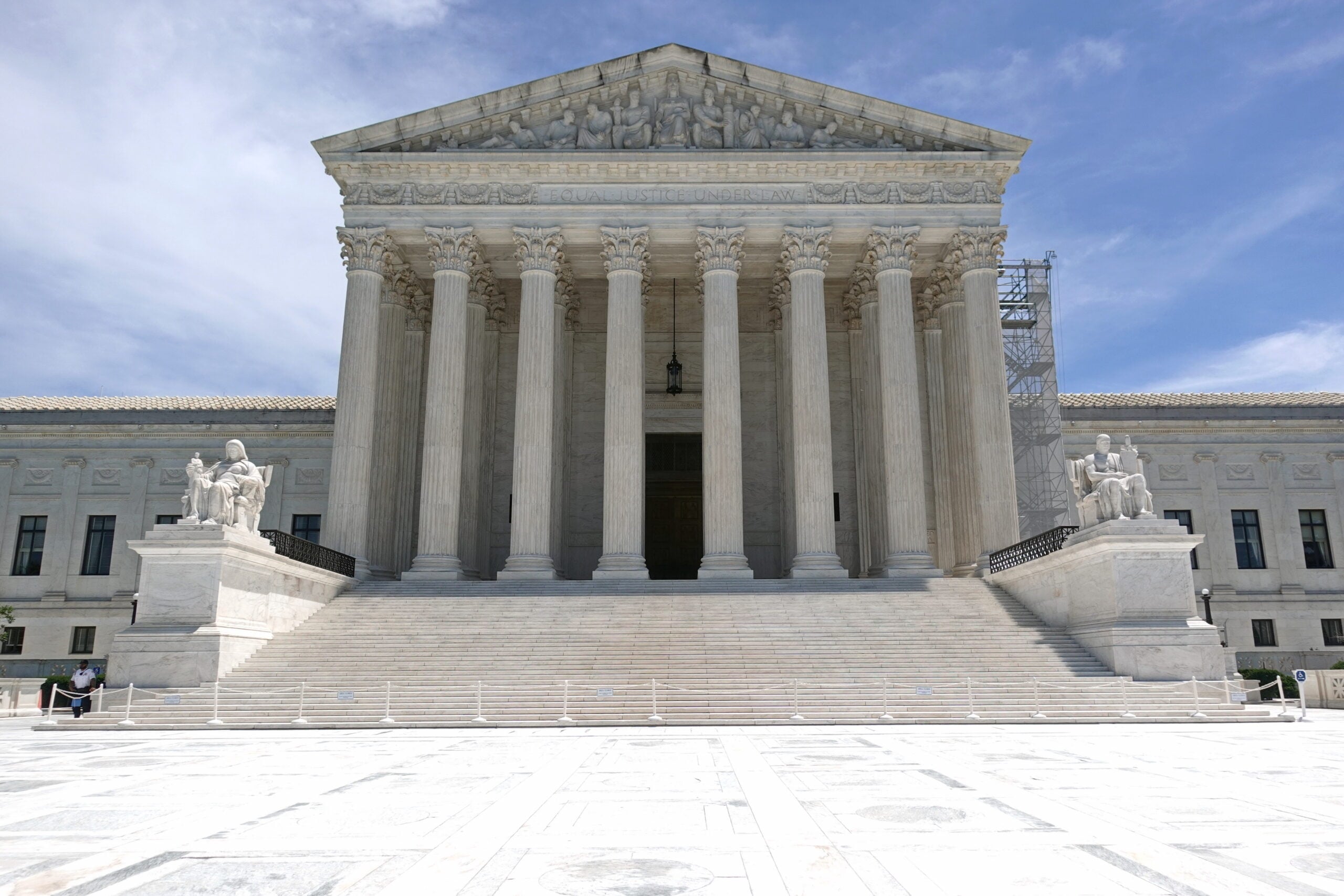
The clearest example arrived from the United States Supreme Court, and it cut in two directions at once.
On that Monday the court ruled that President Donald Trump could not, for now, remove Lisa Cook from the Federal Reserve’s board, with Chief Justice John Roberts writing that to allow it would hollow out the central bank’s protection from political pressure. In the very same hour, by the same author, the court let Trump fire a commissioner of the Federal Trade Commission, overturning a ninety-year-old precedent that had shielded such officials since 1935.
One morning, one court, two opposite-looking verdicts. It deferred to the president on one body and shielded another from him, drawing a line by hand around the Federal Reserve as a special case.
The reasoning behind that line is itself a small lesson in how these referees work. The court was willing to tear down a decades-old precedent and hand the president broad new power to dismiss officials at agencies like the trade commission.
Yet it carved the central bank out as constitutionally different, citing its unique structure and its place at the heart of the financial system, the one body whose independence the justices were unwilling to let a president erode.
And still the biggest question hung unanswered. Whether the Constitution guarantees citizenship to nearly everyone born on American soil remained undecided that day, held over for an opinion still to come.
Our reporting has shown that this deferral of the birthright citizenship ruling is part of a broader pattern in which courts and central banks, rather than elected officials, have become the decisive arbiters of the most consequential questions facing the hemisphere—a dynamic we have tracked across multiple sittings of the US Supreme Court and in the economic data releases that have kept Canada suspended between competing narratives of recession.
The country had its verdicts on the power to fire officials, and it kept holding its breath on the meaning of citizenship itself. A single court, in a single sitting, had answered some of the most consequential questions a democracy can ask while deferring others, and the public could only wait to learn which way the rest would fall.
Waiting on a number
A few hundred miles north, Canada was waiting on arithmetic. Its official statisticians had reported that the economy shrank, just barely, for a second straight quarter, which by the textbook definition is a recession.
But the dip was so slight that economists openly fought over whether the word even applied. The chief economist at the Bank of Montreal, Douglas Porter, was among those arguing it might be a recession in name only, the kind of figure a later revision could quietly erase, and an early estimate suggested the economy had bounced back the following month.
So the country sat suspended between two readings of the same data, its political mood hostage to a figure that had not yet hardened. This is its own kind of deference, in which a government’s record and the public’s sense of whether life is improving wait on a statistical agency to say which story is true.
The country’s central bank was caught in the same suspension. It had held its own interest rate steady for four straight meetings, watching the contested growth figures and an energy-driven rise in prices, unwilling to move in either direction until the numbers made up their mind.
Waiting on a court, and on a bank
In Spain, the waiting was sharper and more personal. The fate of Prime Minister Pedro Sánchez is being shaped less by votes in parliament than by judges working through a thick file of corruption cases.
When the Supreme Court sentenced his former deputy, José Luis Ábalos, to twenty-four years for a pandemic-era kickback scheme, and as separate inquiries reached toward his wife and his brother, the prime minister’s room to govern narrowed with every ruling. He has not been voted out; he is being slowly hemmed in by a process he cannot command.
Then there was the referee everyone watches at once. In mid-June, in his first meeting as the Federal Reserve’s new chairman, Kevin Warsh held interest rates steady and stripped away the bank’s old hints that cuts were coming, while the bank’s own projections tipped toward a possible increase instead.
Markets the world over now hang on that posture, pricing the odds of the next move and rearranging themselves around an institution that answers to no electorate. A handful of officials in a room had become, once again, the most closely read people in the global economy.
Deference is not weakness
It would be easy to read all this waiting as paralysis, as systems too timid to decide. That reading is wrong, and getting it wrong is dangerous.
A government that waits on a court has bound itself to the rule of law. A market that waits on an independent central bank is being spared the chaos of interest rates set by whoever happens to be running for office.
The Cook ruling was, at its heart, a defence of exactly this principle, that some decisions are too important to leave to the passions of the moment. This is what maturity looks like in a political system, the deliberate act of tying one’s own hands and agreeing in advance that certain questions will be answered by judges, statisticians and central bankers precisely because they stand outside the daily scramble for power.
The cost hidden inside the virtue
And yet there is a real price, and a serious body of scholarship has spent years tracing it.
The political scientist Ran Hirschl gave the worry its sharpest name. In his study of how courts in several democracies absorbed questions once left to elected bodies, he called the result a drift toward “juristocracy,” arguing that hand-ing the hardest moral and political choices to judges quietly moves them beyond the reach of voters.
The same unease attaches to the unelected economists. In his book “Unelected Power,” the former Bank of England official Paul Tucker described modern central banks as the very “epitome of technocratic power,” and asked how institutions so insulated from the ballot can be squared with democratic legitimacy at all.
When too much is settled by people no voter chose, the public can lose the thread of who is actually accountable. If the courts decide immigration, the central bank decides the cost of living, and the statisticians decide whether the government’s economic story is true, then an election starts to feel like a contest over a shrinking patch of ground.
Voters sense this, and the sensing breeds a sour, powerless mood that politicians are then tempted to exploit. The political scientist Archon Fung has described the present era as one of “low-deference” democracy, in which citizens are far less willing than before to trust experts to decide on their behalf, and the spreading distrust of referees is part of what that describes.
Both halves are true
That is the genuine dispute, and it has serious voices on both sides.
One camp, following Hirschl and Tucker, warns of a creeping rule by referees, where unelected experts and judges quietly absorb the decisions a democracy ought to argue out in the open. The other answers that the referees are the only reason the game has rules at all, and that a country which let a president fire central bankers or strong-arm its judges would soon discover what their independence was worth.
The honest reading holds both at once. A leader who waits on a court he cannot control, on a number he cannot fix, on a central bank he cannot command, is living inside a system strong enough to restrain him, and the truly frightening figure is not the president who waits but the one who refuses to.
The view from the south
Latin America knows both halves of this bargain intimately, which is why the day should resonate there.
The region has lived through leaders who refused to wait, who treated courts as obstacles, central banks as wallets, and inconvenient statistics as enemies to be massaged or buried. It has also seen the opposite, the slow strengthening of independent courts and autonomous central banks that outlast any single government.
The whole question of whether power should wait on referees is no distant northern curiosity in a region that has paid, in inflation and in impunity, for the times its referees were pushed aside. The strongest case for the waiting is simply the memory of what happens without it.
The strongest case against is the one Hirschl pressed, that deference pushed too far drains democracy of meaning and leaves voters feeling that nothing they choose can change much at all. Both are true at once, and the task for any citizen is to hold them together, to defend the referees without pretending that a system run entirely by referees would still be a democracy worth the name.
What to Watch
The pending Supreme Court opinion on birthright citizenship, held over that day.
Whether Canada’s recession reading is revised away, and how the Bank of Canada responds.
The corruption inquiries circling Pedro Sánchez and his ability to keep governing.
Whether the Fed converts its hawkish signal into an actual rate increase.
This article was produced by The Rio Times’ automated newsroom system. How we use AI · Report an error · Editorial responsibility: Matthias Camenzind, Editor-in-Chief
LatAm Markets: Live Signals → — real-time movers, turnover leaders and FX across Latin America.
Frequently Asked Questions
What does it mean that power waits on courts and central banks?
It describes how the biggest decisions in mature democracies – from firing officials to setting interest rates to declaring a recession – are increasingly settled by unelected referees rather than elected politicians.
Why did the US Supreme Court protect the Fed but not the FTC?
The court overturned a 1935 precedent to let the president fire an FTC commissioner, yet carved out the Federal Reserve as constitutionally special, citing its unique role at the heart of the financial system.
Why does this matter for Latin America?
The region has paid in inflation and impunity when leaders treated courts as obstacles and central banks as wallets, so the debate over deferring to independent referees is lived experience there, not theory.