Haitians still don’t know who killed President Moïse one month after his assassination
RIO DE JANEIRO, BRAZIL – One month after the assassination of Jovenel Moise, Haitians still do not know who killed their president, while the investigation of the assassination is at a standstill, according to various sectors of national life and several people involved in the process, which is the object of innumerable criticisms.
Among the reproaches to the authorities responsible for the case are the slowness of the proceedings, the persistence of many gray areas in the investigation, the refusal of the authorities to disclose information, and the lack of respect for the principles established by law.
Read also: Check out our coverage on Haiti
“The judicial process is made up of violations of people’s rights,” with arrests having taken place “without there having been any in flagrante crime,” said in a statement lawyer Stanley Gaston, legal defender, among other defendants, of Christian Emmanuel Sanon, the alleged mastermind of the plan to kill Moïse.

In addition, several of the accused “were deprived of the assistance of their lawyer” in the interrogations, and that constitutes “an arbitrary act”, said the lawyer, who recognized that there have always been cases of violation of human rights, but believes that the situation is worse in this case.
In his opinion, “the police are violating the principle of presumption of innocence from the moment they show a defendant on television. This creates a bad impression,” he said.
Lawyer Samuel Madistin also criticized the fact that the detainees have not yet appeared before a judge after all this time and said that the actions taken during the investigation could be invalidated in the future.
In a 20-year career, “this is the first time I’ve seen this. Normally, the police let you see your client. It is a right. I think the police probably want to steer the investigation in one direction or another,” she said.
“The police hold (press) conferences every day. They give verified and unverified information,” including “things that can discredit the investigation. All this will prevent the truth from coming out,” said Madistin, who represents defendant Reynaldo Corvington.
In his opinion, “too many strange things have already been done” in this process, and “the real investigations will begin” to be carried out by the investigation cabinet to which Port-au-Prince prosecutor Bed-Ford Claude referred the file last Wednesday after being subjected to numerous death threats, according to the local press.
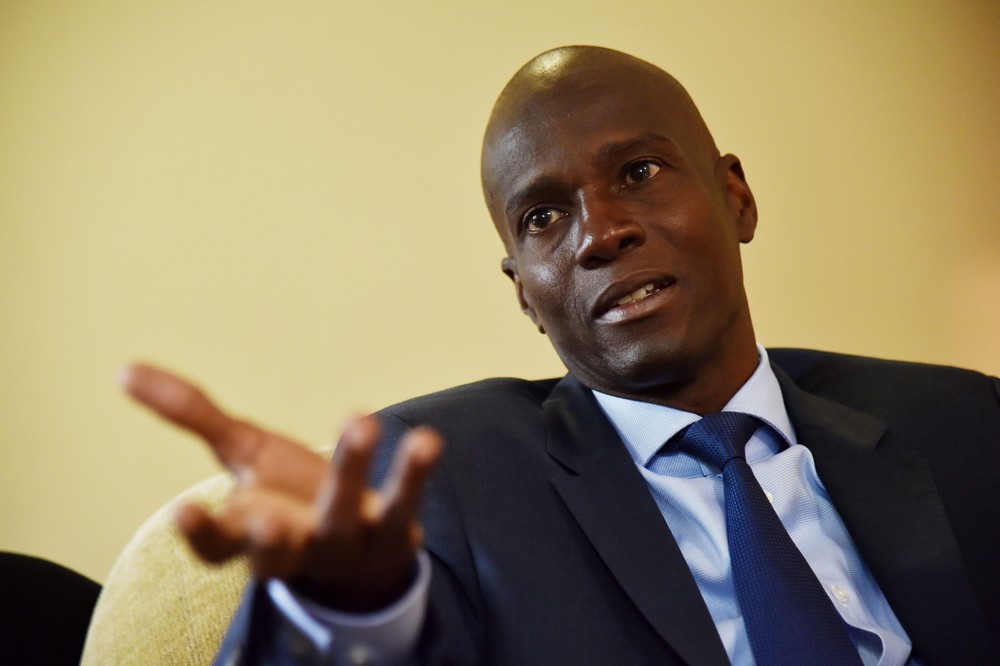
BUT WHO KILLED MOÍSE?
Despite the arrests, the searches, the interrogations, the seizure of weapons and ammunition, and all the actions carried out to date by the judicial and police authorities, the population has great doubts about the investigation, in a country like Haiti, strongly marked by impunity and with a dysfunctional judicial system.
Although Christian Emmanuel Sanon has been identified as the mastermind of Moise’s assassination, the Prime Minister, Ariel Henry, and the president’s widow, Martine Moise, have told the international press that those responsible for the assassination have not yet been arrested.
The first lady affirmed in a recent interview with the New York Times that the people behind the assassination have not yet been brought to light despite the high number of arrests that have been made and pointed to the Haitian autarchy as responsible: “Only the oligarchs and the system could kill him,” she affirmed.
According to the investigations, the assassination was committed by a commando group of 26 mercenaries who broke into the presidential residence in the early morning of July 7 without encountering any resistance from the security forces guarding the president’s house in Port-au-Prince.
According to the latest data provided by the Police, 44 persons are under arrest for the assassination, among them 12 policemen, some for their degree of responsibility and others for their direct implication in Moise’s assassination.
Among those arrested are 18 Colombians, mostly retired military personnel, and six Haitians, three naturalized U.S. citizens.
Authorities have seized 45 firearms, hundreds of rounds of ammunition, and three grenades as part of the investigation, in which Colombian and U.S. authorities are collaborating.
For the Haitian government, the assassination “constitutes an international crime because of the presumed participation of foreign nationals in the planning, financing, and implementation of the attack.”
For this reason, the Ministry of Foreign Affairs has requested the assistance of the United Nations to carry out an international investigation into the assassination of President Jovenel Moise, confirmed Thursday the Haitian Foreign Minister, Claude Joseph.
More: Brazil news in English, every day from The Rio Times.
Editorial responsibility: Matthias Camenzind, Editor-in-Chief · Editorial standards · Report an error