How Guyana Plans to Turn Its Gas Into an Industry That Outlasts Oil
Energy & Commodities · Guyana
—The bet. Guyana wants to turn the gas that comes up with its offshore oil into cheap power, and use that power to seed industry that will outlive the crude.
—Stage one. The Wales Gas-to-Energy project, a roughly two-billion-dollar plant due to finish in 2026, is built to roughly halve the country’s electricity costs.
—Stage two. A second gas pipeline would land at the mouth of the Berbice River, anchoring a far larger industrial and petrochemical zone.
—The tenants. Officials name alumina refining, fertiliser, petrochemicals and the country’s first data centres as the industries cheap gas could support.
—The catch. The big gas fields and the Berbice pipeline are not yet sanctioned, and a Natural Gas Bill to govern the downstream industry is still due in Parliament.
—Why it matters. This is the part of Guyana’s plan meant to answer the question every oil state faces: what is left when the barrels slow?
At the heart of the Guyana gas plan is a simple idea with a hard execution: use the gas that rises with the oil to make power so cheap that heavy industry chooses to set up in a country most investors still picture as a pure crude play.
The idea behind the Guyana gas plan
When oil comes out of the ground offshore, gas comes up with it.
Many petro-states simply burn that gas off or pump it back down, treating it as waste. Guyana’s plan is to bring it ashore instead and turn it into the cheapest input an economy has: reliable, low-cost electricity.
The thinking is that cheap power is the one advantage that does not fade when a barrel of oil is sold. If the country can offer industry energy at a fraction of today’s price, it can attract factories that would never otherwise look at a nation of under a million people.
Stage one: the Wales power plant
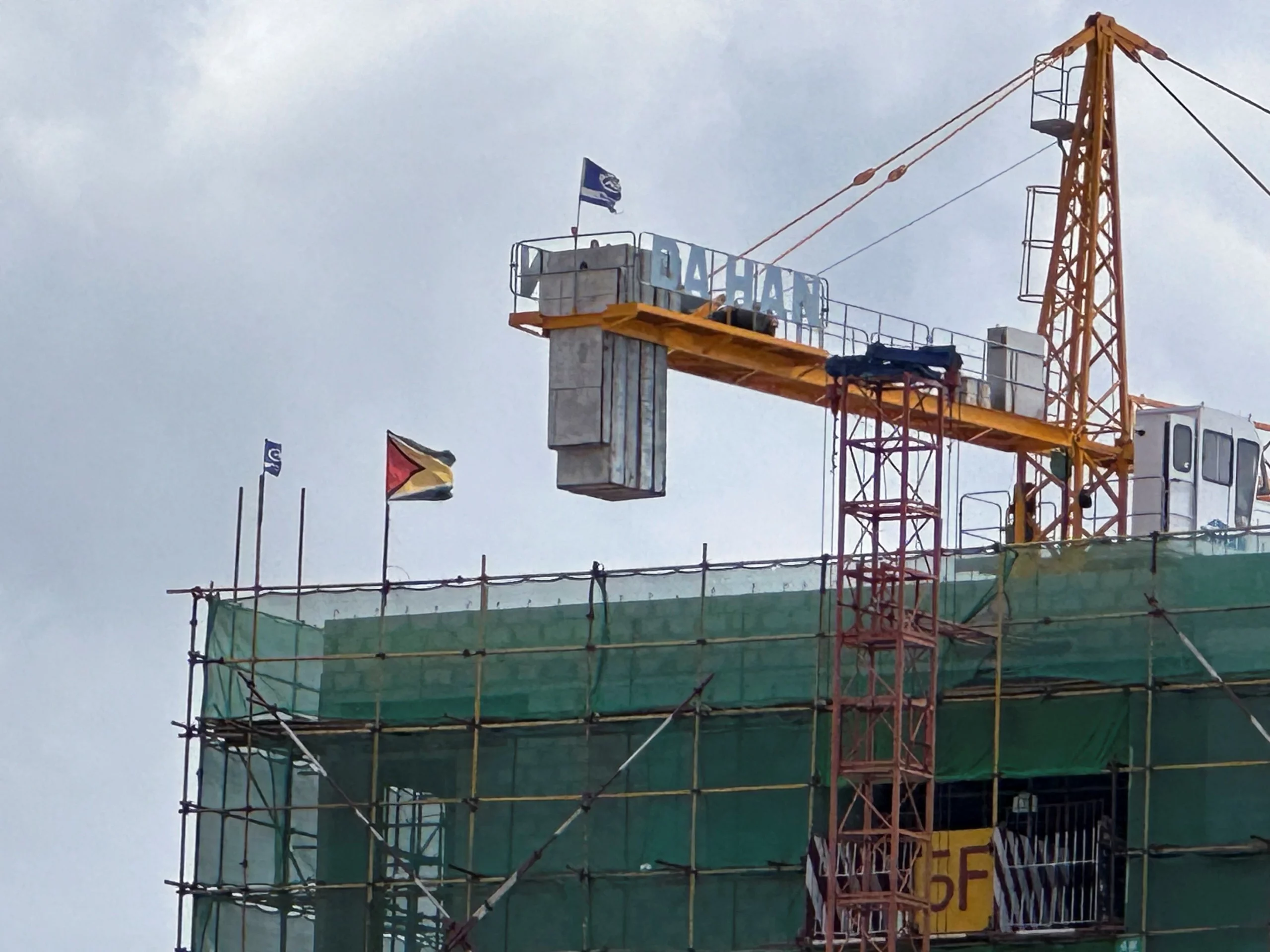
The first piece is already rising on the West Bank of the Demerara River. The Wales Gas-to-Energy project is a power plant of around three hundred megawatts, fed by a pipeline that carries gas from ExxonMobil’s offshore Liza field to shore.
That pipeline is designed to move up to one hundred and twenty-five million cubic feet of gas a day. The government says the plant, due to finish this year, should cut the cost of electricity in Guyana by about half.
Around it sits the Wales Development Zone, a tract of roughly fourteen hundred acres set aside for a fertiliser plant, agro-processing and the first data centres. Wales is the proof of concept for the much bigger idea downriver.
Live Market IntelligenceCommodities — Live Market Board
Rio Times · Live Market Intelligence
Commodities — Live Market Board
-0.03%
| Instrument | Last | Change | YoY | Prev. | High | Low | Volume |
|---|---|---|---|---|---|---|---|
| GOLD | 4,461 | +1.78% | +33.20% | 4,383 | 4,503 | 4,421 | 139,824 |
| SILVER | 65.59 | +1.26% | +73.05% | 64.77 | 66.98 | 64.81 | 46,406 |
| BRENT | 88.88 | -0.03% | +34.42% | 88.91 | 90.07 | 88.12 | 29,713 |
| WTI | 83.11 | -0.11% | +31.57% | 83.20 | 84.35 | 82.40 | 166,848 |
| COPPER | 6.61 | +0.03% | +46.70% | 6.61 | 6.71 | 6.61 | 39,543 |
| LITHIUM | 75.20 | +1.47% | +62.95% | 74.11 | 75.80 | 75.08 | 89,275 |
| IRON ORE | 161.91 | — | +58.10% | 161.91 | 161.91 | 1 | |
| SOY | 1,184 | +3.20% | +17.05% | 1,148 | 1,199 | 1,168 | 163,179 |
| CORN | 480.50 | +10.02% | +29.34% | 436.75 | 480.75 | 459.50 | 341,248 |
| WHEAT | 655.00 | +3.93% | +29.70% | 630.25 | 657.75 | 631.50 | 128,793 |
| COFFEE | 317.25 | -5.51% | +0.67% | 335.75 | 321.20 | 313.55 | 21,747 |
| SUGAR | 16.43 | -1.79% | -3.01% | 16.73 | 17.11 | 16.22 | 171,992 |
| COCOA | 5,719 | +3.18% | -34.96% | 5,543 | 5,779 | 5,574 | 26,773 |
| ORANGE JUICE | 138.55 | -0.47% | -45.38% | 139.20 | 141.05 | 137.50 | 703 |
| COTTON | 85.03 | +2.33% | +26.78% | 83.09 | 82.90 | 81.96 | 16,546 |
| BEEF | 223.60 | -3.93% | -5.18% | 232.75 | 226.40 | 223.00 | 16,126 |
| CATTLE | 339.10 | -3.16% | -1.82% | 350.17 | 345.50 | 338.60 | 10,164 |
| USD/BRL | 5.16 | +0.01% | -5.13% | 5.16 | 5.18 | 5.14 | — |
Stage two: the Berbice complex
The grander vision is in Berbice, to the east. There the government plans a second gas pipeline, landing at the mouth of the Berbice River and feeding an industrial and petrochemical complex on a scale the country has never seen.
The finance minister, Ashni Singh, put it plainly in early June. Once Berbice has enough power, he said, it can host a complex that finally processes Guyana’s own bauxite into alumina rather than shipping the raw ore abroad.
Alumina is only the headline tenant. Officials also point to fertiliser, a petrochemical industry, mineral processing and data centres, all of them industries that live or die on the price of energy.
Where the gas comes from
A complex this size needs far more gas than the first Wales pipeline carries. The likely source is a much bigger offshore development, with Exxon‘s proposed Longtail project alone expected to produce around one billion cubic feet of gas a day.
That is the catch that investors should mark. The large gas fields and the second pipeline have not yet been formally approved, so the Berbice complex remains a staged vision rather than a funded build.
The natural resources minister, Vickram Bharrat, says several companies have already signalled interest in the buildout. Turning that interest into firm commitments is the work of the next few years.
Why it matters for investors
The plan shifts much of the risk onto the state. Exxon has shown it can build offshore projects on time, but the onshore pipelines, ports and legal rules are Guyana’s job, and a Natural Gas Bill to govern the downstream industry is still due before Parliament.
For a foreign reader the read-through is clear. If the gas reaches shore at scale and the rules arrive on time, Guyana could offer energy-hungry industries a rare mix of cheap power and political welcome.
If the fields stall or the framework slips, the country is left with one power plant and a long wish list. That gap between plan and proof is the whole story of whether this oil boom leaves anything behind.
More: Latin America news in English, every day from The Rio Times.
Frequently Asked Questions
What is the Guyana gas plan in simple terms?
It is a strategy to bring ashore the gas that comes up with Guyana’s offshore oil and use it to generate cheap electricity. That power is then meant to attract factories and processing plants, building an economy that does not depend on selling crude.
What would the Berbice complex actually produce?
Officials describe a zone built around alumina refining, fertiliser, petrochemicals and data centres. The common thread is that all of these need a lot of energy, which cheap gas-fired power is supposed to provide.
How firm is the plan right now?
The first power plant at Wales is under construction and due this year. The larger Berbice complex is still a vision, because the big gas fields and the second pipeline are not yet sanctioned and key legislation has not passed.
Connected Coverage
This article was produced by The Rio Times’ automated newsroom system. How we use AI · Report an error · Editorial responsibility: Matthias Camenzind, Editor-in-Chief