Corn Fund Slips 0.7% as US Harvest Adds Supply | Grains Report, Oct 2
Key Facts
- Soybean tracker steady the Teucrium Soybean Fund settled at US$27.22, up 0.07 percent on the day, with US harvest pressure and China’s buying shaping the trade.
- Corn tracker eases the Teucrium Corn Fund closed at US$18.85, down 0.68 percent, as the US harvest advanced.
- Wheat tracker firms the Teucrium Wheat Fund ended at US$24.75, up 0.12 percent, supported by a fresh Saudi tender.
- World cereal prices rise the UN food agency said its cereal price index rose about 5 percent in September, citing weather concerns and transport disruptions.
- South American supply in focus Brazil’s soybean planting and Argentina’s corn weather are the main Latin American variables for the next export cycle.
- Currency link matters the dollar index fell 0.17% on Friday, while the Brazilian real shapes the competitiveness of Brazil’s soy exports against US supply.
Today’s Focus
Grain proxies finished Friday in contrasting directions. The soybean tracker rose a fraction to US$27.22, the corn tracker slipped 0.68 percent to US$18.85, and the wheat tracker added 0.12 percent to US$24.75.
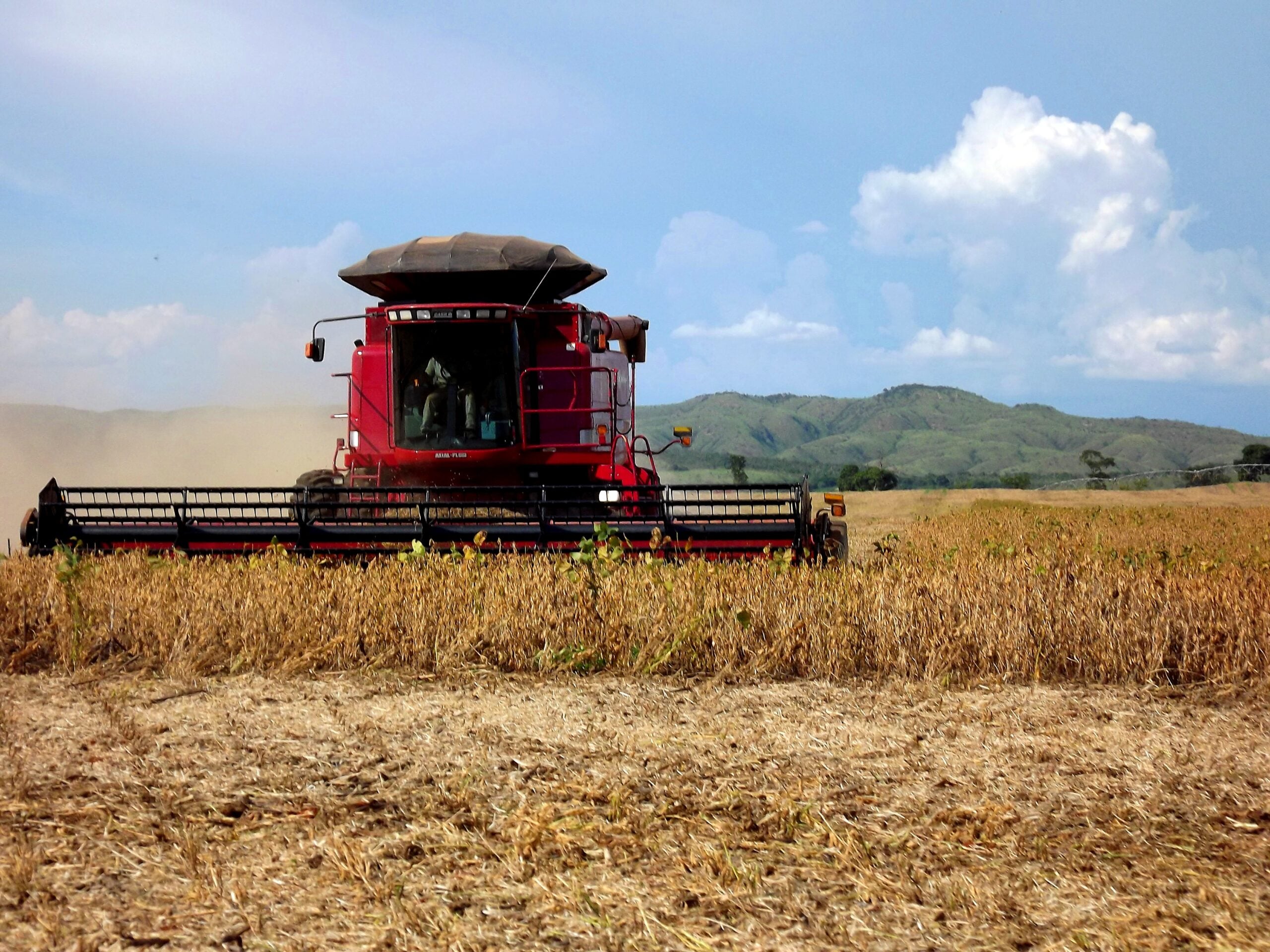
The US harvest adds fresh supply to the soybean and corn markets.
Wheat found a floor from Saudi Arabia’s tender for 535,000 metric tons. Black Sea export workarounds remain a watchpoint for global flow.
For Latin America, the read is straightforward: Brazil is the preferred soybean supplier to China, while Argentina’s planting weather will shape future corn supply.
What matters today. Whether South American planting weather and China’s buying pattern can offset the weight of the US harvest over the next month.
01 The session in one read
Grain proxies diverged on Friday, October 2, 2026, as harvest pressure competed with fresh demand signals. The soybean tracker firmed to US$27.22, while the corn tracker fell to US$18.85, underlining how differently the US supply wave is hitting each market.
Soybeans did not follow corn lower. China, the world’s largest buyer, remains the key demand variable, and Brazil is its preferred supplier.
The grain complex is caught between a rising US supply wave and longer-term risks from Black Sea disruption and South American weather. Corn and soybeans are likely to stay defensive into the WASDE report, while wheat may find intermittent support from tenders. The variable to watch is whether Brazil’s early soybean planting stays ahead of normal without moisture stress.
02 The board
The Teucrium Soybean Fund settled at US$27.22, a marginal rise of 0.07 percent on the day. The Teucrium Corn Fund fell to US$18.85, a drop of 0.68 percent, as the US harvest advanced.
The Teucrium Wheat Fund bucked the softer tone in row crops, closing at US$24.75, up 0.12 percent. Saudi Arabia’s tender for 535,000 metric tons for November and December shipment provided the spark.
| Asset | Level | Change |
|---|---|---|
| Soybeans (SOYB) | US$27.22 | +0.07% |
| Corn (CORN) | US$18.85 | -0.68% |
| Wheat (WEAT) | US$24.75 | +0.12% |
Source: RT close, 2026-10-02. Where a commodity has no spot feed, an exchange-traded tracker or leading producer is shown as a labelled proxy.
Live Market IntelligenceThe live market board
Rio Times · Live Market Intelligence
Latin America — Cross-Market Board
| Instrument | Last | Change | YoY | Prev. | High | Low | Volume |
|---|---|---|---|---|---|---|---|
| IBOV | 192,114.55 | +2.63% | +21.85% | 187,197.46 | 168,310 | 167,142 | — |
| IPSA | 10,916.59 | +0.08% | — | 10,908.18 | 11,210 | 10,984 | 1,513,213,483 |
| IPC MEX | 63,712.24 | -0.18% | +12.17% | 63,828.60 | 66,121 | 65,405 | 108,886,187 |
| MERVAL | 2,767,663 | +0.32% | +30.51% | 3,022,485 | 3,042,365 | 2,991,150 | — |
| COLCAP | 2,515.02 | -0.59% | — | 9.04 | 9.05 | 9.02 | 4,133 |
| BVL PERÚ | 59,751.67 | +0.18% | — | — | — | — | — |
| USD/BRL | 5.16 | +0.01% | -5.13% | 5.16 | 5.18 | 5.14 | — |
| EUR/BRL | 5.95 | +1.01% | -5.83% | 5.89 | 5.98 | 5.94 | — |
| USD/MXN | 17.06 | -0.24% | -8.58% | 17.10 | 17.08 | 17.01 | — |
| USD/CLP | 913.98 | +0.04% | -5.67% | 913.65 | 915.11 | 906.68 | — |
| USD/COP | 3,140 | +0.03% | -22.04% | 3,139 | 3,141 | 3,105 | — |
| USD/PEN | 3.36 | -0.66% | -4.82% | 3.38 | 3.38 | 3.35 | — |
| USD/ARS | 1,493 | +0.10% | +12.96% | 1,491 | 1,494 | 1,480 | — |
| USD/UYU | 40.27 | +1.24% | +1.80% | 39.77 | 40.27 | 40.23 | — |
| USD/PYG | 5,939 | +1.68% | -19.54% | 5,841 | 5,939 | 5,925 | — |
| USD/BOB | 11.64 | -0.76% | +72.04% | 11.73 | 11.72 | 11.64 | — |
| USD/DOP | 58.34 | +1.25% | -3.44% | 57.62 | 58.34 | 58.04 | — |
| USD/CRC | 445.92 | +0.89% | -9.71% | 441.97 | 448.50 | 445.92 | — |
03 What moved it
For corn, the weight came from a rapid US harvest and the UN food agency’s note that cereal prices climbed about 5 percent in September on weather concerns and transport disruptions.
Soybeans faced the same harvest push but had a structural tailwind from China. China was the largest reported buyer of US soybeans in the latest weekly data with 589,400 metric tons, while Brazil remains its preferred supplier.
04 The Latin American read
Brazil’s soybean planting is a key variable for global supply. A fast start in Mato Grosso and other key states would let Brazilian beans reach export terminals sooner, reinforcing the country’s preference among Chinese buyers.
Argentina remains the wildcard on corn, which matters because Argentina is a major prospective exporter of corn and wheat to global markets.
05 The names to watch
On the tracker side, SOYB, CORN and WEAT are the cleanest proxies for foreign investors who want exposure without trading futures directly. Each one converts futures moves into a simple US-dollar share price.
For Latin American equities, watch Brazil’s large grain producers and logistics names linked to the new crop. Argentina’s listed agricultural exporters will also move with any shift in corn moisture forecasts or Black Sea trade resolution.
06 The outlook
The near term favours more choppy trading. Corn and soybeans are likely to stay sensitive to US harvest progress and official stock revisions, with the next WASDE report the main event for supply confirmation.
Wheat has a separate anchor in Black Sea logistics and Middle Eastern buying. If Saudi Arabia and other importers keep tendering while Russia and Ukraine struggle with export workarounds, wheat may hold a firmer floor than row crops over the next two weeks.
07 What to watch
- Black Sea export workarounds: Russia and Ukraine are seeking new channels for grain shipments, and any disruption could shift demand back to the Americas.
- Argentine corn planting: Rain forecasts over the next ten days will set the tone for corn supply sentiment.
- China soybean procurement: The pace of Chinese buying from Brazil versus the United States will determine whether the Brazilian premium holds.
- US harvest and WASDE: The upcoming supply and demand report will test whether corn and soybean prices can absorb the current harvest without another leg lower.
What moved the soybean tracker Friday?
The Teucrium Soybean Fund settled at US$27.22, up 0.07 percent, with China’s buying the key demand variable.
Why did the corn tracker fall?
The Teucrium Corn Fund closed at US$18.85, down 0.68 percent, pressured as the US harvest advanced.
What supported the wheat price?
The Teucrium Wheat Fund rose 0.12 percent to US$24.75 after Saudi Arabia tendered for 535,000 metric tons.
How does this affect Latin America?
Brazil remains the preferred soybean supplier to China, while Argentina’s planting weather will shape future corn exports.
Market data: RT
This article was produced by The Rio Times’ automated newsroom system. How we use AI · Report an error · Editorial responsibility: Matthias Camenzind, Editor-in-Chief
LatAm Markets: Live Signals → — real-time movers, turnover leaders and FX across Latin America.
Read More from The Rio Times