Germany Approves Historic €500 Billion Spending Package, Lifting Defense Budget Constraints
German lawmakers have approved a landmark spending package that marks the end of decades of fiscal austerity, potentially revitalizing Europe’s largest economy while raising significant questions about democratic process and economic transformation.
The measure passed Tuesday with 513 votes in the 733-member parliament, comfortably exceeding the two-thirds majority required for constitutional changes.
The legislation exempts defense spending from Germany’s constitutional debt brake and establishes a massive €500 billion ($546 billion) fund for infrastructure investments over the next decade.
This historic shift in German fiscal policy comes amid growing security concerns over Russia’s actions in Ukraine and changing transatlantic relations.
The Spending Package Breakdown
The constitutional changes include three major components:
- Defense spending exceeding 1% of GDP (approximately €44 billion annually) will be exempt from Germany‘s strict debt rules
- A €500 billion infrastructure fund to be spent over the next 10-12 years
- New borrowing capacity for German states, allowing them to run annual deficits of up to 0.35% of GDP
Of the infrastructure fund, €100 billion will be immediately channeled into the Climate Transition Fund, with the remainder allocated as €300 billion for federal government projects and €100 billion for state governments.
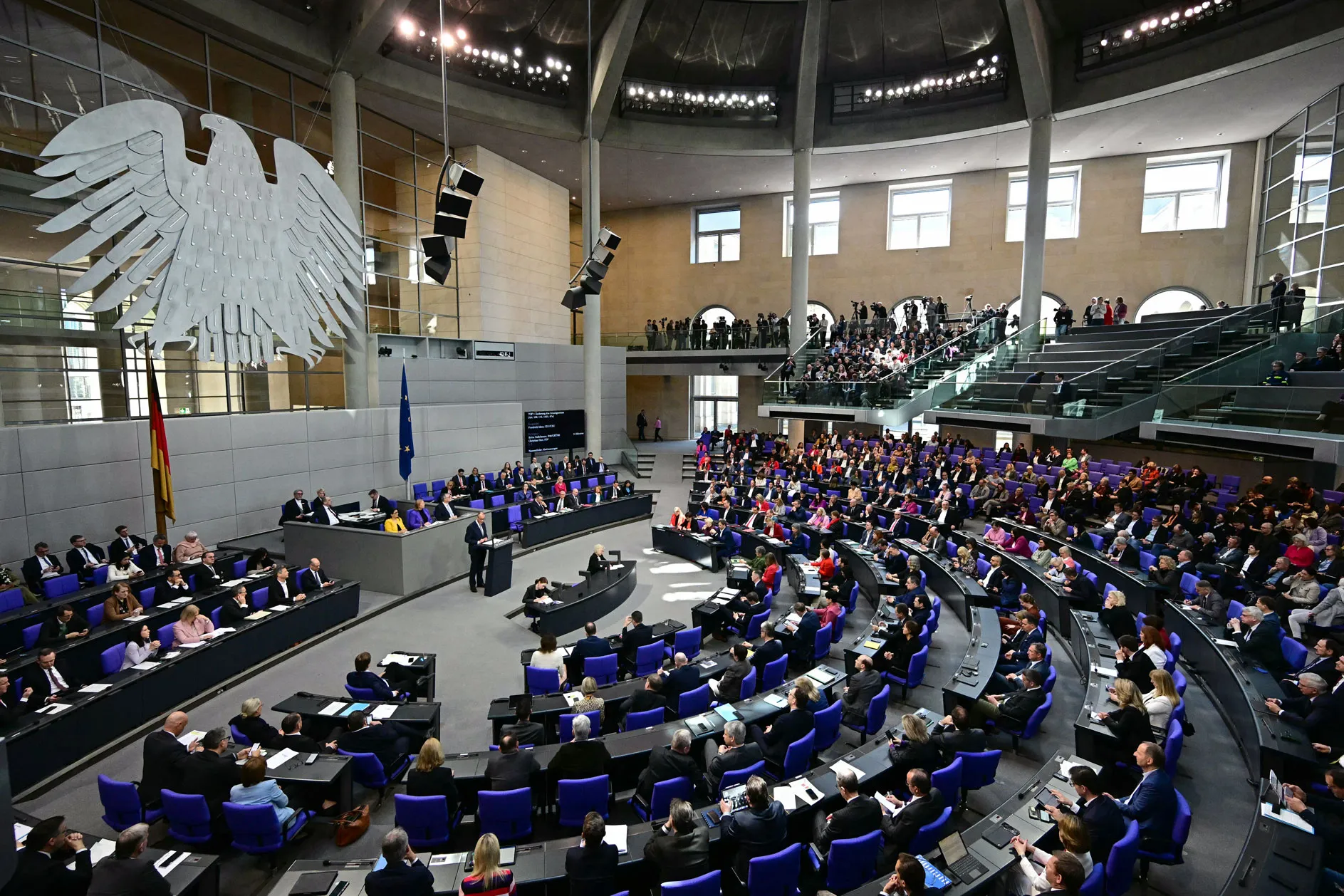
“This is possibly the biggest spending package in the history of our country,” said SPD co-leader Lars Klingbeil during parliamentary debate in Berlin. “Germany must take on its leadership role in Europe.”
Economic Context and Motivations
Germany’s economy has struggled in recent years, contracting for two years due to structural problems including high energy costs, sluggish industrial production, and bureaucratic constraints.
The German stock market responded positively to the package, with the DAX index reaching a new record. Economists suggest this fiscal expansion could potentially double Germany’s growth rate to 1.6% by 2026.
The shift toward fiscal expansion has been partly motivated by Donald Trump‘s return to the White House and concerns about his commitment to the transatlantic alliance.
With Russia’s ongoing war against Ukraine raising security concerns across Europe, German officials argue that defense spending cannot be constrained by budgetary rules.
“Our security must not be jeopardized by budgetary constraints,” Defense Minister Boris Pistorius stated, adding that “anyone who hesitates today is denying reality.”
Democratic Concerns and Opposition
The timing and process of this constitutional change have sparked significant debate about democratic legitimacy.
Friedrich Merz, poised to become Germany’s next chancellor, pushed these changes through the outgoing parliament before the newly elected one convenes on March 25. Critics argue this approach deliberately circumvents the fresh electoral mandate.
With the hard-right AfD and far-left parties having gained significant ground in February’s elections, Merz is using the current parliamentary configuration to secure the required majority that would be unattainable in the new Bundestag.
“This momentous step is going to be taken by a parliament that is defunct and which the German people have basically thrown out,” noted one critic, highlighting concerns about democratic process.
The AfD and The Left have filed legal challenges, with the Constitutional Court still to determine whether such consequential measures can be approved by an outgoing parliament.
Philosophical Shift for Merz
For Merz, this fiscal reform represents a remarkable philosophical pivot. Long associated with fiscal conservatism and previously a BlackRock director, Merz campaigned on budget consolidation but is now championing massive public borrowing.
Some critics connect his financial sector background to what they see as a deeper agenda of “financializing the German economy” that could potentially accelerate deindustrialization.
They question whether Germany—unlike Britain with its established financial center—has the ecosystem to successfully transition from industrial powerhouse to financial hub.
The German Taxpayers Association warns that Germany faces “not a revenue problem, but a spending problem,” suggesting the new government should focus on reducing inefficient expenditures alongside new investments.
“We ended the legislative period with a bang,” said Robert Habeck, the outgoing Green vice-chancellor. “Climate protection in Germany can no longer fail because of money; it can only fail due to lack of competence or lack of will.”
As Germany embarks on this new fiscal path, the debate continues about whether this historic spending package represents necessary modernization or a problematic departure from fiscal responsibility and democratic norms.
What’s certain is that the decision marks a fundamental transformation in Germany’s economic approach that will shape its future for decades to come.
This article was produced by The Rio Times’ automated newsroom system. How we use AI · Report an error
Read More from The Rio Times