Mexico’s Airport Giant GAP Cuts Its 2026 Traffic Forecast After a Weak Quarter
Key Facts
—2026 Forecast. GAP cut its 2026 traffic forecast to between minus 3% and flat, down from previous guidance of 2–5% growth.
—Q2 Passengers. Second-quarter passengers fell 5.6% to just under 15 million.
—Revenue Miss. Revenue rose 3.7% to Ps.11,290 million ($646M) but missed the roughly Ps.12,360 million ($707M) analysts expected.
—EBITDA Climb. EBITDA still climbed 8.4% to Ps.5,965 million ($341M).
—Jamaica Drop. Revenue at its Jamaican airports dropped 18.3%.
—CBX Acquisition. The CBX Tijuana–San Diego bridge terminal entered the accounts, adding 89.7 million new shares and Ps.30,803 million ($1.76B) of goodwill.
GAP cut its 2026 traffic forecast to between minus 3% and flat, down from 2–5% growth, after second-quarter passengers fell 5.6% and revenue missed analyst expectations.
GAP Guidance Cut Q2 2026: What Happened
Grupo Aeroportuario del Pacífico (NYSE: PAC; BMV: GAP) runs 14 airports: twelve across Mexico’s Pacific corridor — Guadalajara and Tijuana above all, plus Los Cabos, Puerto Vallarta and the Bájio — and two in Jamaica, Montego Bay and Kingston. Since May it also owns Cross Border Xpress (CBX), the bridge terminal that lets passengers walk between San Diego and Tijuana’s runway.
It is one of the three big listed Mexican airport groups, alongside ASUR in the southeast and OMA in the north.
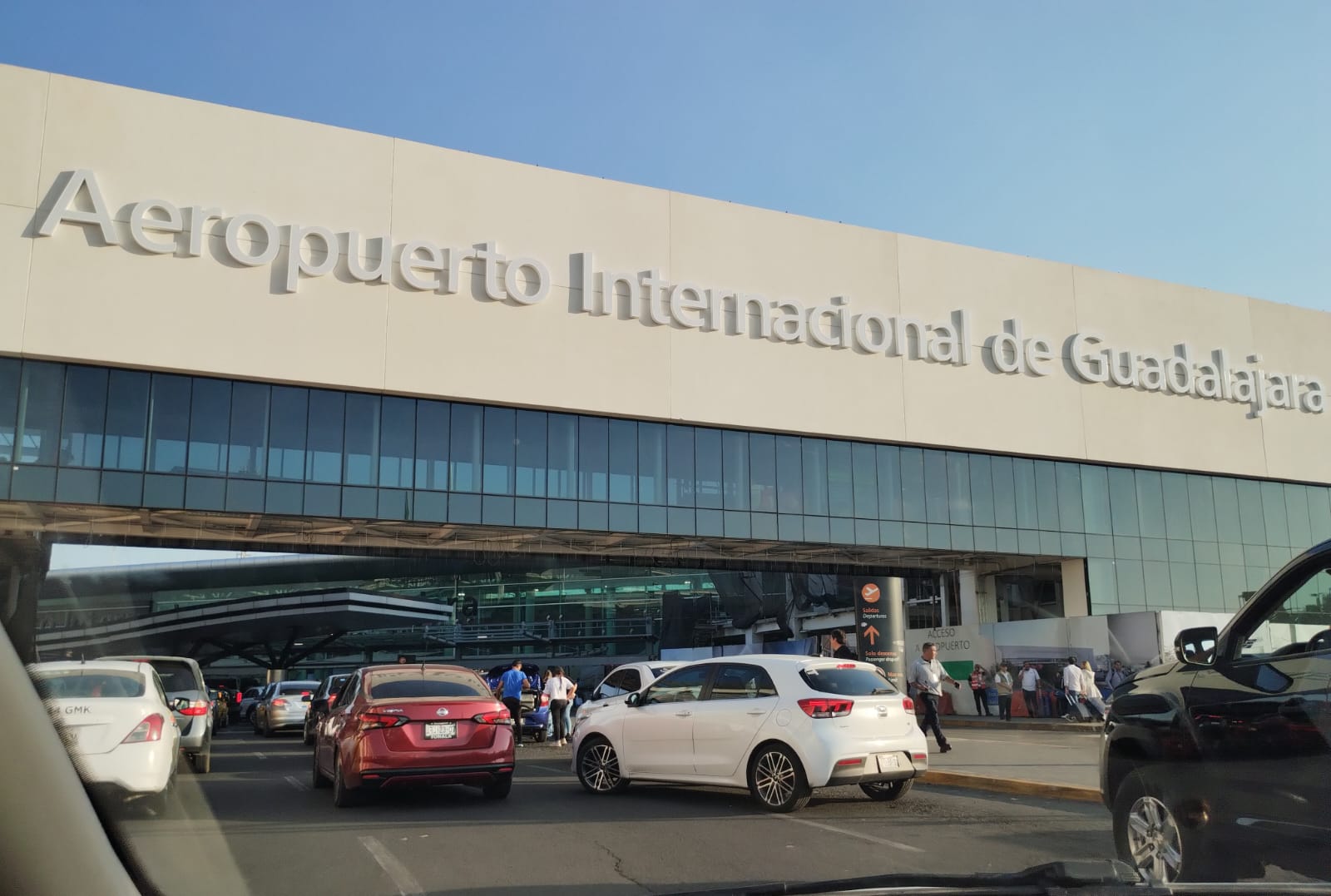
The company published second-quarter results on July 14, via GlobeNewswire, and the guidance revision inside them was the loudest news of Mexico’s earnings week: full-year passenger traffic is now expected between minus 3% and flat, where the previous guidance saw growth of 2% to 5%. From growth to shrinkage in one revision. The stock fell more than 5.6% and led the losers on the Mexican exchange; several banks trimmed targets within a day.
The consensus target of $267.91 still sits 19% above the ADS price, but the ratings split — four holds and one strong sell against four buys — is unusually wide for a Mexican airport stock, and it captures the real debate: whether this year’s traffic slump is a cyclical air pocket or the end of the post-pandemic super-cycle in Mexican aviation.
Key Drivers Behind the GAP Guidance Cut
Three forces converged on the quarter. First, the peso: 10.9% stronger against the dollar year over year. GAP collects a large share of its tariffs in dollar-linked terms and reports in pesos, so a strong peso shrinks the top line in translation before a single passenger is lost.
Second, the beach slump. International traffic to Mexico’s Pacific resorts fell hard — Puerto Vallarta’s international passengers dropped 27.1%, Los Cabos’ fell 11.4% — while the big city hubs held up far better.
Guadalajara actually grew, domestic traffic up 3.1% and international up 8.1%. The network’s problem is concentrated where American tourists used to be.
Third, Jamaica: revenue at Montego Bay and Kingston fell 18.3%. The Caribbean leg, bought as diversification, moved in the same direction as the Mexican beaches this quarter — diversification that did not diversify.
| Airport (Q2 2026) | Domestic pax | International pax | Reading |
|---|---|---|---|
| Guadalajara | +3.1% | +8.1% | the bright spot |
| Tijuana | −7.7% | −9.7% | border softness |
| Los Cabos | −2.2% | −11.4% | resort slump |
| Puerto Vallarta | −6.2% | −27.1% | worst in network |
| Mexicali | −12.8% | — | border softness |
Live Company IntelligenceGrupo Aeroportuario del Pacifico SAB De CV ADR — the full investor dossier
Wall Street view
Valuation & profitability
Price & risk
$192.6552-wk high
$300.41
Revenue trend · 6y
Ownership
Dividend
GAP Q2 2026 Financial Detail
| Metric | Q2 2025 | Q2 2026 | Chg |
|---|---|---|---|
| Total revenue | Ps.10,882 mn ($623M) | Ps.11,290 mn ($646M) | +3.7% |
| Aeronautical + non-aeronautical rev. | — | +Ps.399 mn vs Q2 2025 | +4.9% |
| EBITDA | Ps.5,503 mn ($315M) | Ps.5,965 mn ($341M) | +8.4% |
| EBITDA margin (ex-IFRIC 12) | 67.1% | 69.3% | +220 bps |
| Comprehensive income | Ps.2,236 mn ($128M) | Ps.2,450 mn ($140M) | +9.6% |
| Passenger traffic | 15.8 mn | 14.96 mn | −5.6% |
Read the table twice and the guidance cut looks stranger: every money line improved. Margins expanded 220 basis points, income grew faster than revenue, and the miss against the Ps.12,360 million ($707M) consensus came mostly from translation and traffic, not from cost slippage.
GAP’s regulated-infrastructure economics are doing their job; the demand side is what broke.
The quarter was also the first to consolidate Cross Border Xpress, effective May 1. The merger issued 89,740,731 new shares — taking the total to 595,018,195, roughly 18% dilution — and put Ps.30,803 million ($1.76B) of goodwill on the balance sheet, while adding about Ps.5,400 million ($309M) of cash.
CBX is a genuine strategic asset: the only cross-border airport bridge in the Americas, feeding Tijuana’s runway with San Diego passengers. But it makes every per-share comparison this year an apples-to-oranges exercise, and it arrived in the very quarter Tijuana’s own traffic fell.
| Fiscal year | Revenue | EBITDA | Net income |
|---|---|---|---|
| 2021 | Ps.19.0 bn ($1.09B) | Ps.10.9 bn ($624M) | Ps.6.0 bn ($343M) |
| 2022 | Ps.27.4 bn ($1.57B) | Ps.16.1 bn ($922M) | Ps.9.0 bn ($515M) |
| 2023 | Ps.33.2 bn ($1.90B) | Ps.18.7 bn ($1.07B) | Ps.9.5 bn ($544M) |
| 2024 | Ps.26.8 bn ($1.53B) | Ps.18.1 bn ($1.04B) | Ps.8.6 bn ($492M) |
| 2025 | Ps.32.5 bn ($1.86B) | Ps.17.9 bn ($1.02B) | Ps.10.0 bn ($572M) |
(Revenue includes IFRIC-12 construction accounting, which adds noise to the top line between investment cycles; the EBITDA and net income lines are the cleaner read.) The arc is a company that roughly doubled its earnings power since 2021 — which is precisely why a traffic contraction in 2026 stings: it is the first year the post-pandemic escalator runs backwards.
| Quarter | EPS actual | EPS estimate | Surprise |
|---|---|---|---|
| Q2 2026 | $2.80 | $3.17 | −11.7% |
| Q1 2026 | $3.78 | $3.04 | +24.3% |
| Q4 2025 | $2.06 | $3.08 | −33.1% |
| Q3 2025 | $2.90 | $2.92 | −0.7% |
| Q2 2025 | $2.82 | $2.76 | +2.2% |
Two misses in the last three quarters — after years in which Mexican airport groups beat routinely. The estimate machine has not yet caught up with the new traffic reality, which is exactly what the guidance cut now forces it to do.
Post-merger, GAP is sitting on more cash than debt — unusual for an airport group and partly a CBX artifact — with a 28% return on equity. The balance sheet is not the problem.
The forecast is.
Management Signals from GAP
Cutting full-year guidance from +2–5% to −3–0% in a single revision is management choosing credibility over hope: it front-loads the bad news rather than bleeding it out monthly. The accompanying message — margins up, costs flexed, CBX integration on schedule — is aimed at separating what the company controls from what it cannot.
Notably, GAP did not cut its investment commitments under its master development programs; the long-cycle bet on Mexican aviation infrastructure stands.
What to Watch Next for GAP
Monthly traffic reports: GAP publishes passenger numbers every month — the fastest public gauge of whether −3% is the floor or the midpoint. The peso: every centavo of USD/MXN moves dollar-linked tariffs in translation; the rate stood near 17.5 at the quarter’s end. CBX integration: the first full quarters will show whether the bridge terminal’s earnings justify 18% dilution. Jamaica: whether the 18.3% revenue drop was a quarter or a trend. ASUR and OMA results: if their traffic holds while GAP’s falls, the problem is the Pacific corridor, not Mexican aviation.
Risks Facing GAP
The bear case: US-bound tourism and border traffic keep weakening, the peso stays strong, and 2026 becomes the template rather than the exception. Regulatory risk is permanent — Mexican airport tariffs are set under government-approved master programs, and the 2023 revision episode showed how quickly the terms can move.
The CBX goodwill of Ps.30.8 billion ($1.76B) would face impairment questions if cross-border traffic disappoints. And one strong sell on the sheet is a reminder that not everyone believes the escalator restarts.
Mexican Airport Sector Context
Airport operators are the closest thing markets have to a real-time gauge of North American travel, and GAP’s network — Pacific beaches, the US border, Guadalajara’s tech-and-nearshoring hub — reads like a cross-section of the Mexico trade itself. This quarter the reading was uncomfortable: the nearshoring city grew while the tourist coast and the border shrank.
For investors in Mexican infrastructure, the GAP guidance cut is the season’s clearest warning that the post-pandemic travel boom has found its ceiling — and the strong peso, celebrated everywhere else in the Mexican market, is quietly taxing the country’s dollar-earning assets.
This report is part of The Rio Times’ Company Intelligence coverage of Latin American listed companies. It is journalism, not investment advice.
More: Latin America news in English, every day from The Rio Times.
Frequently Asked Questions
What is GAP's updated traffic forecast for 2026?
GAP cut its 2026 traffic forecast to between minus 3% and flat, down from its previous guidance of 2–5% growth.
How did GAP's second-quarter revenue compare to analyst expectations?
Revenue rose 3.7% to Ps.11,290 million ($646M) but missed the roughly Ps.12,360 million ($707M) that analysts had expected.
What impact did the CBX acquisition have on GAP's accounts?
The CBX Tijuana–San Diego bridge terminal acquisition added 89.7 million new shares and Ps.30,803 million ($1.76B) of goodwill to GAP's accounts.
This article was produced by The Rio Times’ automated newsroom system. How we use AI · Report an error · Editorial responsibility: Matthias Camenzind, Editor-in-Chief
Read More from The Rio Times