From the “delicious roll” to the largest bay in Brazil: check out the attractions that Salvador offers on its birthday
RIO DE JANEIRO, BRAZIL – Today is a birthday day! Salvador celebrates, this Monday, March 29, 472 years since its foundation, which occurred in 1549. It seems a long time, doesn’t it? 472 years… But everything is relative. Damascus, the Syrian capital, and Beirut, in Lebanon, for example, are around 5,000 years old
And even though it is still young, Salvador is a city famous all over the world for its beaches, Carnaval, historical attractions, for being the first capital of Brazil, the city of music recognized by Unesco, and many other qualities.
To celebrate the 472 years of this young lady, G1 sisted listed attractions that are not so obvious in Salvador. It has a lot of things: from giant acarajé to the Holocaust Memorial, from the largest bay in Brazil to the delicious bread roll, besides, of course, being the birthplace of the first Brazilian saint. See the list below:
Brazil’s largest bay
The year was 1501 when the first colonizing ships sailed through the waters of Todos-os-Santos Bay. With 1,233 sq km of area and more than 50 islands, it is the largest bay in the country and the second largest in the world, only behind the Bay of Bengal.
Considered the Blue Amazon, from these waters comes the subsistence of the riverside dwellers and fishermen, as well as being used as private “swimming pools” for the piers of luxury buildings located in the Corredor da Vitória, in Salvador, or as a “carpet” for the parade of speedboats and sailboats.

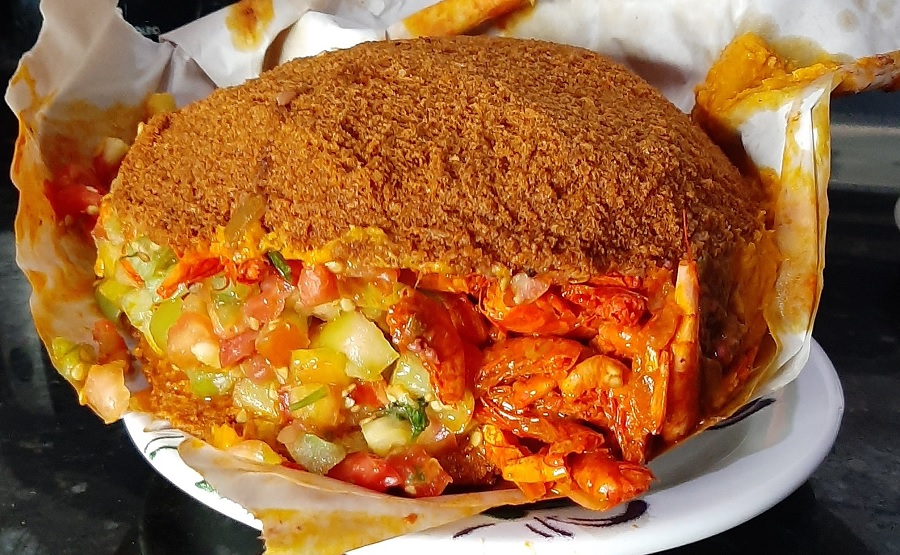
Giant Acarajé
In every corner of Brazil you can find acarajé, but in Salvador things have taken on proportions never before seen in the history of this country. The market is brutal and the competition for customers is fierce, and since the watchword in the corporate world is “innovate”, a Bahian from Salvador went all in.
Regivalda Linhares, known as Binha, from the Liberdade neighborhood, invented the giant acarajé, which weighs one kilo (can you imagine the pepper?). She said she came up with the idea during a period when her husband was unemployed. The Goliath acarajé was so successful that even famous people became customers. “Márcio Victor, from Psirico, comes here from time to time. I like him a lot”, said the Bahian.
The artist praised the delicacy: “Her acarajé is impressive. I met her through Júnior, Psirico’s dancer, who lives in Liberdade. We had just left a rehearsal with the band and everyone was hungry. We passed by an acarajé [tray] and felt like eating. Then he came up with the idea of going there because it would be cheaper and would be good for everybody. He combined business with pleasure. I became a customer.”
Delicious bread roll
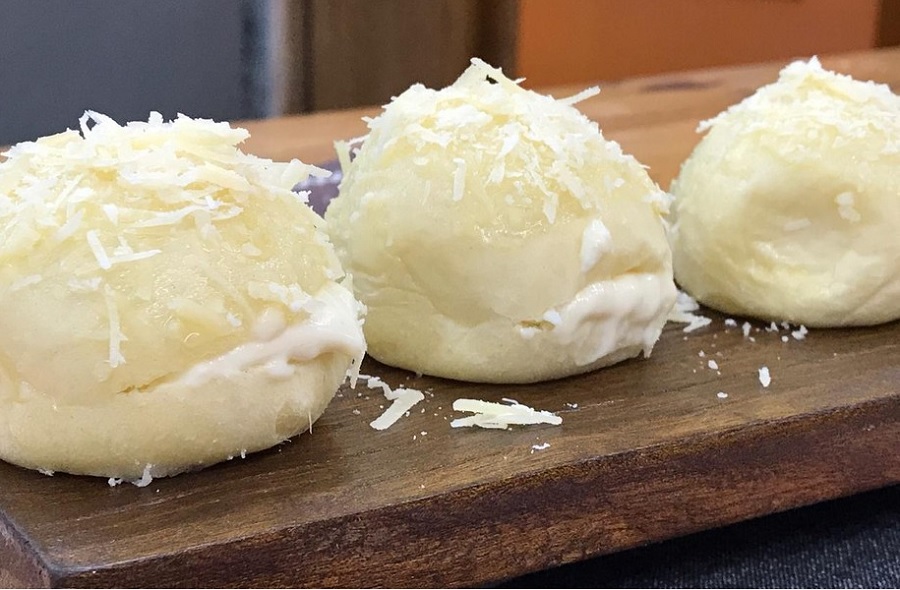
Ah, the delicious bread roll (pãozinha delícia)! A guaranteed presence at every party, meeting, happy hour, and whatever else is invented for socializing. Outsiders sometimes get the confused with cheese bread (pão de queijo), but let me tell you once and for all: the dough does not contain an ounce of cheese and is a mixture of wheat flour, yeast, sugar, milk, eggs, salt, oil, and margarine.
With time, the most creative chefs have been adding the most varied fillings, which can be cheese, turkey breast, patê, and whatever else goes with this marvelous dish.
The most accepted legend says that the delicious bread roll was born from a mistake, like the discovery of penicillin (and around here, the delicacy seems to be more appreciated than penicillin): someone was making bread dough, but used too little flour and the mixture became sticky. The dough ended up fermenting and the person decided to bake it anyway. The result was this star of popular haute cuisine.
Some sources say that the delicious bread roll was invented in Vitória da Conquista, in the southwest of Bahia. Regardless, it is in the capital of Bahia that it reigns supreme. It is like that saying: “the English may have invented soccer, but it was the Brazilians who created dribbling”. Game on!
Israeli Cemetery and Holocaust Memorial
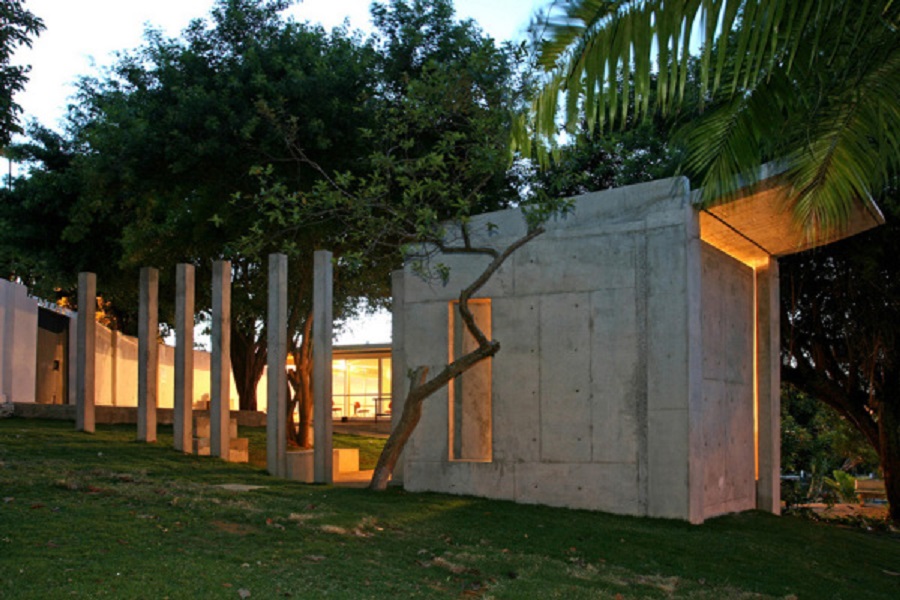
The Bahia Israeli Cemetery is located at Largo da Quintas dos Lázaros, in the Baixa de Quintas neighborhood. A Holocaust Memorial was built on the site in 2007. The building faces east, allowing the faithful to pray in the direction of Jerusalem, according to Jewish tradition.
According to architect Sergio Ekerman, responsible for the Memorial design, the building “seeks the inspiration for its forms in the word “chai” – life in Hebrew – understanding that the memory of those who are among us, as well as of those who have passed away, is made through the recapitulation of their lives, their actions and their legacy. Not by chance, we call the cemetery, in Hebrew, Beit HaChayim, House of Life”.
At Ladeira da Barra is the Cemitério dos Ingleses (English Cemetery). Inaugurated in 1814, the cemetery is on Sete de Setembro Avenue. Its history is related to the transfer of the Portuguese court to Brazil and the signing of the Treaty of Commerce and Navigation between the Kingdom of Portugal and the United Kingdom, which allowed the presence of the Anglican Church in Brazil.
City of music
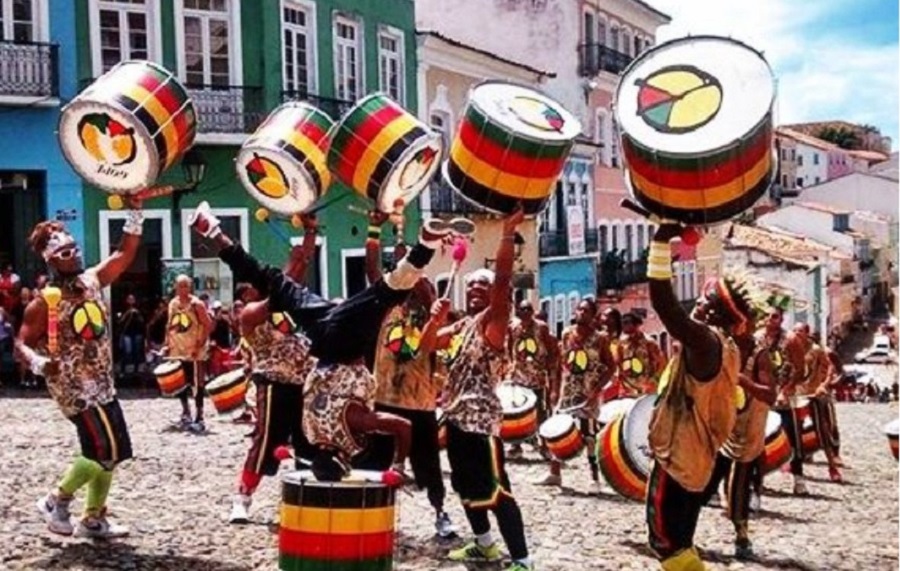
Ôôôô, here in Salvador, the city of axé, the city of rock, the city of forró… In June 2016, the capital of Bahia was recognized by the United Nations Educational, Scientific and Cultural Organization (Unesco) as a “City of Music” – the only one in Brazil.
The measure aimed to promote international cooperation between cities for sustainable urban development, social inclusion and increased influence of culture in the world.
In September 2020, Salvador’s title of city of music was renewed by Unesco.
Museum of sexuality
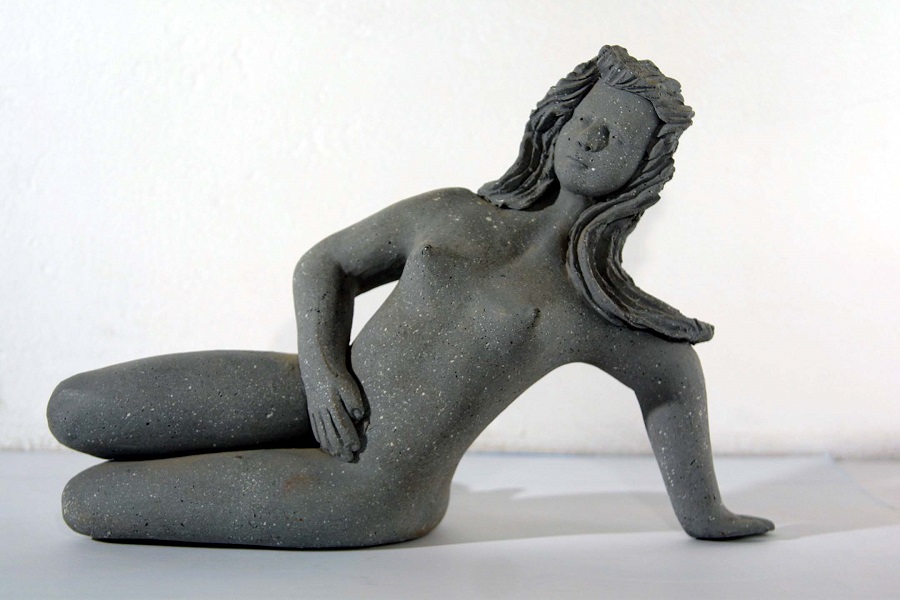
Get the kids out of the room! Did you know that Salvador has a Museum of Sexuality? Yes, it does, and it is located in Pelourinho.
There is a rich collection of sculptures, drawings, and utilitarian objects from various cultures related to the phenomena of sex life and sexuality in the world. The pieces are made of several materials, such as ceramics, porcelain, marble, glass, fiber, acrylic, wood, and fabric.
The initial idea for the museum came from obtaining handmade ceramic pieces made in the Northeastern fairs, representing scenes of eroticism or depictions of nudity. From then on, new pieces were acquired in other states and countries.
Nossa Senhora da Conceição da Praia Church
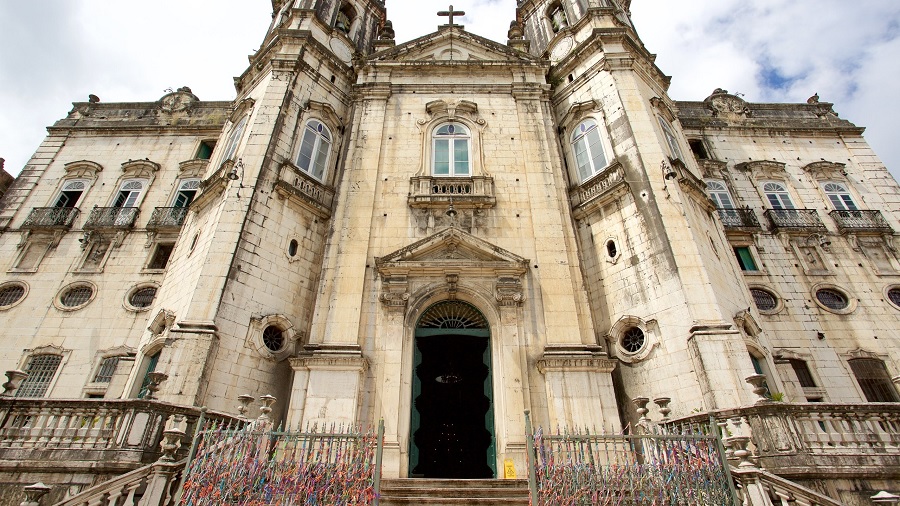
There is a Church of Nossa Senhora da Conceição everywhere, but only in Salvador is it from the beach! And the reason is as prosaic as possible: the small chapel built in 1549 and that gave origin to the church was built on the beach.
The history of the church is intertwined with the history of Salvador. The chapel was built by order of the then governor of Brazil, Tomé de Souza, and after 300 years of renovations and even filling up the area, the church took the form known today. The chapel of 1549, however, was preserved on the site
Our Lady of Conception became the patron saint of Bahia, and the feast in honor of the saint was first celebrated on December 8, 50 years ago. Before, the celebration, which has been going on for more than four centuries, did not have a specific date.
The first and only urban elevator in the country
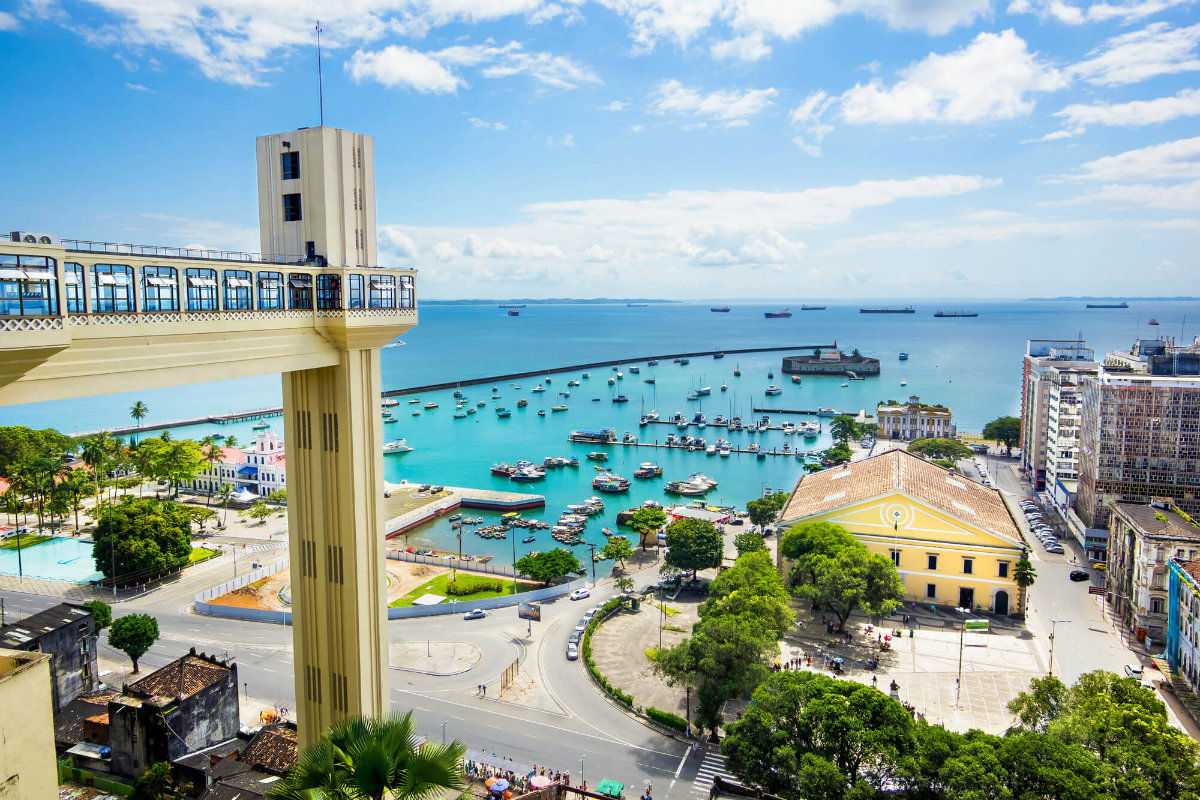
The first elevator that served as public transportation in the world and one of the most popular postcards in Brazil, the Elevador Lacerda is 147 years old. The development was created to solve a problem of uneven levels in the city. In the early 17th century, the only way to transport cargo between the so-called “Upper City” and “Lower City” in Salvador was by crane.
People moved on long stairways and steep hillsides. After the foundation, besides being a means of transportation, the elevator became a postcard and a tourist attraction. From the top of its 72 meters, near the Salvador City Hall, it is possible to have a view of the Todos-os-Santos Bay, the Mercado Modelo and, in the background, the São Marcelo Fort.
The elevator has undergone several renovations before reaching the current model. The first one occurred in 1906, almost 33 years after the inauguration, when it started to run on electricity and had its base widened. In 1930, a second tower and two more cars were added.
Birthplace of a saint
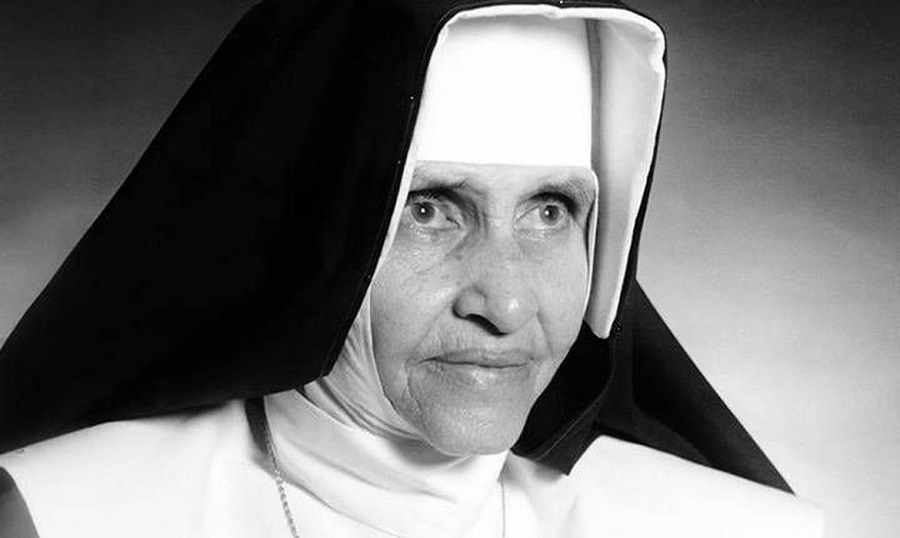
In 2019, Sister Dulce was canonized by the Vatican and became Saint Dulce of the Poor. With this, Salvador became the place where the first Brazilian saint was born and lived.
Dulce Maria de Souza Brito Lopes Pontes was born on May 26, 1914, and from an early age showed that her mission on earth was to be close to those who needed help – mainly the sick and poor. At the age of 13, she already welcomed beggars and the sick in the house where she lived with her father and brothers, in the Nazaré neighborhood.
From a simple chicken coop, she created what became the Social Works Sister Dulce, in Cidade Baixa, and founded the Santo Antonio Hospital, which is part of the complex of works. Sister Dulce saved lives, pulled people out of drug addiction, gave hope to abandoned teenagers, and did all this with hard work and dedication.
In 2003, the shrine of Sister Dulce was built next to the headquarters of the Osid (Sister Dulce Social Works(, in Largo de Roma. There, the relics (term used to designate the body or part of the body of the blessed or saints) of the Good Angel of Brazil are deposited in a space called Chapel of the Relics – a circular room, with triple height, having in the center the tomb that keeps the remains of the Mother of the Poor.
The Chapel of Relics was opened in June 2010, when Sister Dulce’s body was transferred from the Santo Antonio Chapel (located in the Sister Dulce Memorial) to its new home. In September 2019, the shrine underwent a new renovation, gaining a glass tomb with a life-size effigy of Saint Dulce of the Poor.
Home of Carnaval
Now a math question for you: what is the result if we add a city that breathes carnaval with a city full of museums? That’s it! The result is the Casa do Carnaval, a museum that gathers props, musical instruments, costumes used by artists of Bahia’s music, and videos that tell the history of the party.
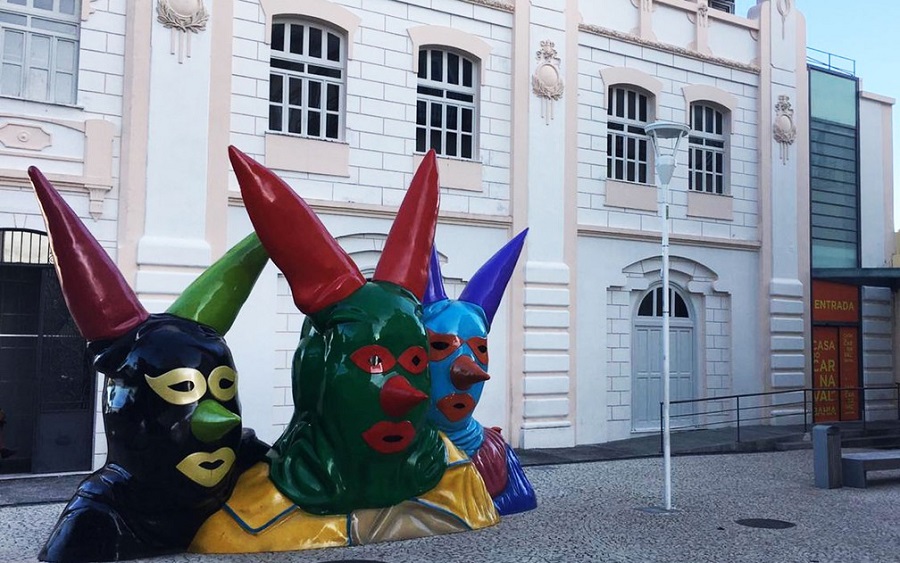
Founded in February 2018, the attraction is located in Praça Ramos de Queirós, Pelourinho, Salvador’s historic center. Even before entering the museum, the public is welcomed by a sculpture of “caretas”, traditional costumes in the carnaval of the Bahian Recôncavo (the area surrounding the Todos os Santos Bay, mainly from the city of Maragogipe, a municipality where, since 2009, the February revelry is an Intangible Heritage of Bahia.
The museum has seven spaces that include rooms that deal with the history and beauties of carnaval, a cafeteria, an academic research room, an interactive movie theater, a terrace for events such as soirées and book launches, and an unmissable view of Todos-os-Santos Bay.
Source: G1
More: Brazil news in English, every day from The Rio Times.
This article was drafted with automated assistance and reviewed before publication. How we use AI · Report an error · Editorial responsibility: Matthias Camenzind, Editor-in-Chief
Living in or visiting Salvador? See this month's events and our Salvador city guide with rents, safety and upcoming concerts.