From the Dance Floor to Entrepreneurship: The Tango Power Couple Bringing Golden-Age Buenos Aires Into the Future
Argentina · Culture
Through Cristal Tango Shoes and Tiempos Porteños, dancer and entrepreneur Magdalena Valdez, together with her artistic partner, Guilherme Monteiro Borges, is translating tango’s enduring values into a vision for its next generation.
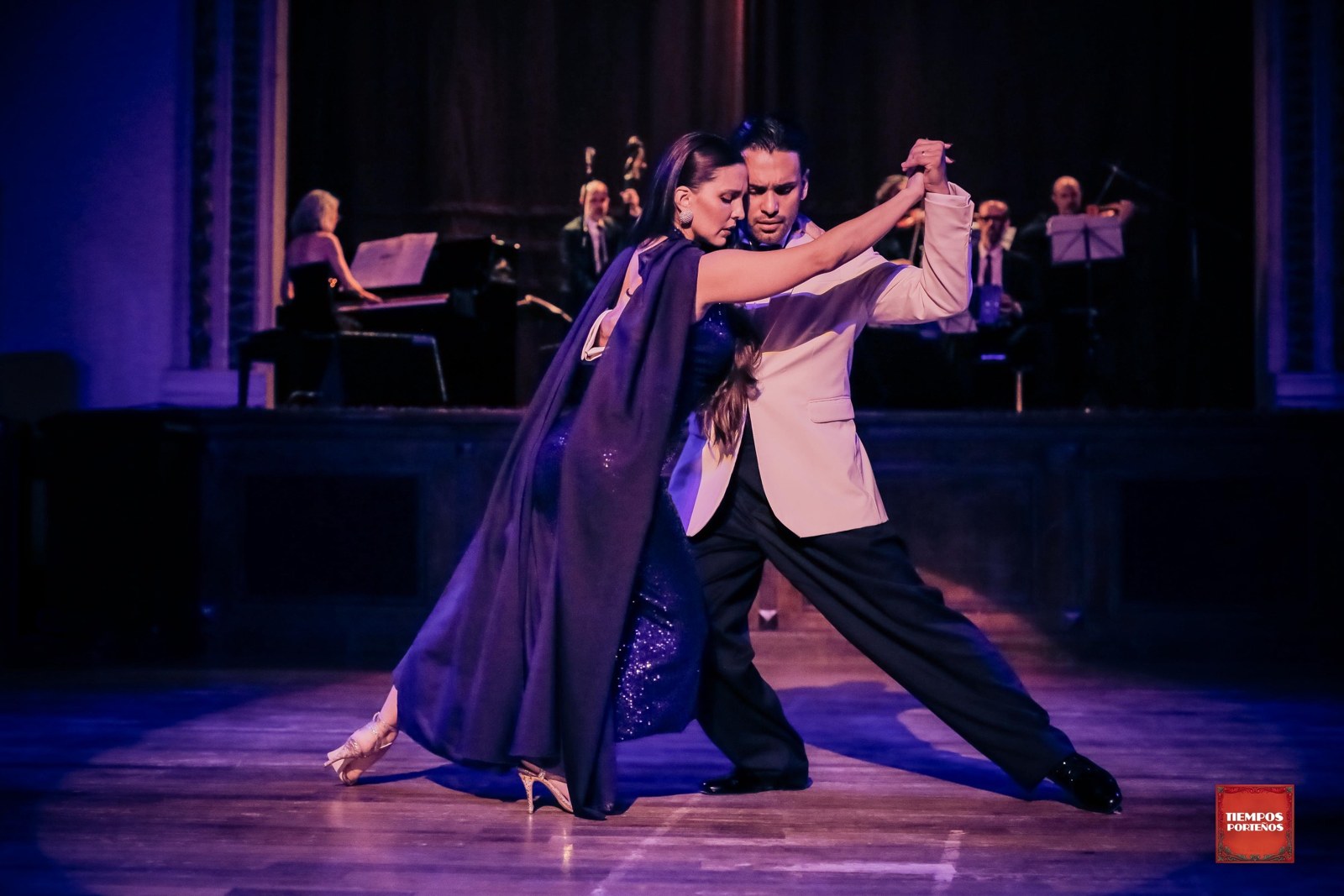
BUENOS AIRES — Walking through the doors of Salón La Argentina is already an encounter with another Buenos Aires.
Built in 1902, the historic hall has hosted milongas since the 1930s. Carlos Gardel sang there. During the 1940s, Osvaldo Pugliese and his orchestra played there every Thursday. Its walls and dance floor carry the memory of an era when tango was not only music or movement, but an entire social world defined by orchestras, fashion, ritual and a sense of occasion.
On August 23, Magdalena Valdez and Guilherme Monteiro Borges invited an international audience to step inside that world through Tiempos Porteños, an elegant gala created to honor tango’s golden age while imagining how its spirit can live in the present.
The evening brought together a reception, curated gastronomy, a live performance by Color Tango, exhibitions by internationally acclaimed couples and a traditional milonga. A dress code encouraged guests to become part of the atmosphere rather than simply observe it.
For Valdez and Borges, the objective was not to reproduce the past or suggest that tango should retreat into nostalgia. It was to reclaim some of the beauty, elegance and ceremony associated with its history, and make those qualities relevant to audiences today. “Tango, as an essential part of Argentine culture, belongs everywhere,” they said. “At its heart, it is a popular, living culture.”
But within tango’s vast contemporary landscape, they believed there was also room for an experience that restored its sense of glamour. “Our intention was never to change anything, but simply to add and offer one more space where that sense of occasion could shine.”
Artists, teachers, producers — and hosts
At the center of Tiempos Porteños is the partnership between Valdez and Borges — dancers who move fluidly between the roles of artists, teachers, producers, hosts and cultural entrepreneurs.
They did not remain behind the scenes during the gala. They also performed, placing their own dancing within the artistic story they had assembled. “We wanted to be part of the story we were telling,” they said, “not only as producers and hosts, but as dancers sharing our own tango with our guests.”
For Borges, producing the event became another form of artistic expression. “Working on the production is a way of putting my own feelings and style into the event, while also taking great care with every detail,” he said. “I experience the evening as part of myself, not as separate work, but as an extension of who I am.”
From the dance floor to a shoe brand
That same relationship between artistic identity and entrepreneurship has shaped Valdez’s work beyond the dance floor.
Through Cristal Tango Shoes, she has taken the knowledge developed through years of dancing — the importance of detail, presentation, quality and the relationship between a dancer and what she wears — and translated it into a tango footwear brand.
The business is not separate from her identity as an artist. Like Tiempos Porteños, it is another expression of the world she wants to create around tango. “For me, every role we play — producer, dancer, host — is connected by the same essence: quality, elegance and distinction,” Valdez said. “That shared essence makes it natural to bring the same character to each role, whichever hat we happen to be wearing that night.”
Her trajectory reflects a larger evolution taking place within tango. Today’s leading artists are increasingly more than performers. They are building brands, schools, festivals, products and cultural platforms capable of supporting the dance and carrying it into new markets.
Valdez has transformed what she learned through tango into a business that serves the people who dance it. With Tiempos Porteños, she and Borges are applying that entrepreneurial thinking on an even larger scale — designing not simply a product or performance, but an entire experience.
A hall that survived intact
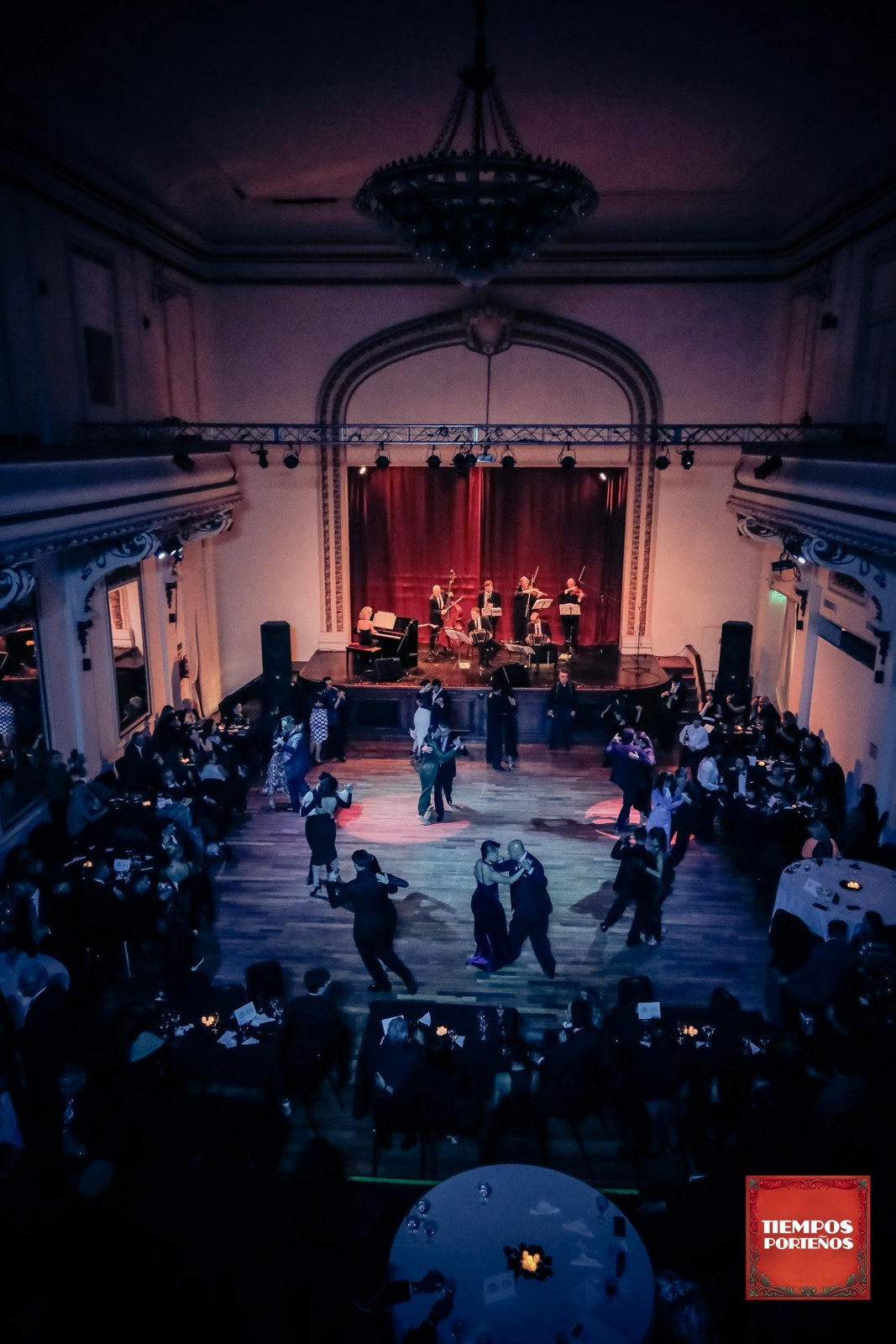
The choice of Salón La Argentina was central to the concept. “That mystique is extraordinary,” Valdez and Borges said. “Fortunately for us, the salon has survived intact through all these years. Simply walking through its doors already feels like stepping back in time.”
The name Tiempos Porteños emerged from the same dialogue with tango history. It was inspired by classic themes the couple had long admired and, specifically, by Tiempos Porteños, the album by Ángel D’Agostino’s legendary orchestra.
Yet the gala was never intended as a historical reenactment. “We are always inspired by the past, yet we are not the past itself,” they said. “We dance differently now, we speak differently now.”
Their challenge was to capture the emotional atmosphere of tango’s golden age without denying the cultural changes that have occurred since. The result was an evening that respected traditional codes while reflecting the artists and audiences shaping tango now. The historic salon and dress code evoked another era, but the interpretations on the floor belonged unmistakably to the present.
Three couples, three versions of the same dance
That balance between heritage and evolution also guided the selection of performers. Valdez and Borges invited Javier Rodríguez and Stella Misse, celebrated maestros representing the depth and intimacy of tango salón; Claudio González and Marcela Vespasiano, whose dramatic partnership draws on extensive theatrical experience; and Juan Malizia Gatti and Manuela Rossi, world champions known for the power and passion of their stage performances.
Together, the couples demonstrated that tango does not have a single contemporary expression. It can be intimate or theatrical, restrained or explosive, rooted in the social dance floor or expanded for the stage.
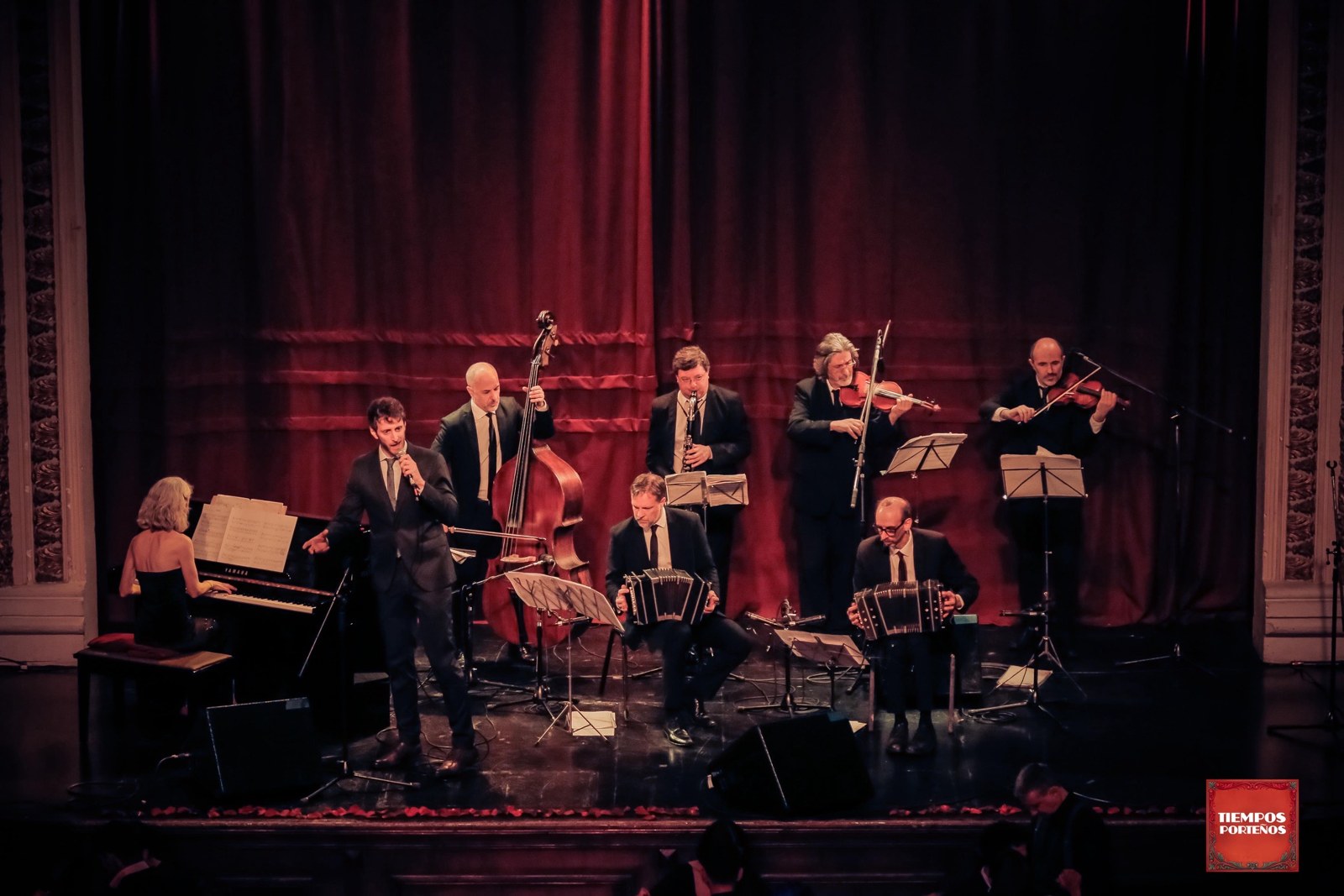
The musical selection carried its own historical significance. Color Tango was chosen to evoke the world of Pugliese in the same hall where his orchestra once played. “We deeply admire the work of Color Tango,” the couple said. “For us, they are the finest living representation of Pugliese’s musical world, of the great orquestas pugliesianas. Their presence gave the evening real depth and elegance.”
The live orchestra did more than accompany the dancers. It connected the venue’s history to the present, allowing audiences to experience that legacy as something heard and felt in real time.
Tango as cultural tourism
Valdez and Borges intentionally presented the gala during Tango BA Festival and Mundial, when Buenos Aires becomes a global meeting place for the tango community. “August is a time of encounters and gatherings in Buenos Aires,” they said. “We chose that moment precisely to offer this international community a night in which to feel and live the elegance of the city.”
Guests arrived from Argentina, Brazil, Mexico, Russia, China, India, the United States and Canada — a reflection of tango’s extraordinary international reach. Their presence also demonstrated the cultural opportunity surrounding the Mundial. International visitors come to Buenos Aires not only to compete or watch the championship, but to enter the broader ecosystem of the dance: its milongas, orchestras, designers, teachers, historic venues and social traditions.
Tiempos Porteños offered those visitors an immersive encounter with that ecosystem. In doing so, the gala also illustrated tango’s potential as a driver of cultural tourism — one capable of connecting heritage, hospitality, fashion, music and live performance.
What comes next
For Borges, tango’s future depends on maintaining a connection to Buenos Aires and its history while remaining open to experimentation. “We must always return to Buenos Aires, to our roots, to our history, but at the same time, we must always be willing to try something new,” he said. “We don’t dance the way they did in the 1930s and ’40s, but that era will always be a source of inspiration.”
Valdez believes reaching younger audiences will require spaces that feel welcoming rather than intimidating. “To bring new generations into tango, we need spaces where young people can take part in a way that feels soft, relaxed and fun — while still sustaining the traditional places where the roots of tango continue to live,” she said.
That duality sits at the heart of Tiempos Porteños: preservation without rigidity, elegance without exclusion and innovation without abandoning identity.
Valdez and Borges are already planning additional gala nights based on the proposal presented on August 23. Their ambition, however, extends beyond producing another successful evening in Buenos Aires. They envision Tiempos Porteños evolving into a broader platform for dancers, musicians and designers — and potentially traveling to international cities through global collaborations.
For Valdez, it represents the next stage of an entrepreneurial journey that began by applying a dancer’s knowledge to the creation of tango shoes and has expanded into building experiences around the culture itself. For Borges, it offers a way to extend his artistic identity beyond his own performance.
Together, they are proposing that tango’s history should not be sealed behind glass. It should be danced, worn, played, produced and continually reimagined. “We see the essence of Tiempos Porteños reaching far beyond Buenos Aires,” they said. “We remain open to collaborations globally, so that this idea can travel as far as it deserves to.”
This article was produced by The Rio Times’ automated newsroom system. How we use AI · Report an error
Read More from The Rio Times