From Blacklist to Business Partner: Ecuador and Panama Reset Relations
The governments of Ecuador and Panama confirmed in mid-August 2025 that they signed a Tax Information Exchange Agreement. Ecuador’s tax authority then removed Panama from its national list of tax havens, which reduces the tax burden on cross-border transactions.
This change lowered the withholding tax rate on services paid from Ecuador to Panama. Companies previously faced a 37 percent rate because Panama was listed as a tax haven.
With the new classification, payments now face the standard 25 percent non-resident rate. Ecuador’s Internal Revenue Service confirmed this adjustment, which immediately reduces the cost of doing business between the two countries.
Government spokesperson Carolina Jaramillo said Ecuador sees the agreement as a step toward greater transparency and as a basis for stronger bilateral ties.
She stated that the move creates space for a possible free trade agreement with Panama. President José Raúl Mulino of Panama praised Ecuadorian President Daniel Noboa for supporting the deal, noting that it resulted from months of direct talks.
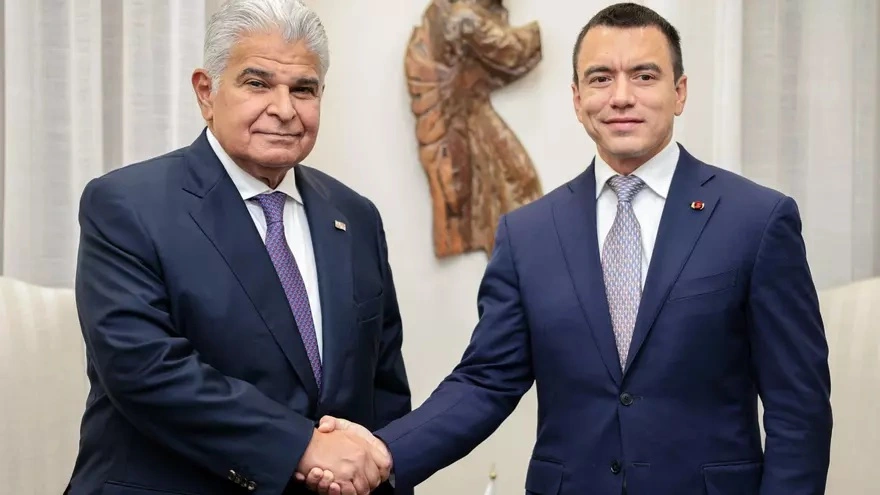
Panama gains international credibility from this removal. President Mulino has set the objective of clearing his country from all discriminatory lists.
His government is also pursuing accession to the Organisation for Economic Co-operation and Development, which requires high standards of tax transparency.
Ecuador–Panama Tax Deal Boosts Trade and Services
Panama has already advanced similar agreements with the United States and the European Union, which helps improve its image in financial markets. For Ecuador, the change carries clear economic benefits.
The trade balance with Panama is positive, and the reduction in service tax rates lowers costs for firms that rely on logistics, finance, and professional services managed through Panama’s regional hubs.
Ecuador exported goods worth about 5.8 billion dollars to Panama in 2024, largely hydrocarbons, according to UN COMTRADE data. Panama, through its Colón Free Zone, re-exported goods worth over 12 billion dollars in the same year, underlining its role as a regional gateway.
Lowering the withholding rate makes it cheaper for Ecuadorian companies to buy shipping, insurance, and consulting services. Business leaders also argue that being off the tax haven list allows easier access to financing routed through Panama’s banks.
These practical outcomes explain why officials describe the decision as more than symbolic. Both governments signaled that the next steps could involve formal discussions on a bilateral free trade agreement.
Officials said that cooperation in logistics and energy remains a shared priority, which aligns with the economic reality of both nations. The removal of fiscal barriers now clears the way for such negotiations.
The decision shows how targeted fiscal policy can directly lower costs, improve transparency, and open channels for wider trade agreements.
More: Latin America news in English, every day from The Rio Times.
This article was produced by The Rio Times’ automated newsroom system. How we use AI · Report an error · Editorial responsibility: Matthias Camenzind, Editor-in-Chief