Colombia Effect Hits Mexican Giants FEMSA, Bimbo, Cemex
Mexico · Business
Key Facts
—Banxico cut. On 7 May 2026, Mexico’s central bank lowered its benchmark rate by 25 basis points to 6.50%, the lowest since May 2022.
—Colombia vote. Opposition candidate De la Espriella secured a preliminary 49.68% of the vote, drawing attention from Mexican firms with Colombian exposure.
—Mixed share moves. FEMSA rose 2.04%, Cemex gained 2.74%, and Grupo Bimbo slipped 0.92% on the Monday after Colombia’s election.
—Colombia rates diverge. Colombia’s central bank raised its policy rate to 12% by end-June 2026, contrasting sharply with Mexico’s easing path.
—No direct link. Market strategists say the Colombia effect on Mexican equities was muted and driven more by sector dynamics than electoral politics.
The Colombia effect on Mexico’s largest consumer and industrial names proved muted and mixed after an opposition presidential win, even as Banxico delivered what it signalled would be its final rate cut of the current easing cycle.
Banxico delivers its final cut of the cycle
On 7 May 2026, Banco de México lowered its benchmark overnight interbank rate by 25 basis points, taking it from 6.75% to 6.50% in a split 3–2 vote. The decision marked the lowest policy rate since May 2022 and the culmination of an easing cycle that began in March 2024, delivering a cumulative 475 basis points of cuts.
Banxico’s forward guidance was unusually explicit: maintaining the rate at 6.50% “will likely be appropriate” from here, signalling a prolonged pause. Analysts at BBVA Research and Scotiabank interpreted the language as the conclusion of the easing cycle, driven by moderating Mexican inflation and persistent domestic investment weakness rather than any external political shock.
Colombia’s political and monetary backdrop shifts sharply
While Mexico was easing, Colombia’s central bank was moving in the opposite direction. Banco de la República had cut its policy rate to 9.25% in April 2025 under pressure from President Gustavo Petro, but by January 2026 it was forced to hike by 100 basis points to 10.25%—the first increase in roughly 33 months—as inflation expectations and external imbalances mounted.
On 30 June 2026, BanRep raised rates again by 75 basis points to 12%, confirming a renewed tightening cycle. The backdrop was a Colombian economy that grew 2.6% in 2025, up from 1.5% in 2024, with core inflation stubbornly rigid at 5.0% in December 2025, barely below the 5.2% recorded a year earlier.
Live Company IntelligenceFomento Económico Mexicano S.A.B. de C.V — the full investor dossier
Valuation & profitability
Price & risk
$163.4252-wk high
$233.21
Revenue trend · 6y
Ownership
Dividend
How the Colombia effect played out on the Mexican stock exchange
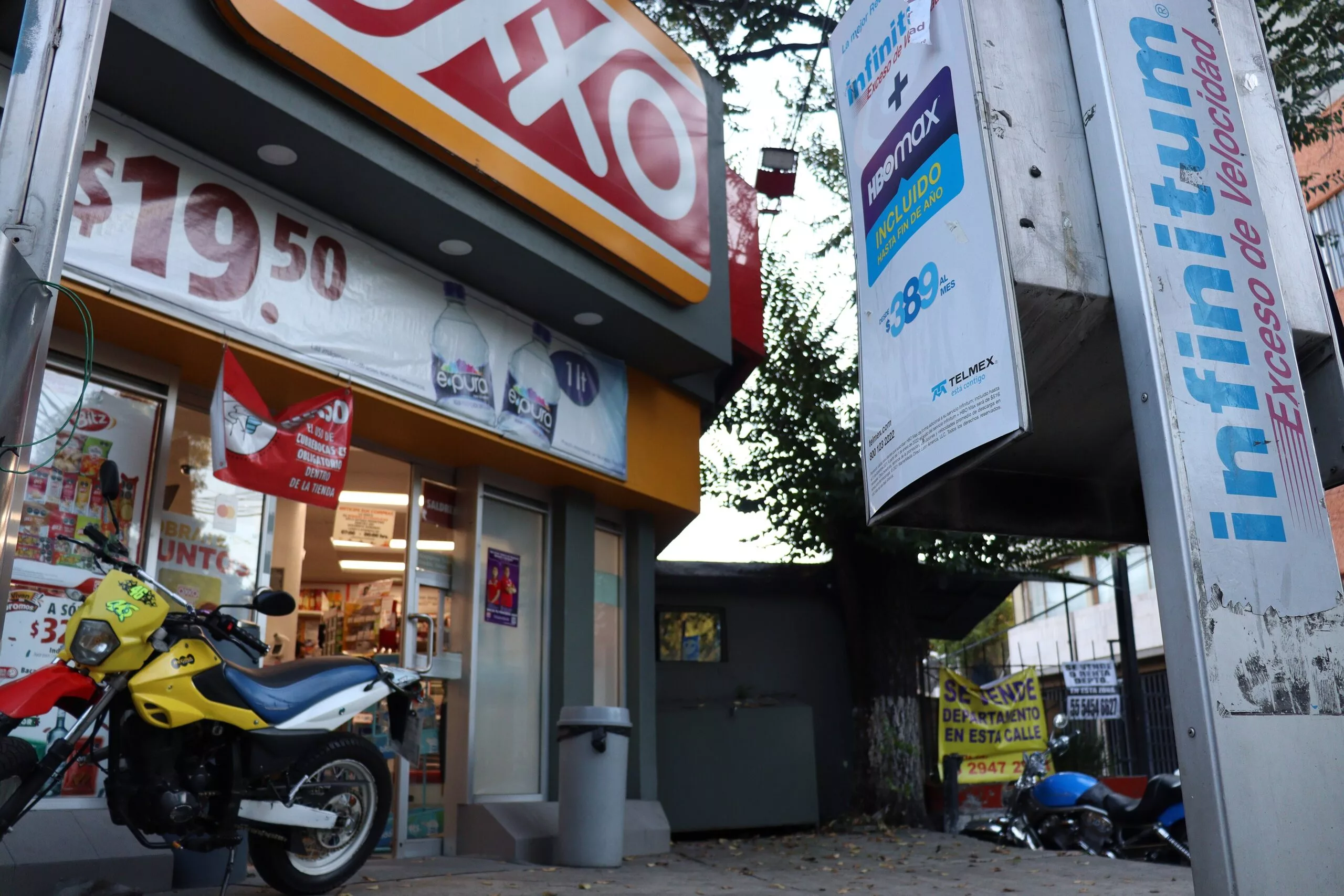
The Monday after Colombia’s opposition presidential win, at least seven Mexican firms in the IPC index registered notable price moves. FEMSA, the owner of the OXXO convenience chain and the largest independent Coca-Cola bottler globally, rose 2.04%, while its bottling subsidiary Coca-Cola FEMSA jumped 3.33%.
Our reporting has shown that FEMSA, Bimbo and Cemex have been actively weighing Colombia’s political shift since at least mid-2025, when the Petro–BanRep feud began to escalate and the opposition’s electoral prospects first solidified. The muted market reaction captured here reflects a political risk that these multinationals had already priced in over several quarters, rather than a sudden reassessment on election day.
Cemex, one of the world’s largest cement producers with significant Colombian housing and infrastructure exposure, gained 2.74%. Grupo Bimbo, the global bakery leader, fell 0.92%, while Genomma Lab dropped 3.39% and América Móvil declined 1.24%.
Strategists downplay a direct Colombia effect on Mexican corporates
Humberto Calzada, Chief Economist at Rankia Latinoamérica, told El Cronista that the Mexican market moves “do not seem to be directly related to the electoral result in Colombia,” attributing them instead to general market conditions, sector factors, and company-specific elements. Antonio Hernández, Director of Fundamental Analysis at Actinver, described the preliminary Colombian election results as “positive to neutral” for Mexican companies.
Hernández noted that Coca-Cola FEMSA, FEMSA and Cemex were already showing good volume performances, with FEMSA’s OXXO chain enjoying growth in traffic and same-store sales independent of the Colombian ballot outcome. The strategists’ consensus was clear: any Colombia effect was secondary to broader market dynamics.
Operational exposure versus market perception
All three Mexican multinationals maintain meaningful Colombian operations. FEMSA runs bottling plants and the Cruz Verde pharmacy chain in Colombia, Grupo Bimbo has a substantial bakery footprint, and Cemex supplies cement and building materials to Colombian housing and infrastructure projects.
During earlier periods of Colombian social unrest, Bimbo reported a 50-basis-point contraction in its adjusted EBITDA margin for Latin America, while Cemex said disruptions affected product deliveries. FEMSA, by contrast, cited its Colombian operations as contributing positively to sales growth in both its bottling and pharmacy divisions, suggesting a more resilient local business model.
What the diverging rate paths mean for investors
Banxico’s 6.50% rate supports Mexican consumption and investment by reducing financing costs for both companies and households, a tailwind for consumer-facing names like FEMSA and Bimbo. Colombia’s 12% rate, by contrast, raises borrowing costs and may weigh on construction demand, a potential headwind for Cemex’s Colombian operations.
A cross-Latam analysis cited by Bank of America projects Mexico’s policy rate at 6.50% by end-2026 and Colombia’s at 7%, though the latter figure now looks optimistic given the June hike to 12%. For international investors and expats with exposure to Latin American equities, the diverging monetary trajectories underscore the importance of country-level analysis rather than treating the region as a single bloc.
What to watch next across the Latin America desk
The key variable for Mexican corporates with Colombian exposure is whether BanRep’s tightening cycle stabilises or extends further, and how the new opposition government’s fiscal and regulatory stance affects consumer spending and infrastructure investment. No official corporate or central-bank source directly ties FEMSA, Bimbo or Cemex strategy to the Colombian election outcome combined with Banxico’s cut.
Any linkage remains interpretative, based on timing, regional exposure, and market commentary rather than documented decisions. Investors should watch for quarterly earnings calls from the three Mexican multinationals for any explicit guidance on Colombian market conditions and the impact of diverging Latin American rate cycles on consolidated results.
More: Latin America news in English, every day from The Rio Times.
Frequently Asked Questions
What is the Colombia effect on Mexican stocks?
The Colombia effect refers to how political and economic developments in Colombia influence the share prices of Mexican companies with Colombian operations. After the recent opposition presidential win, the effect was muted and mixed: FEMSA and Cemex rose while Grupo Bimbo dipped, and market strategists attributed the moves primarily to broader sector dynamics rather than the election result itself.
Why did Banxico cut rates to 6.50% in May 2026?
Banxico cut its benchmark rate by 25 basis points to 6.50% as the final step of an easing cycle that began in March 2024, driven by moderating Mexican inflation and concerns over domestic investment weakness. The central bank signalled a prolonged pause, with the decision grounded in Mexican macro conditions rather than external political events in Colombia or elsewhere.
Which Mexican companies have the most exposure to Colombia?
FEMSA operates Coca-Cola bottling plants and the Cruz Verde pharmacy chain in Colombia, Grupo Bimbo has a substantial bakery business there, and Cemex supplies cement and building materials to the Colombian construction sector. During past social disruptions, Bimbo and Cemex reported operational impacts while FEMSA proved more resilient, citing positive sales contributions from its Colombian divisions.
Connected Coverage
Salinas Pliego’s TV Azteca Faces $400 Million US Debt Lawsuit Pressure
This article was produced by The Rio Times’ automated newsroom system. How we use AI · Report an error · Editorial responsibility: Matthias Camenzind, Editor-in-Chief