Mexico Free-Medicine Network Goes National in August
Economy
Key Facts
Mexico is about to scale its Farmacias del Bienestar free-medicine network across the whole country, and buried in the plan is a quiet opening for private pharmacy chains.
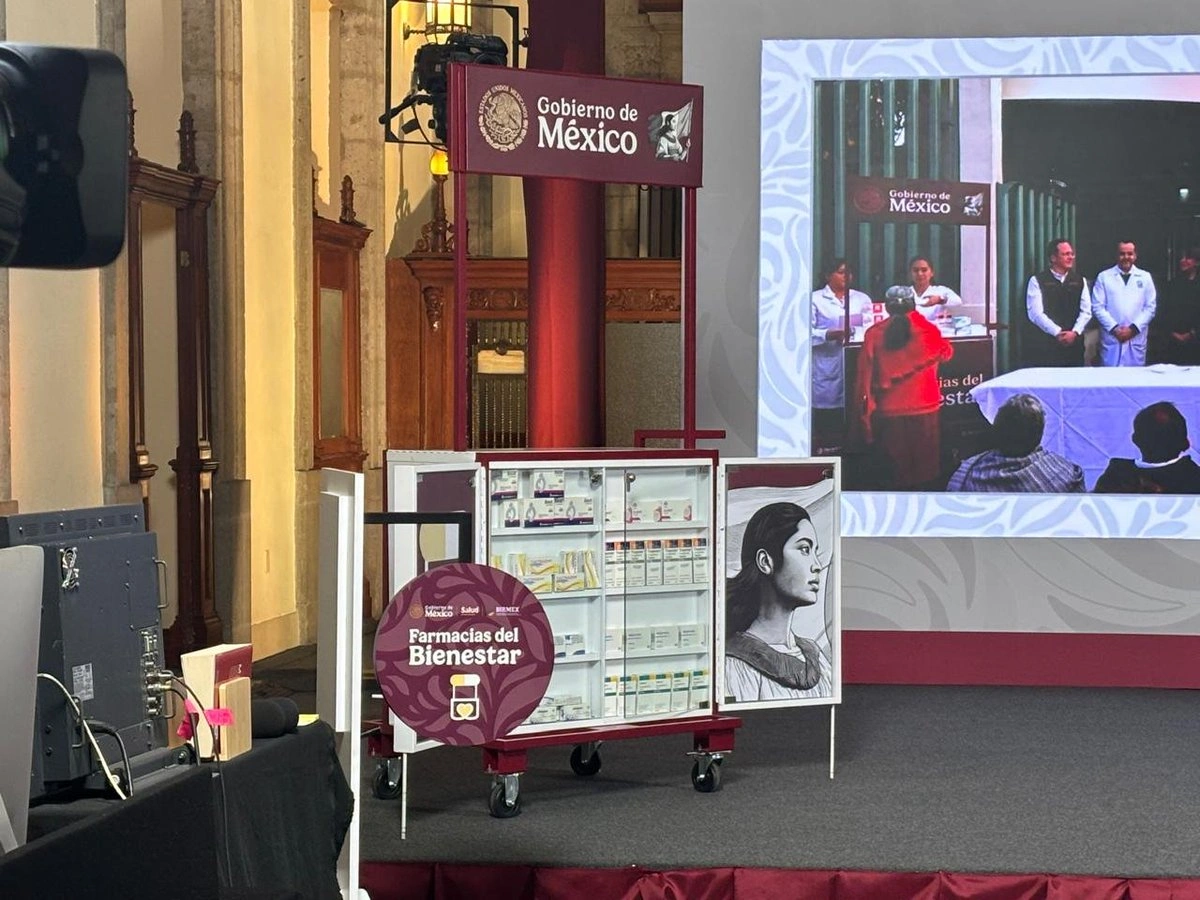
President Claudia Sheinbaum announced that the programme will begin its national rollout in August. For a reader abroad, the simple version is that Mexico is trying to hand out common medicines free of charge, close to where people live.
The aim is to remove a long-standing barrier in Mexican health care, where patients with a prescription often could not actually obtain the drug. The interesting detail, though, is how the government plans to plug the gaps.
How Farmacias del Bienestar works
The network hands out medicine through modules placed inside public health units and government food stores, tied to a home-visit programme in which nurses and doctors call on the elderly and people with disabilities.
Each outlet stocks twenty-two medicines, a list the government says covers about eighty percent of common needs, chiefly for chronic conditions such as diabetes and high blood pressure. Nurses have also been given wider power to write prescriptions.
So far the scheme has run only in the State of México, where roughly four hundred modules now operate and nurses have issued more than one hundred thousand prescriptions. The August launch is meant to carry it nationwide.
Officials say the supply chain is regulated by the country’s health-safety agency, and that a large central warehouse already supplies hospitals, handling cancer drugs for the whole country. The promise is a single system from warehouse to doorstep.
A rollout that is already running late
There is a wrinkle the government did not dwell on. When the programme launched in December, officials publicly set March of this year as the date for the national rollout.
That deadline came and went. Starting the wider rollout in August means the plan is arriving about five months behind its own stated schedule, a reminder that building supply chains is harder than announcing them.
Why private pharmacies are watching closely
The most consequential part of the plan is also the least noticed. Sheinbaum said that when a medicine is not available at a public point, the government is studying a network of private pharmacies where patients could collect it free, with the state footing the bill.
For investors, that is a potential new revenue channel. A government that pays private chains for every prescription it cannot fill itself would open a fresh, state-funded market for pharmacies with national reach and the systems to validate electronic prescriptions.
It also carries risks. The design could favour a few large operators able to meet the technology and logistics demands, and it creates an awkward incentive to send patients to a paid pharmacy rather than confirm the public stock was truly empty.
That tension sits at the heart of the story. A welfare programme built to cut costs for families could, through its back door, become a meaningful new income stream for the private sector it was meant to bypass.
What is Farmacias del Bienestar?
It is a Mexican government programme that distributes common medicines free of charge through modules in public health units and state food stores. It is tied to a home-visit scheme for the elderly and people with disabilities.
When does the national rollout begin?
The national rollout begins in August, after a pilot in the State of México. That is roughly five months later than the March date the government set when the programme launched in December.
How could it affect private pharmacy chains?
The government is studying a network of private pharmacies that would dispense medicines free when public stock runs out, paid by the state. That could create a new revenue channel, most likely for large chains with national reach.
Connected Coverage
For how Mexico is funding programmes like this, see our look at Mexico’s 2026 budget and its guarantee for welfare spending. For the country’s wider push into medicine supply, read our report on Mexico’s plan to build chips and pharmaceuticals at home.
More: Latin America news in English, every day from The Rio Times.
Frequently Asked Questions
What medicines are available at Farmacias del Bienestar and what conditions do they cover?
Each Farmacias del Bienestar outlet stocks twenty-two medicines, which the government says covers about eighty percent of common needs. The catalogue focuses chiefly on chronic conditions such as diabetes and high blood pressure.
When will Farmacias del Bienestar expand nationwide and how late is the rollout?
The national rollout is set to begin in August, making it five months behind schedule after the original plan targeted a March launch. Until now, the programme has only operated as a pilot in the State of México, where about four hundred modules currently run.
What happens when a Farmacias del Bienestar module runs out of medicine?
When public stock runs out, patients may be sent to private pharmacy chains that are paid by the state. This arrangement represents a quiet opening for private pharmacy chains within the otherwise publicly run programme.
This article was produced by The Rio Times’ automated newsroom system. How we use AI · Report an error
Read More from The Rio Times