Engines of Excess: Trump’s Tariffs Set China’s Flood Upon Us All
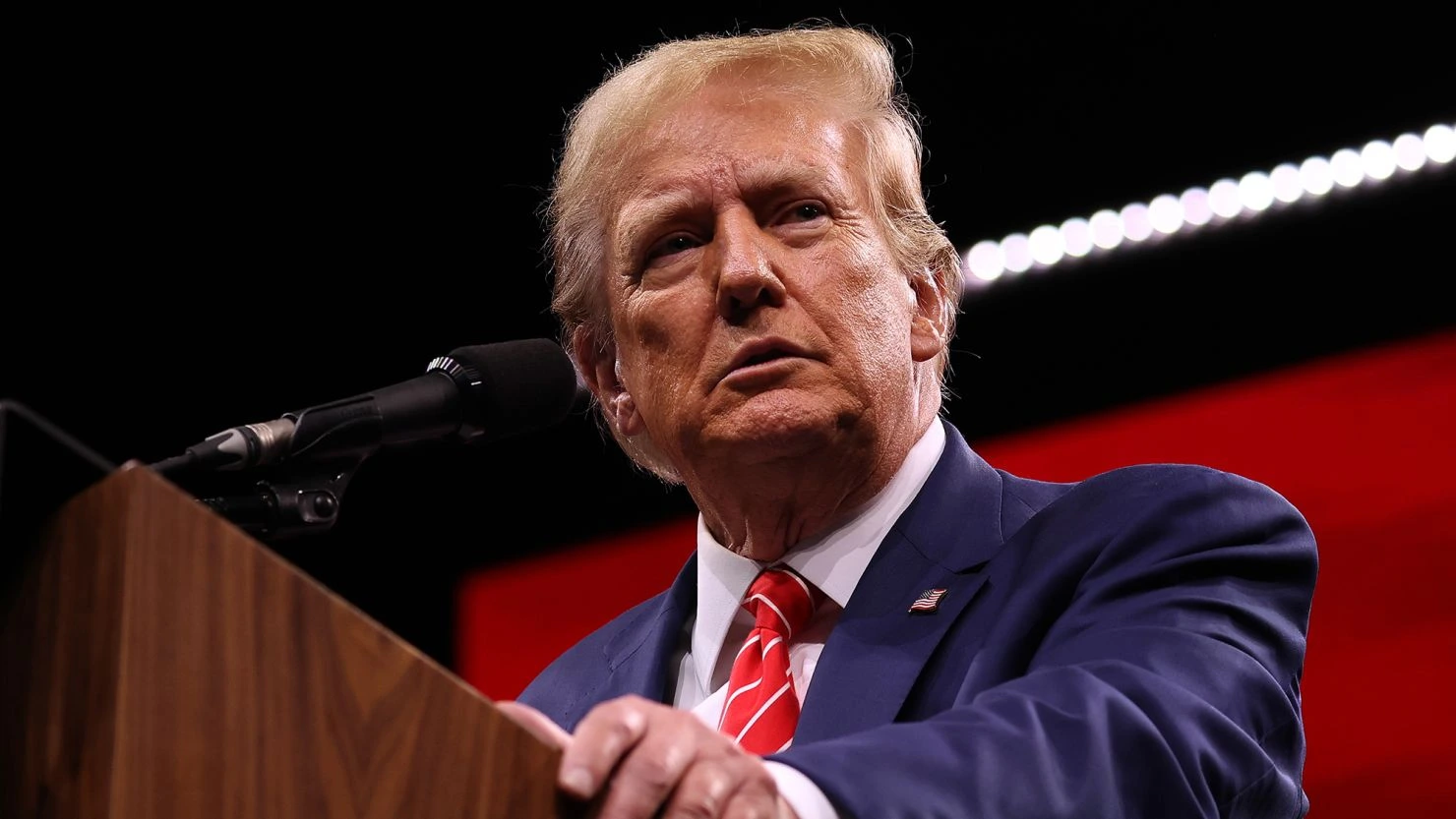
Donald Trump, newly reinstated in the White House, has brandished his boldest economic weapon yet: a 145% tariff on Chinese imports. Unveiled this week with his trademark swagger, the policy seeks to revive American manufacturing.
But rather than restoring equilibrium, it has primed a global tempest. China’s industrial colossus—relentless and unyielding—now finds its largest market fortified against it. Beijing’s factories, however, will not pause.
They cannot. Fueled by a model that thrives on ceaseless production, China will redirect its cascade of goods—steel, solar panels, textiles, electric vehicles—to every corner of the globe. The question is not whether this tide rises, but who will be swept under first.
China’s Machine: Relentless but Fragile
Picture a factory in Guangdong, its automated looms thrumming under the faint glow of “blacklighting,” weaving fabric without pause as AI oversees the dance of threads.
In Shanghai, steel mills roar, their furnaces casting an orange haze over the skyline; in Shenzhen, assembly lines whir, spitting out electric vehicle batteries at a relentless clip.
This is China’s industrial might—$3 trillion in exports in 2024, a haul that eclipses even America’s postwar zenith. State subsidies stoke this furnace: steel prices bolstered by government largesse, solar firms lifted by tax breaks.
Last year, textile exports alone hit $293.6 billion. Yet beneath the roar lies a brittleness. China’s consumers falter—a property crisis, 17% youth unemployment, and a savings culture keep household spending below 40% of GDP, a far cry from America’s 68%.
Exports, at 20% of GDP, are not a luxury but a lifeline. With Trump’s tariffs barring $600 billion in U.S.-bound goods, Beijing must either idle its machines—risking unrest—or flood the world with its surplus. History points to the latter.
Trump’s Tariffs: A Global Ripple Effect
The tariffs have not staunched China’s output; they’ve merely shifted its course. Steel beams, lithium batteries, and sneakers once bound for American ports now seek new harbors.
In 2024, exports to ASEAN leapt 12%, while Europe saw a 15% surge in Chinese EVs. China’s strategy is unapologetic: build vast capacity, subsidize relentlessly, and saturate markets with goods too cheap to resist.
Critics call it overcapacity; Beijing deems it efficiency. The outcome is undeniable—a world awash in Chinese products, with Trump’s policy amplifying the current.
ASEAN: The First to Face the Surge
Southeast Asia stands at the tide’s edge, its 680 million people bracing for impact. In Indonesia, the looms of Streetex—once a textile titan employing 50,000—have fallen silent, drowned by a flood of cheap Chinese fabric.
Since 2023, 60 textile firms have shuttered, leaving 250,000 workers jobless. Malaysia’s solar sector reels too: Jinko Solar’s $800 million Penang plant lies dormant, a casualty of redirected Chinese output.
In Thailand, the “Detroit of Asia,” auto production has slumped 30% since 2024, as BYD’s sleek EVs roll off automated lines in Rayong, their hum outpacing the clatter of fading Japanese factories.
ASEAN fights back, but the battle is steep. Indonesia mulls 200% duties on Chinese imports; Thailand imposes a 7% VAT on low-cost goods; Vietnam has banned e-commerce giant Temu.
These are bulwarks, not solutions. China’s $523.7 billion in exports to ASEAN last year overshadows the region’s own trade flows.
Yet glimmers of strategy emerge—Indonesia negotiates a trade pact with the EU, Thailand pivots to become an EV hub under the Regional Comprehensive Economic Partnership (RCEP). These steps promise resilience, but time is a luxury the region lacks.
Europe: A Shoreline Under Siege
Across the Atlantic, Europe hears the tide approaching. Chinese EVs, their motors purring at half the price of Volkswagen’s, claimed 8% of the market in 2024—double their share from two years prior.
In Italy’s Prato, textile workers face a second reckoning as Chinese fabrics, stacked high in warehouses, threaten a fresh wave of layoffs. Subsidized steel pours in too, its clang echoing through construction sites despite EU duties topping 40%.
The burden falls unevenly. Southern Europe—Greece, Portugal, Spain—lacks the industrial heft to compete, its small firms teetering. In Germany, BMW and Mercedes weather the storm but report profit squeezes as Chinese EVs encroach.
The EU counters with stricter anti-dumping rules and green-tech subsidies, yet these feel like sandcastles against a swelling sea. With America’s market closed, Europe’s exposure to China’s $3 trillion export machine will only deepen.
The U.S.: A Double-Edged Sword
Trump’s tariffs shield American shores—or so he hopes. But as China pivots its goods to ASEAN and Europe, U.S. firms lose access to cheap inputs, from steel to battery components.
Prices may climb, stoking inflation, while supply chain snarls hinder industries still tethered to global trade. The dream of reshoring manufacturing faces hurdles—labor costs, aging infrastructure—that tariffs alone cannot bridge. America may stand apart from the tide, but it cannot escape its ripples.
A World Awash
This is no mere trade spat; it is a saga of survival. ASEAN’s textile workers, Europe’s small manufacturers, and emerging industries from Africa to Latin America face submersion beneath China’s export surge.
Beijing remains unbowed, its factories humming, its surplus seeking buyers. Trump’s tariffs have unleashed a force that spares no market.
Who will falter under this rising tide? Who will find footing and endure? The answers are unwritten, but the stakes—economic, human, global—tower like waves on the horizon.
Editorial responsibility: Matthias Camenzind, Editor-in-Chief · Editorial standards · Report an error