Fuse Failure Shuts 161 Ecuador Oil Wells at Referendum-Hit ITT Block
Ecuador · Energy
Key Facts
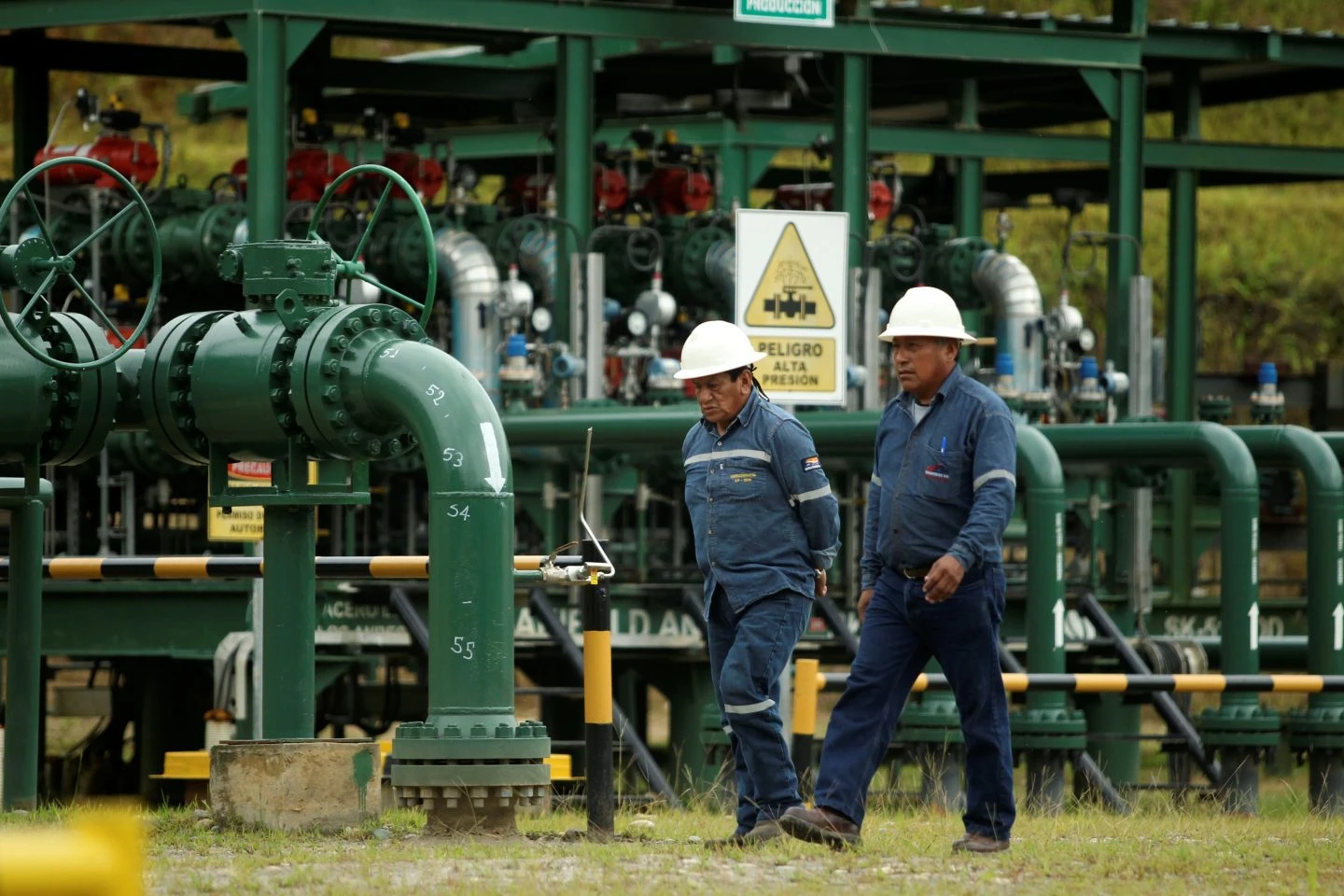
—What happened. A blown fuse at a processing plant triggered the emergency shutdown system at Ecuador’s Block 43-ITT, automatically switching off 161 oil wells between September 5 and 7, 2026.
—The cost. Petroecuador puts the lost volume at about 25,000 barrels. National output fell from roughly 375,000 barrels per day to a trough of 344,000 before recovering.
—The recovery. Crews reactivated the wells progressively; the hydrocarbons regulator recorded a rebound to nearly 361,000 bpd on Wednesday, and full stabilization was expected by Thursday, September 10.
—The block. ITT sits inside the Yasuní National Park — the field Ecuadorians voted to close in a 2023 referendum. It still produces around 40,000 bpd.
—The backdrop. Ecuador ran a US$5.3 billion fiscal deficit in 2025, oil is its top export, and Brent crude just broke US$105 — every lost barrel is expensive, and every produced one unusually valuable.
—The plan. Petroecuador is investing US$632 million in 2026, roughly 50% more than last year, to hold national production near 370,000 bpd.
A single faulty fuse switched off 161 wells in Ecuador’s most controversial oil field last weekend, briefly knocking national output down by some 30,000 barrels a day — a small accident with an outsized political echo, because the field in question is the one voters ordered closed three years ago.
A Fuse, a Pressure Spike and 161 Silent Wells
Petroecuador’s explanation, delivered after reporters noticed a sharp production drop, is almost banal. A fuse failed at one of the block’s plants. Pressure rose in the pipelines carrying crude out of the field. The emergency shutdown system did exactly what it is designed to do — and turned off 161 wells at once, sometime over the weekend of September 5 to 7.
The state company estimates the lost volume at around 25,000 barrels. The national production curve tells the story more vividly: output had been running near 375,000 barrels per day, fell to 344,000 at the trough, and had already climbed back to nearly 361,000 by Wednesday, according to the Regulation and Control Agency for Hydrocarbons (ARCH). Petroecuador said systems would be fully stabilized by Thursday, September 10.
No spill, no injuries, no sabotage — a safety system working as intended. But the location turned a routine incident into national news.
The Most Political Oil Field in Ecuador
Block 43, known as ITT — for the Ishpingo, Tambococha and Tiputini fields — lies beneath the Yasuní National Park in the Amazon, one of the most biodiverse places on Earth. In August 2023, Ecuadorians voted in a national referendum to keep the ITT crude in the ground forever. Three years later, the block still produces around 40,000 barrels per day, down just 3.6% year on year in the first four months of 2026.
President Daniel Noboa’s government says it respects the vote but argues that closing the field properly will take years — and Petroecuador has warned of multibillion-dollar losses over two decades if the wells are cemented. Environmental groups counter that every month of delay is a breach of the popular mandate. A weekend in which 161 ITT wells sat idle gave both sides a preview of the argument to come: for activists, proof that the shutdown is technically trivial; for the treasury, a reminder of what disappears.
Live Market IntelligenceCommodities — Live Market Board
Rio Times · Live Market Intelligence
Commodities — Live Market Board
-0.03%
| Instrument | Last | Change | YoY | Prev. | High | Low | Volume |
|---|---|---|---|---|---|---|---|
| GOLD | 4,461 | +1.78% | +33.20% | 4,383 | 4,503 | 4,421 | 139,824 |
| SILVER | 65.59 | +1.26% | +73.05% | 64.77 | 66.98 | 64.81 | 46,406 |
| BRENT | 88.88 | -0.03% | +34.42% | 88.91 | 90.07 | 88.12 | 29,713 |
| WTI | 83.11 | -0.11% | +31.57% | 83.20 | 84.35 | 82.40 | 166,848 |
| COPPER | 6.61 | +0.03% | +46.70% | 6.61 | 6.71 | 6.61 | 39,543 |
| LITHIUM | 75.20 | +1.47% | +62.95% | 74.11 | 75.80 | 75.08 | 89,275 |
| IRON ORE | 161.91 | — | +58.10% | 161.91 | 161.91 | 1 | |
| SOY | 1,184 | +3.20% | +17.05% | 1,148 | 1,199 | 1,168 | 163,179 |
| CORN | 480.50 | +10.02% | +29.34% | 436.75 | 480.75 | 459.50 | 341,248 |
| WHEAT | 655.00 | +3.93% | +29.70% | 630.25 | 657.75 | 631.50 | 128,793 |
| COFFEE | 317.25 | -5.51% | +0.67% | 335.75 | 321.20 | 313.55 | 21,747 |
| SUGAR | 16.43 | -1.79% | -3.01% | 16.73 | 17.11 | 16.22 | 171,992 |
| COCOA | 5,719 | +3.18% | -34.96% | 5,543 | 5,779 | 5,574 | 26,773 |
| ORANGE JUICE | 138.55 | -0.47% | -45.38% | 139.20 | 141.05 | 137.50 | 703 |
| COTTON | 85.03 | +2.33% | +26.78% | 83.09 | 82.90 | 81.96 | 16,546 |
| BEEF | 223.60 | -3.93% | -5.18% | 232.75 | 226.40 | 223.00 | 16,126 |
| CATTLE | 339.10 | -3.16% | -1.82% | 350.17 | 345.50 | 338.60 | 10,164 |
| USD/BRL | 5.16 | +0.01% | -5.13% | 5.16 | 5.18 | 5.14 | — |
The Fiscal Math Behind Every Barrel
Ecuador can ill afford idle wells. The country’s fiscal deficit widened to US$5.3 billion in 2025 from US$3.11 billion the year before, according to the Observatorio de Política Fiscal. Crude is the country’s top export earner, and last year’s numbers were already grim: production fell 9% to an average of 349,167 bpd, exports dropped 7% in volume, and the average realized price slipped to US$58.63 a barrel from US$68.56 in 2024. Starved of cash, Petroecuador cut investment by 80% between January and November 2025, to US$357 million.
This year was supposed to be the turnaround. The company plans US$632 million of investment in 2026 — nearly 50% more — with a 36-well drilling campaign, seven contracted rigs and a production target of 369,000 to 370,000 bpd. High prices are helping: exports reached US$2.98 billion between January and April, up 3.8% year on year despite volumes falling 7.7%. And with Brent crude now above US$105 a barrel, the price umbrella over Quito’s budget is wide — as long as the oil actually flows.
A Fragile System, Once Again
The fuse incident is small compared to what Ecuador’s oil infrastructure has already survived. In July 2025, regressive erosion of the Coca and Loco rivers forced the shutdown of both major pipelines, the SOTE and the OCP, dragging national output to an all-time low of 146,000 bpd and shutting the country’s three biggest blocks for most of the month. Recovery took weeks.
That is the uncomfortable context of a blown fuse: a system this centralized, this underinvested and this exposed to nature does not need sabotage to stop. It needs only a weak component — and a country that cannot decide whether it wants the oil at all.
What Comes Next
Watch the ARCH daily production figures over the coming days for confirmation that the 375,000-bpd baseline is holding. The larger fight — over when, and whether, Block 43-ITT will ever be switched off deliberately, well by well — returns to the courts and the streets. This weekend, Ecuador got an accidental rehearsal of both outcomes.
More: Ecuador news in English, every day from The Rio Times.
Frequently Asked Questions
Why did Ecuador shut 161 oil wells?
A fuse failed at a plant in Block 43-ITT between September 5 and 7, 2026. The resulting pressure increase in the crude pipelines activated the automatic emergency shutdown system, which switched off 161 wells as a safety measure. There was no spill or sabotage.
How much oil production did Ecuador lose?
Petroecuador estimates about 25,000 barrels in total. National output fell from roughly 375,000 barrels per day to a low of 344,000, then recovered to nearly 361,000 by Wednesday, September 9, with full stabilization expected by September 10.
Why is Block 43-ITT controversial?
The block lies under the Yasuní National Park in the Amazon. In an August 2023 referendum, Ecuadorians voted to keep its crude permanently underground — yet it still produces around 40,000 barrels per day while the government argues an orderly closure will take years.
Sources
Radio Centro (Petroecuador explanation, ARCH recovery data, September 9, 2026) · Ecuavisa (fuse failure, September 10, 2026) · BNamericas (2025 results, fiscal deficit, January 2026) · Industrial Info Resources (June 2026 output, export data) · Primicias (2026 investment plan, March 2026)
Connected Coverage
Oil above US$105 changes the math for every producer in Latin America.
Brent Crude Oil Breaks US$105 as Saudi Output Sinks to 1990 Low
This article was produced by The Rio Times’ automated newsroom system. How we use AI · Report an error · Editorial responsibility: Matthias Camenzind, Editor-in-Chief