Dollarization in Ecuador, a straitjacket that no candidate dares to question
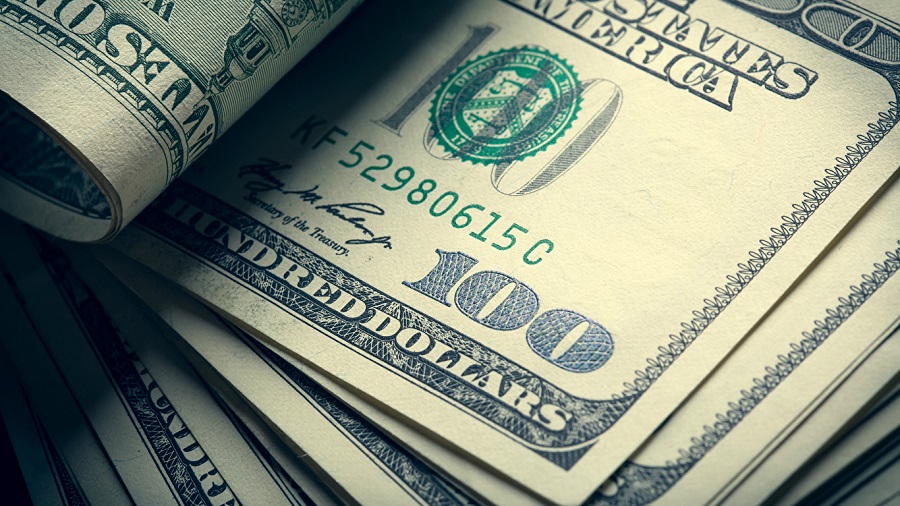
RIO DE JANEIRO, BRAZIL – Ecuador has a love-hate relationship with its currency, the dollar. On the one hand, dollarization has made it possible to control inflation (in 1999, just before the demise of the sucre, it reached 100% per year) and has been a dike against any adventure that breaks with the scripts of economic orthodoxy.
On the other hand, the country has lost a fundamental tool: it cannot issue banknotes or devalue. When the deficit soars, there is no alternative but to cut spending or go into debt. Ecuador is today a country rescued by the IMF. Every election campaign activates the discussion on the benefits or problems of dollarization.

Is it a guarantee of stability or a drag on growth? The only consensus is that any candidate who insinuates any criticism of dollarization will become a political corpse in the eyes of the public.
“Dollarization came as a solution to a monstrous crisis,” explains Vicente Albornoz, dean of economics at the Quito-based Universidad de la Americas. “In 1998, four of the big banks went bankrupt and we had been experiencing 40 years of high inflation. Ecuadorians are engraved with that crisis and dollarization came as a solution to the problem. Inflation fell violently in January 2003 and since 2015 it has been close to zero. Dollarization is tremendously popular, any candidate who speaks against it will be destroyed”, summarizes Albornoz.
Former President Rafael Correa (2007-2017) was always aware of this. When he had been in office for two years, he declared himself a critic of dollarization. As an economist, he said that it had been “the worst technical-economic absurdity that has been carried out in the country”, but he immediately admitted that “getting out of dollarization is tremendously chaotic”. “So”, he admitted, “we have decided to keep it.”
Leonardo Izquierdo Montoya, dean of the Faculty of Economics of the Universidad Técnica Particular de Loja, says that the beginning of dollarization produced an “impressive loss in thousands of families, who became poorer.” But he considers that, with the passing of the years, the balance is positive. “We have inflation control and, above all, confidence in the currency. Another issue is macroeconomic stability, because a stable currency allows you to project in the long term.”
Albornoz adds a political dimension to the cost-benefit analysis. “It forces us to have discipline,” he says, “if we didn’t have it, after 10 years of Correa we would be in a situation similar to the Venezuelans. Dollarization is a block to the temptations of unlimited deficits.”
The problems begin, precisely, when the country cannot bring in the dollars it needs to finance its expenses. Izquierdo Montoya says that the country is forced “to export more than it imports, because it cannot print currency. Dollarization is negative when we do not achieve external competitiveness, when our neighbors devalue their currency and force us to lower costs,” he explains.
Ecuador closed 2020 with a public deficit of US$6.9 billion, equivalent to 7% of GDP. But without emissions or devaluation, the only way to cover this fiscal deficit is with unpopular adjustments or foreign loans.
This year, the IMF came to Ecuador’s rescue with a loan of US$ 6.5 billion, a figure that rises to $7.4 billion when other multilaterals are added. Last year, the government of Lenin Moreno agreed to postpone debt payments for four years. However, according to World Bank forecasts, Ecuador will take the longest, together with Argentina, to recover pre-crisis values: until 2024, two years longer than the rest of the countries in the region.
The scenario awaiting the new president is not the best. Poverty is around 30% and unemployment is 5.7%, a figure that hides the fact that only 34% of Ecuadorians earn the 400 dollars per month needed to have what is considered an “adequate job”. The average salary of Ecuadorians barely exceeds $300. In contrast, the basic family basket – which includes food, clothing, housing and services for a family of four” is $712. The vital basket, which includes fewer items, is also higher than most salaries: US$501.
“Dollarization was a serious mistake, it was an IMF experiment,” says Argentine economist Matías Vernengo, a professor at Bucknell University, from the United States. “Ecuador is not doing well, because dollarization prevents it from accumulating in domestic currency and hinders the national development project; but it is not possible to get out of it,” he admits.
“One of the possible ways is to carry out social programs in a currency issued by the national government, a fiscal dollar that can fluctuate,” he explains. Thus we arrive to this Sunday’s runoff, when two candidates from ideological antipodes will fight for the presidency.
Andrés Arauz, Correa’s political heir, has insisted throughout the campaign that he will not abandon dollarization if he reaches the Carondelet seat of government. “It will continue and will be strengthened. We are going to export more, to generate greater consumption of Ecuadorian products and to preserve and encourage dollars to stay in Ecuador,” he has repeated.
Liberal Guillermo Lasso is a staunch defender of dollarization. Lasso promotes greater economic openness and even reducing to zero the 5% tax on the outflow of dollars abroad. In any case, neither of them dares to question the model. Their voters would not forgive them.
Source: El Pais
More: Ecuador news in English, every day from The Rio Times.
This article was drafted with automated assistance and reviewed before publication. How we use AI · Report an error · Editorial responsibility: Matthias Camenzind, Editor-in-Chief