Cuba Denies Contract for 90 Fuel Shipments US Seized

CUBA · SANCTIONS
Key Facts
- —The country Cuba is a communist-run island about 90 miles (145 km) from Florida, under US sanctions for six decades and short of fuel.
- —What happened Cuba’s energy minister said on Monday 12 October that no contract of any kind existed with ENETEC S.A., the buyer US agents named.
- —The seizure US agents announced on Wednesday 7 October that they had seized 71 biodiesel shipments in Florida and were holding 19 more in Houston, Texas.
- —The value The 90 fuel shipments, about 615,000 gallons in total, are worth more than US$2.8 million, according to US Immigration and Customs Enforcement (ICE).
- —Prediction markets Polymarket gives US military action against Cuba by 31 December an 11% chance (13 October, 2:18 a.m. ET).
- —What it means for you US fuel exporters risk seizure and a federal investigation if their cargo is bound for a sanctioned Cuban state buyer such as ENETEC.
Cuba’s government denies it ordered the 90 fuel shipments that US agents seized or detained at ports in Florida and Texas. Washington says the biodiesel was headed to ENETEC S.A., a Havana fuel wholesaler under US sanctions.
Energy and Mines Minister Vicente de la O Levy said on Monday 12 October that there was “no contract of any kind” with ENETEC. For US exporters, the case shows that customs officers now stop Cuba-bound fuel at American ports before it sails.
What Cuba’s Energy Minister Said
Vicente de la O Levy is Cuba’s Minister of Energy and Mines, the cabinet member in charge of oil, power plants and mining. He spoke in an interview with an international news agency at his office in Havana.
His remarks were reported on Monday by CiberCuba, Diario de Cuba and Periódico Cubano. All three are independent Cuban news sites that are critical of the government.
According to all three, the minister said there was no contract of any kind with ENETEC S.A. for the fuel shipments. He added that no Cuban state company had managed to win a fuel contract, large or small.
He played down the fuel that reaches Cuba legally from the United States, saying it covers less than 3% of the country’s needs.
He pointed to solar power instead, saying Cuba has installed 144 solar parks with 1,418 megawatts of capacity. About 40% of its electricity still comes from domestic oil, he said.
What US Agents Seized
The seizure of the 90 shipments was announced on Wednesday 7 October by Homeland Security Investigations (HSI), the investigative arm of ICE. HSI worked with US Customs and Border Protection (CBP) and the Commerce Department’s Bureau of Industry and Security (BIS), which polices export controls.
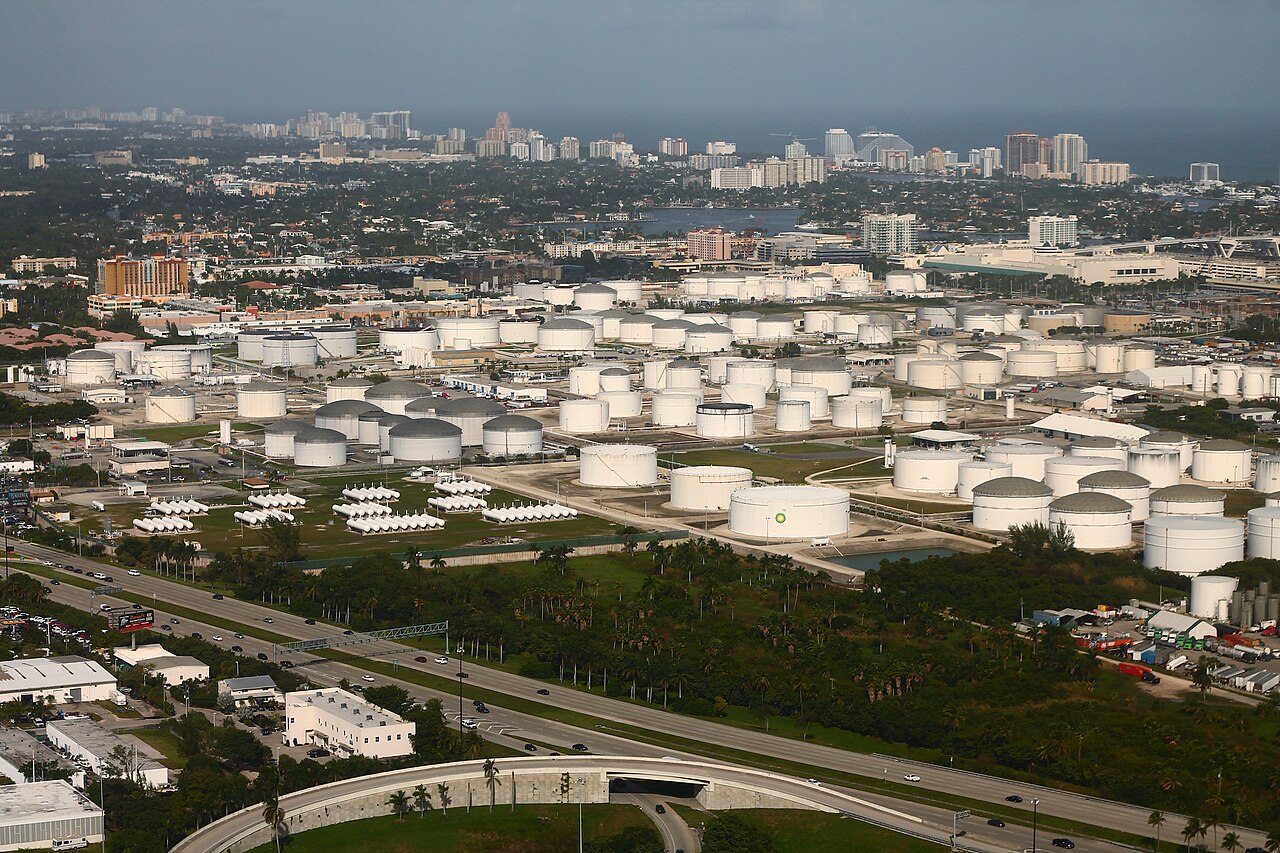
According to the ICE news release, CBP flagged the fuel shipments in early September through intelligence and trade-data analysis. Agents seized 71 shipments, about 496,000 gallons, at Port Everglades in Florida.
Another 19 shipments, about 119,000 gallons, are being detained at the Port of Houston in Texas. Investigators say the Cuban government used ENETEC to receive fuel exported illegally from the United States.
They cite suspected breaches of US export rules and the International Emergency Economic Powers Act, the law behind most US sanctions.
The US Treasury’s Office of Foreign Assets Control (OFAC) added ENETEC to its sanctions list on 13 July 2026. Its entry describes a Havana wholesaler of solid, liquid and gaseous fuels, set up in December 2019.
José R. Figueroa leads HSI in Miami. He said agents will “deny the Cuban government access to resources obtained in violation of U.S. law.”
No exporter has been named and no charges have been announced.
How Havana’s Message Shifted
Havana’s tone had been different. Deputy Foreign Minister Carlos Fernández de Cossío called intercepting Cuba-bound fuel ships in international waters illegal, “as piracy and plunder are illegal.”
CiberCuba and Diario de Cuba both carried that remark. On Monday, the energy minister took a different line and denied any Cuban state contract behind the seized fuel shipments.
What It Means for You
For US exporters and shippers, the final buyer now decides whether a cargo sails. Fuel bound for a sanctioned end user such as ENETEC can turn a routine sale into a federal case.
Legal fuel trade with Cuba is still growing. The U.S.-Cuba Trade and Economic Council, a private, not-for-profit membership group, puts US fuel exports to Cuba at US$74.8 million in August.
That brings the January to August total to US$231.7 million, the council says, after record monthly sales. Periódico Cubano and CiberCuba report that Washington allows such sales to Cuba’s private sector.
Deliveries to the Cuban state are another matter. ICE treats fuel shipments sent to the government through ENETEC as illegal exports.
What Prediction Markets Say
On Polymarket, bets put the chance of US military action against Cuba by 31 December at 11% on 13 October at 2:18 a.m. ET. About US$5.4 million has been traded on that deadline, and about US$7.6 million across the whole market.
A separate Polymarket contract gives a 10.5% chance that Miguel Díaz-Canel, Cuba’s president, is out as the country’s leader by 31 December. That deadline has drawn about US$746,000 in bets.
Why we show this: prediction markets turn real-money bets into a live probability that moves within minutes of the news, which is why investors, campaigns and newsrooms in the United States now follow them closely. We show them next to polls and official results, never instead of them.
What Is Not Known
US agencies have not named the American exporters or said whether anyone will be charged. They have not said whether the 19 shipments held in Houston will be formally seized.
Cuba’s minister did not explain why US agents traced the fuel to ENETEC. It is also unclear who, if anyone in Cuba, ordered the fuel shipments, and what will happen to the seized biodiesel.
More: Cuba news in English, every day from The Rio Times.
Frequently Asked Questions
What is ENETEC S.A.?
ENETEC S.A. is a Havana-based fuel wholesaler set up in December 2019, according to the US Treasury. The United States placed it under sanctions on 13 July 2026.
Can US companies legally sell fuel to Cuba?
Some can. Washington allows fuel sales to Cuba’s private sector, Cuban outlets report. Federal agents treat fuel sent to a sanctioned state firm such as ENETEC as a suspected breach of US export law.
What did Cuba’s energy minister say about the fuel shipments?
Vicente de la O Levy said on Monday 12 October that there was no contract of any kind with ENETEC. He said no Cuban state company had won a fuel contract, large or small.
Has anyone been charged over the seized fuel?
No charges had been announced when US agencies described the seizures on Wednesday 7 October. Homeland Security Investigations and its partners say the investigation is continuing.
Sources: US Immigration and Customs Enforcement (HSI Miami news release), 7 October 2026; US Treasury, Office of Foreign Assets Control (recent actions), 13 July 2026; CiberCuba, 12 October 2026; Diario de Cuba, 12 October 2026; Periódico Cubano, 12 October 2026; Diario de Cuba (Fernández de Cossío), 7 October 2026; U.S.-Cuba Trade and Economic Council, 8 October 2026.
This article was produced by The Rio Times’ automated newsroom system. How we use AI · Report an error · Editorial responsibility: Matthias Camenzind, Editor-in-Chief