Bitcoin Falls 2.08% to US$84,383 on 23 September 2026, and Stablecoins Still Carry Latin America’s Crypto Trade
Key Facts
- —The country. Brazil has 213.6 million people and has been governed by President Lula da Silva since 1 January 2023. Voters go to the polls on 4 October 2026.
- —The money. Brazil’s currency is the real, near 5.13 to the US dollar. Argentina’s peso trades near 1,515 officially and about 1,535 on the parallel market.
- —The background. A stablecoin is a crypto token pegged to the US dollar; USDT and USDC are the two biggest. Pix is Brazil’s instant bank-payment system.
- —The news. Bitcoin closed Wednesday 23 September 2026 at US$84,383, down 2.08%, after a rally earlier in the week had carried it above US$87,000.
- —What is disputed. A desk check compared this with US$86,603 from Monday 21 September. That is a different trading day; Tuesday closed at US$86,198, so the fall holds.
- —What it means for you. For most people in the region the daily Bitcoin move matters less than stablecoins, which now carry salaries, savings and cross-border payments.
- —The caveat. Exchange volumes are self-reported and hard to audit, and a large Bitcoin options expiry on Friday could move prices sharply either way.
Today’s Focus
Bitcoin closed Wednesday at US$84,383, down 2.08 percent, after a retreat from earlier strength above US$87,000. The pullback reflected profit-taking and consolidation following strong inflows into US spot-Bitcoin exchange-traded funds.
Major tokens tracked Bitcoin lower. Ethereum settled at US$2,685, down 2.47 percent, while Solana fell 2.98 percent to US$114.98. XRP lost 4.53 percent to US$1.5006, the sharpest decline among the major names.
For Latin America, the more consequential story remains stablecoins. Dollar-linked tokens made up 98 percent of Brazil’s reported first-quarter crypto turnover and more than 70 percent of Argentine purchases, reflecting their use as inflation hedges and payment rails.
El Salvador’s large Bitcoin treasury has not translated into broad remittance use. Digital-currency remittances reached only US$35.4 million in the first half of 2026, just 0.7 percent of total remittances.
What matters today. The daily Bitcoin move matters less for Latin America than the region’s deepening reliance on dollar-linked stablecoins for savings, salaries and cross-border payments.
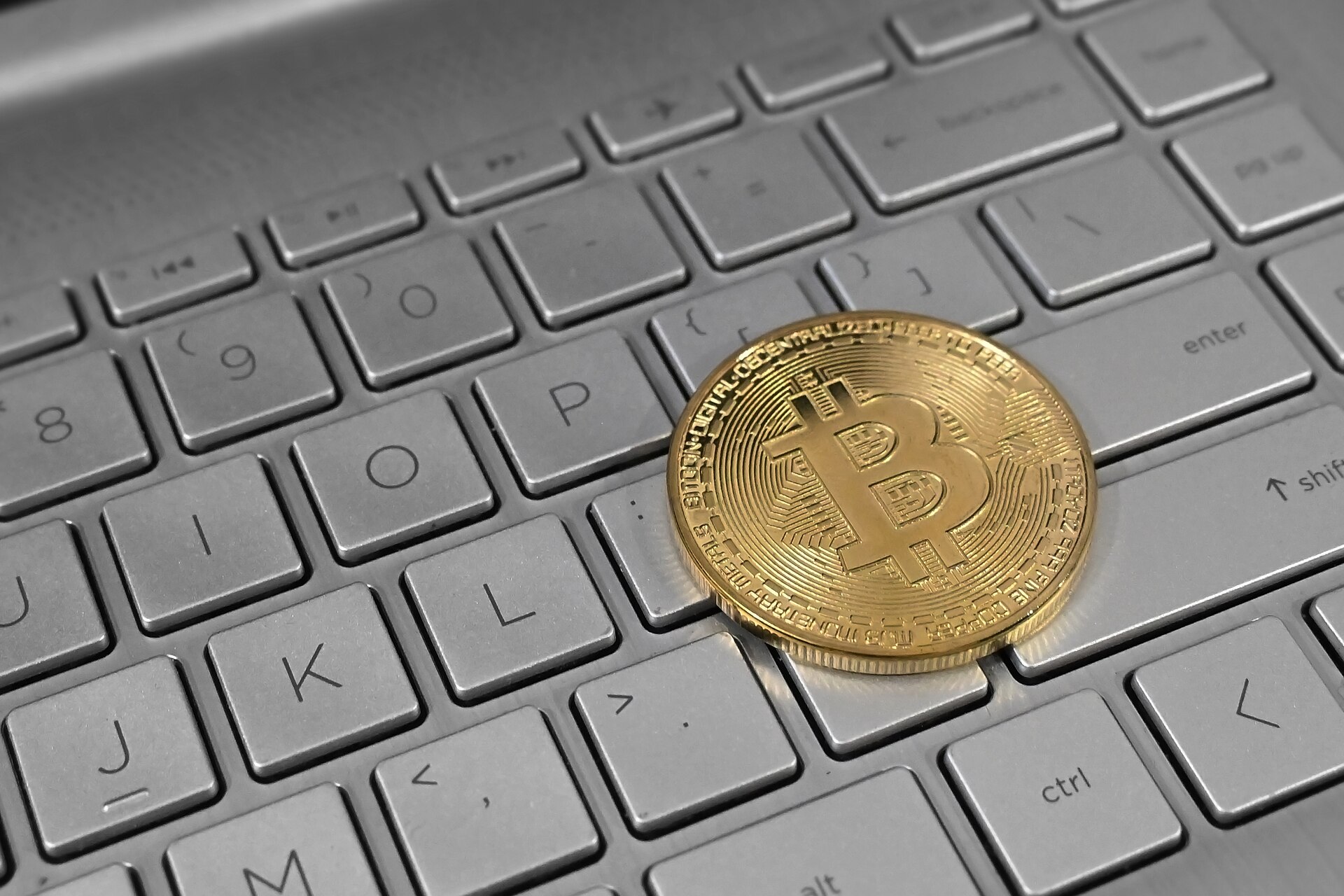
01 The session in one read
Bitcoin closed Wednesday at US$84,383, a decline of 2.08 percent, as traders locked in gains after the coin’s push above US$87,000. The drop came despite a run of strong inflows into US spot-Bitcoin exchange-traded funds.
The wider crypto market followed the flagship lower. Ethereum settled at US$2,685, down 2.47 percent, while Solana lost 2.98 percent to US$114.98 and XRP slid 4.53 percent to US$1.5006.
B
i
t
c
o
i
n
i
s
t
a
k
i
n
g
a
b
r
e
a
t
h
e
r
a
f
t
e
r
a
s
t
r
o
n
g
r
u
n
,
w
h
i
l
e
a
l
t
c
o
i
n
s
a
b
s
o
r
b
h
e
a
v
i
e
r
s
e
l
l
i
n
g
.
T
h
e
v
a
r
i
a
b
l
e
t
o
w
a
t
c
h
i
s
w
h
e
t
h
e
r
F
r
i
d
a
y
’
s
U
S
US$1
5
.
6
b
i
l
l
i
o
n
B
i
t
c
o
i
n
o
p
t
i
o
n
s
e
x
p
i
r
y
o
n
D
e
r
i
b
i
t
a
m
p
l
i
f
i
e
s
v
o
l
a
t
i
l
i
t
y
o
r
k
e
e
p
s
t
h
e
f
l
a
g
s
h
i
p
c
o
i
n
r
a
n
g
e
–
b
o
u
n
d
.
02 The board
Ethereum’s 2.47 percent decline outpaced Bitcoin’s 2.08 percent fall, a sign that traders rotated away from riskier altcoins during the pullback. Solana’s drop to US$114.98 left it the weakest of the major smart-contract tokens.
XRP was the session’s clear laggard at minus 4.53 percent, settling at US$1.5006. The sharper loss reflected thinner liquidity and the token’s sensitivity to regulatory headlines after the Senate failed to advance the CLARITY Act.
| Asset | Level | Change |
|---|---|---|
| Bitcoin | US$84,383 | -2.08% |
| Ethereum | US$2,685 | -2.47% |
| Solana | US$114.98 | -2.98% |
| XRP | US$1.5006 | -4.53% |
Source: RT close, 2026-09-23. Where a commodity has no spot feed, an exchange-traded tracker or leading producer is shown as a labelled proxy.
Live Market IntelligenceThe live market board
Rio Times · Live Market Intelligence
Latin America — Cross-Market Board
| Instrument | Last | Change | YoY | Prev. | High | Low | Volume |
|---|---|---|---|---|---|---|---|
| IBOV | 185,814.09 | -0.86% | +21.85% | 187,422.92 | 168,310 | 167,142 | — |
| IPSA | 11,449.60 | +0.20% | — | 11,426.75 | 11,210 | 10,984 | 1,513,213,483 |
| IPC MEX | 64,276.72 | -0.28% | +12.17% | 64,456.59 | 66,121 | 65,405 | 108,886,187 |
| MERVAL | 2,969,545 | -0.94% | +30.51% | 3,022,485 | 3,042,365 | 2,991,150 | — |
| COLCAP | 2,612.48 | +0.92% | — | 9.04 | 9.05 | 9.02 | 4,133 |
| BVL PERÚ | 60,625.42 | -1.56% | — | — | — | — | — |
| USD/BRL | 5.16 | +0.01% | -5.13% | 5.16 | 5.18 | 5.14 | — |
| EUR/BRL | 5.95 | +1.01% | -5.83% | 5.89 | 5.98 | 5.94 | — |
| USD/MXN | 17.06 | -0.24% | -8.58% | 17.10 | 17.08 | 17.01 | — |
| USD/CLP | 913.98 | +0.04% | -5.67% | 913.65 | 915.11 | 906.68 | — |
| USD/COP | 3,140 | +0.03% | -22.04% | 3,139 | 3,141 | 3,105 | — |
| USD/PEN | 3.36 | -0.66% | -4.82% | 3.38 | 3.38 | 3.35 | — |
| USD/ARS | 1,493 | +0.10% | +12.96% | 1,491 | 1,494 | 1,480 | — |
| USD/UYU | 40.27 | +1.24% | +1.80% | 39.77 | 40.27 | 40.23 | — |
| USD/PYG | 5,939 | +1.68% | -19.54% | 5,841 | 5,939 | 5,925 | — |
| USD/BOB | 11.64 | -0.76% | +72.04% | 11.73 | 11.72 | 11.64 | — |
| USD/DOP | 58.34 | +1.25% | -3.44% | 57.62 | 58.34 | 58.04 | — |
| USD/CRC | 445.92 | +0.89% | -9.71% | 441.97 | 448.50 | 445.92 | — |
03 What moved it
Profit-taking was the main driver. Bitcoin’s retreat followed a rally that took it above US$87,000, and traders used the strength to reduce exposure before Friday’s US$15.9 billion Bitcoin options expiry on Deribit.
Regulatory uncertainty added weight. The Senate’s inability to advance the CLARITY Act, which sought clearer treatment for digital assets, kept a cautious tone across altcoins, hitting XRP hardest.
04 The Latin American read
The day’s price moves matter far less to Latin American users than the stablecoin economy. In Brazil, dollar-linked tokens represented 98 percent of US$6.9 billion in reported first-quarter 2026 crypto turnover, supported by Pix instant payments and central-bank virtual-asset rules in force since February 2, 2026.
Argentina shows the same pattern. With roughly 11.2 million crypto holders in 2025, USDT and USDC made up more than 70 percent of purchases, and about 75 percent of workers paid in crypto chose stablecoin salaries as a shield against inflation.
El Salvador’s case is more mixed. The sovereign treasury holds about 7,660 BTC, but digital-currency remittances reached only US$35.4 million in the first half of 2026, up 39.1 percent yet still just 0.7 percent of total remittances.
05 The names to watch
Strategy shares drew attention after President Donald Trump disclosed a July purchase of the stock worth up to US$100,000. The disclosure links the administration’s crypto policy push to direct financial exposure.
Coinbase expanded borrowing against Bitcoin at a fixed rate through the Morpho Midnight deployment, letting users lock in repayment dates on USDC loans. The shift away from variable-rate on-chain lending could make crypto credit more predictable.
06 The outlook
Friday’s options expiry is the near-term catalyst. A book stacked with calls could pull Bitcoin toward a key strike level as market makers hedge, adding volatility to an already consolidating market.
Beyond the expiry, the structural story for Latin America is unchanged: dollar-linked stablecoins now handle more than 90 percent of the region’s digital-asset transaction volume, making them the real payments layer.
07 What to watch
- Friday options expiry: A US$15.9 billion Bitcoin options expiry on Deribit could amplify volatility as market makers hedge around key strike prices.
- CLARITY Act fallout: The Senate’s failure to advance the bill leaves US digital-asset rules unresolved, weighing on altcoin sentiment.
- Brazil stablecoin rules: Central-bank virtual-asset rules in force since February 2026 are shaping how exchanges report dollar-linked token turnover.
- El Salvador remittances: The gap between the sovereign Bitcoin treasury and tiny crypto remittance share shows adoption has not followed official holdings.
Frequently Asked Questions
Why did Bitcoin fall on Wednesday?
Bitcoin closed down 2.08 percent at US$84,383 as traders took profits after a rally above US$87,000, despite strong spot-ETF inflows.
Which major crypto fell the most?
XRP fell 4.53 percent to US$1.5006, the sharpest decline among the major tokens, pressured by regulatory uncertainty.
What role do stablecoins play in Latin America?
Dollar-linked tokens dominate local activity, making up 98 percent of reported Brazilian crypto turnover and more than 70 percent of Argentine purchases.
Is El Salvador using Bitcoin for remittances?
Only marginally. Digital-currency remittances hit US$35.4 million in the first half of 2026, just 0.7 percent of total remittance flows.
Market data: RT
This article was produced by The Rio Times’ automated newsroom system. How we use AI · Report an error
LatAm Markets: Live Signals → — real-time movers, turnover leaders and FX across Latin America.
Read More from The Rio Times
- Colombian Peso Falls About 2.1% to 3,272 per US Dollar on September 23 While Colombia’s COLCAP Stock Index Gains 0.92%
- Merval: Argentina’s Main Stock Index Falls 0.94% on 23 September 2026 as Country Risk Climbs to 566 Points
- Chilean Peso Hits an 11-Month Low of 962 per US Dollar on September 23 as Chile’s IPSA Stock Index Edges Up 0.20%