Corridor Ignored, Blockade Tested: Spain’s Lone Course on Israel and NATO
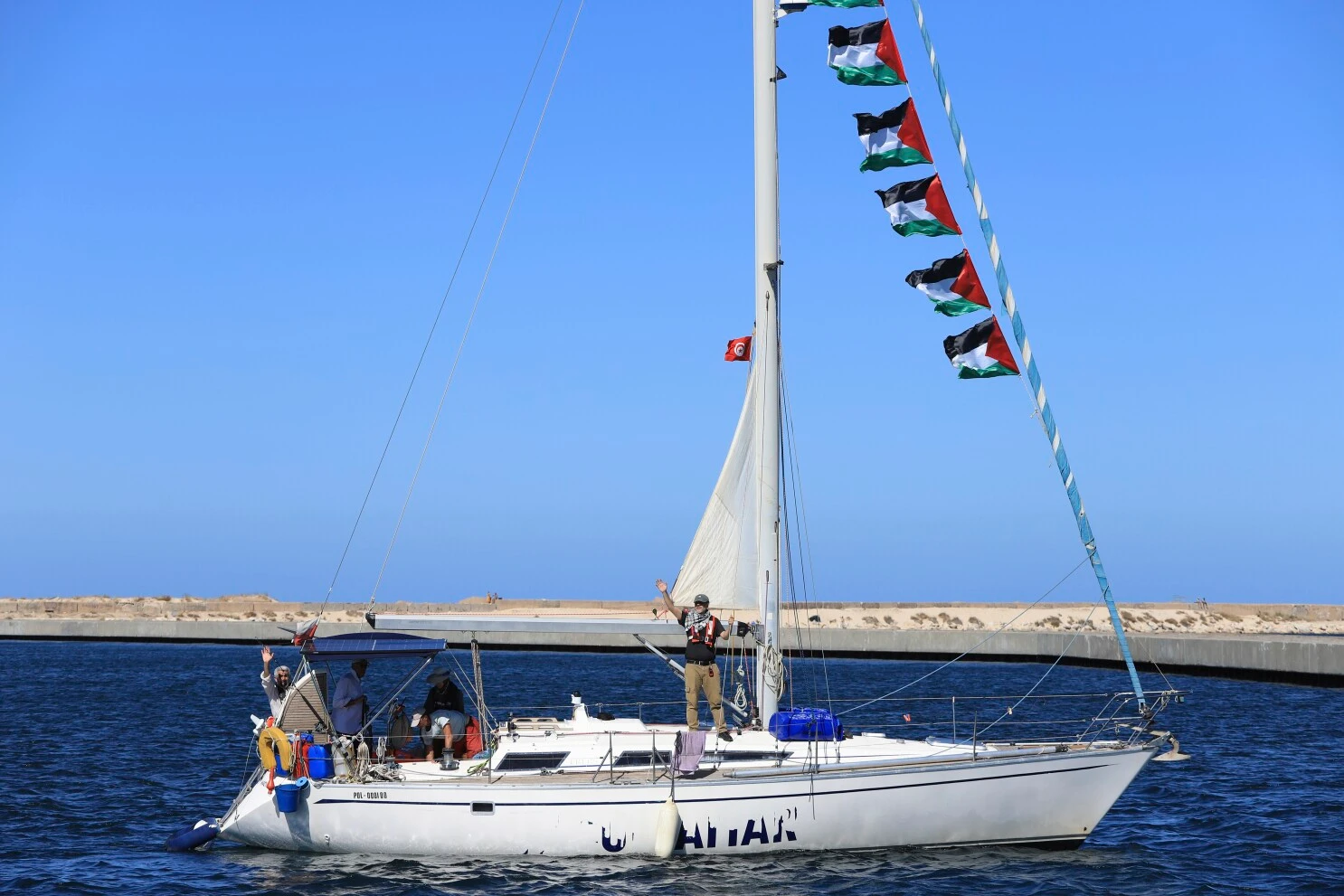
(Op-Ed Analysis) Spain ordered a navy patrol vessel to sea after Spanish citizens joined a flotilla that advertises a challenge to Israel’s declared Gaza blockade.
Prime Minister Pedro Sánchez announced the deployment from Cartagena; Italy dispatched at least one frigate and later a second ship, while urging the flotilla to hand cargo over in Cyprus for vetted distribution.
Israel has maintained a published naval blockade since January 2009. These are the governments’ own positions. The obvious question follows: why place state hulls near a convoy that signals a blockade test when a sanctioned maritime corridor already exists?
The Cyprus-to-Gaza Amalthea route—activated with the European Commission, Cyprus, the UAE, the UK, the United States, and others—moves inspected aid under agreed deconfliction. Israel publicly endorsed the concept subject to security screening.
If the goal is throughput rather than theater, Amalthea is the lane. Madrid’s legal explanation runs this way: citizens retain movement rights, and governments owe rescue at sea.
Europe’s Protocol No. 4 protects the freedom to leave any country, subject to narrow limits; UNCLOS and SOLAS embed duties to render assistance. Those rules justify strong consular readiness and search-and-rescue planning.
But they do not compel a warship to loiter near a declared enforcement line when a vetted corridor operates nearby. What makes Spain’s choice more consequential is timing.
On 23 September, the Council of Ministers strengthened a total arms embargo on Israel, expanded controls on dual-use technology, denied transits of fuels and materials with potential military use, and banned imports from illegal Israeli settlements; the Royal Decree-Law was published in the Boletín Oficial del Estado.
That is a formal, unilateral tightening of policy toward Israel. Pairing that decree with a naval move beside a flotilla that intends to challenge a published blockade is a deliberate signal.
The alliance context is just as stark. NATO leaders adopted a new defense-investment commitment of 5% of GDP at The Hague Summit in June 2025, with 3.5% for core defense and up to 1.5% for related resilience.
Spain then announced it had reached an understanding with NATO to hold spending near 2.1%—“nothing more, nothing less”—and separately said it would reach 2% this year.
Spain is therefore meeting the older Wales floor while diverging from the new 5% trajectory that allies endorsed. Those are official records from NATO and La Moncloa.
Set against that backdrop, the flotilla posture looks less like necessity and more like preference. Italy’s line couples naval presence to a Cyprus hand-off and warns against breaching the closure.
Spain co-signed a 16-nation statement about consular protection and international law; then it chose to add a ship. In a region with drone activity and reported communications interference, the risk is not theoretical: proximity can turn a “rescue posture” into perceived shielding.
Underwriters and operators will price that ambiguity long before diplomats resolve it. For Gaza, the operational math is simple: escorts do not raise aid tonnage; inspected corridors do.
For Israel, the enforcement line is on paper and public; Notice to Mariners No. 1/2009 remains the baseline. Spain and Italy must keep prudent standoff distance, publish rules of engagement, and maintain hotlines to prevent misreads.
If an assistance mission slides into an operational umbrella for a blockade challenge, deconfliction will fail and tempers will harden. For Spain–Israel ties, Madrid has already moved from rhetoric to regulation.
A strengthened arms embargo and settlement-goods bans carry commercial bite and diplomatic weight. A naval shadow beside a self-described blockade test adds friction that neither inspections nor talking points will easily unwind.
For Spain–U.S. ties, the leverage points are quiet. Foreign Military Sales and direct commercial export licenses flow through U.S. legal gates that consider policy and trust.
Calendars, prioritizations, and technology releases can slow without fanfare when alignment frays. By choosing 2.1% against a 5% allied commitment and tightening measures against Israel while stationing a patrol vessel near a contested line, Madrid increases the odds that those valves tighten.
Spain can still narrow the damage. Keep the ship on a strict search-and-rescue leash outside the declared closure. Channel any cargo to Amalthea.
Publish detailed deconfliction procedures. Those steps would honor movement rights and rescue duties while reducing operational hazard, legal ambiguity, and commercial spillovers.
A corridor exists. It functions, with partners’ backing. Every mile sailed outside it adds risk without adding relief. On defense spending and on Israel policy, Spain has chosen a different lane.
The costs will be measured less in declarations than in licensing tempos, program sequencing, and access to capability—where outcomes, not intentions, decide partnerships.
This article was produced by The Rio Times’ automated newsroom system. How we use AI · Report an error
Read More from The Rio Times