Coronavirus Drugs: Plenty of Research, but Little Science in Application
RIO DE JANEIRO, BRAZIL – “There are many doubts. It is increasingly clear that antivirals could be useful in the early stages. We don’t know which one is effective, but they are probably of little use in advanced stages, when a host’s excessive inflammatory response prevails”.
Jesús Rodríguez Baño, head of the Infectious Disease Service at the Virgen de la Macarena University Hospital in Seville (Spain), summarizes in a message the situation faced by many doctors and researchers in the face of the novel coronavirus.” At this time, in well-selected patients, immunosuppressive drugs seem to be most needed, but we still lack solid clinical evidence”.

Doctors use drugs which have already proven their usefulness in other infections or in certain diseases in which the regulation of the immune system is important, but which have not yet had their effectiveness against Covid-19 tested in broader studies. Between stress and uncertainty, these professionals seek to collect useful data while trying to save as many lives as possible.
In this race, the doctors who attend to patients on a daily basis have the support of scientists involved in basic research, who until recently would not have imagined that their findings could reach hospitals this quickly.
But times have changed. Recently, a team of researchers led by José Ordovás-Montañés, of the Children’s Hospital of Boston and Harvard Medical School, released a draft paper that is under review to be published in Cell magazine, where the keys to better treatments for thousands of people affected by the coronavirus in the world can be found.
“We are finding that many decisions regarding treatments for this disease are based, at best, on very little science. People want to implement something as soon as possible,” notes Ordovás-Montañés.
“That’s the case with hydroxychloroquine, which seemed to work by observing the results of an uncontrolled trial on patients who were going to improve anyway,” he continues. “We wanted to understand how the virus gets into the body, which cells it can infect and which ones it can’t, what causes some cases to worsen from a certain point, or why there are people who are infected, but have no symptoms,” he adds.
When trying to uncover the tricks that SARS-CoV-2 uses to attack human cells, scientists analyzed the areas where ACE2 proteins and TMPRSS2 enzyme are most expressed. These proteins play key roles in our physiology and lung function, but they also serve the novel coronavirus in attacking the body.
In February this year, groups from around the world determined that the novel coronavirus has a cell abduction technique similar to the virus that caused SARS in 2003.
The Ordovás-Montañés team observed that the places where the two proteins were most expressive were the nasal cells, some in the intestine and mainly in the lungs, something that explains the symptoms of Covid-19.
However, the examination of individual cells showed that, unlike SARS and the flu, which infected a higher percentage of cells, the new virus only affects a few of each tissue.
“This could explain why this virus, unlike the preceding ones, allows you to remain infected, but free of alarming symptoms for a while, and infecting more people,” says the researcher. In his opinion, knowing in detail which cells are infected, and why, could help to choose more specific and effective treatments.
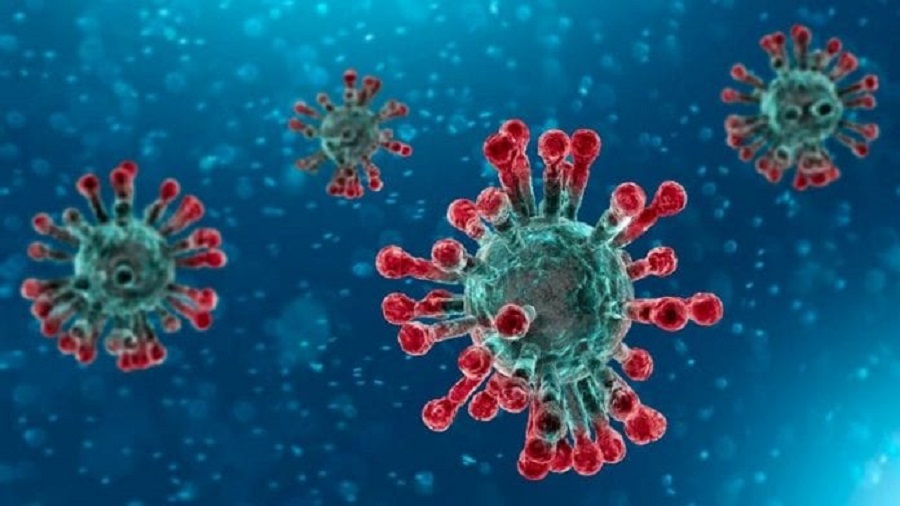
In addition to this fundamental knowledge of the nature of SARS-CoV-2 infection, the findings of Ordovás-Montañés and his colleagues have implications on the effect of interferons on ACE2 and its coenzyme.
Interferons, crucial proteins in the immune reaction to infections, are used when there is no vaccine or antiviral cure. They were used against hepatitis C before there were effective treatments for the virus, and were also used against the novel virus, but in the absence of controlled trials it is unclear whether they helped, worsened or did nothing.
The data from the study Cell is evaluating suggest that administering interferon to a patient would expedite the production of the two proteins that serve as the gateway to the coronavirus, easing invasion, but also protecting the tissue, in a real arms race.
Some 5,500 kilometers away from Boston, at the Ramón y Cajal University Hospital in Madrid, Luisa Villar, head of immunology at the institution, is pleased to hear Ordovás’ findings, as they corroborate her experience in recent weeks.
“Type 1 interferons, such as alpha and beta, have a potential antiviral effect and their use in infections like this is considered, but our data showed that the results were not as expected,” she explains. “Interferon induces the recipient of the virus in many cells that do not express it and increases it in cells that already express it. This facilitates infection, and it’s something we obviously don’t want,” she concludes.
On March 19th, Villar had already warned other hospitals of his findings, although the evidence remained limited “because the number of patients was small and there could be confounding variants”. África González, president of the Spanish Society of Immunology, notes that, based on Villar’s work, there was already information in the medical community about doubts regarding interferons.
On the one hand, “there’s a note from the Ministry (of Health of Spain) saying that they are not recommended because they are used for autoimmune diseases,” González points out. As with other drugs, the use of interferon for the coronavirus could endanger the supply to patients of diseases in which their efficacy has been proven, and this is something to be avoided.
Results such as those presented at the Cell “supported, along with clinical data, that interferons should not be used in these patients”, concludes González.
A few weeks after having come across the novel coronavirus, doctors and researchers are still studying ways to tackle it using evidence and to stop treating it blindly.
Source: El País
More: Brazil news in English, every day from The Rio Times.
This article was produced by The Rio Times’ automated newsroom system. How we use AI · Report an error · Editorial responsibility: Matthias Camenzind, Editor-in-Chief