Uribe Attacks Colombia Peace Deal as No Vote Turns 10

POLITICS · COLOMBIA
Key Facts
- —The country Colombia, ten years after voters narrowly rejected the first text of the 2016 peace accord with the FARC guerrillas, later revised and approved by Congress.
- —What happened On 2 October 2026, former president Álvaro Uribe wrote on X that it is time to fix the problems the accord left, citing drug trafficking and military trials (El Tiempo, Infobae, Semana).
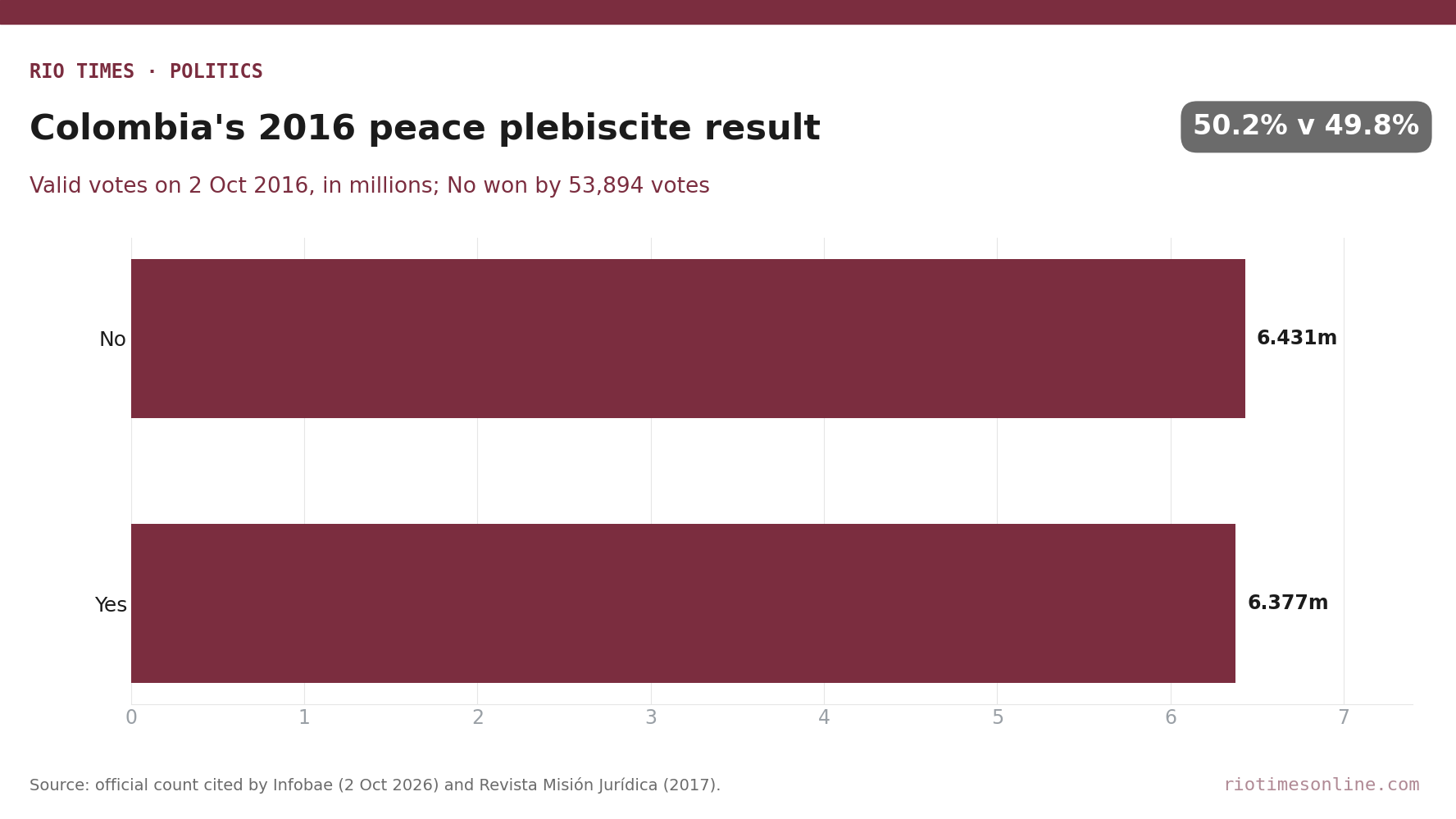
- —The numbers On 2 October 2016, No beat Yes by 53,894 votes, 50.2 percent to 49.8 percent, according to the official count cited by Infobae.
- —What it means for you The peace tribunal’s budget, deadline and rulings on soldiers are now live issues in Congress. Any change would reshape how Colombia closes its war cases.
- —Still open Whether Congress passes the bill letting military courts review tribunal sentences, and whether plenaries keep the 2027 budget cut for the tribunal approved in committee on 23 September (El Colombiano).
Uribe peace deal criticism returned on Friday, ten years to the day after Colombians rejected the accord with the FARC. The FARC, or Revolutionary Armed Forces of Colombia, was the country’s largest guerrilla army.
Former president Álvaro Uribe, who led the 2016 No campaign, wrote on X that it is “time to resolve problems”. His three demands target drugs, soldiers’ sentences and political rights.
A Narrow Vote That Still Shapes Colombia
On 2 October 2016, No won with 6,431,376 votes against 6,377,482 for Yes, a margin of 53,894. Most eligible voters stayed home, and turnout was below four in ten.
The government of Juan Manuel Santos then renegotiated the text with the guerrillas, taking in several proposals from the No camp. Congress approved the revised accord weeks later, without a second popular vote.
That path left many No voters feeling ignored, El País noted on Friday. It added that President Abelardo de la Espriella is among the accord’s critics today.
Uribe Peace Deal Demands: Drugs, Soldiers and Political Rights
Uribe’s first point was drug trafficking. Cocaine reaching the market, he wrote, rose from 150 tonnes in 2010 to 2,100 tonnes in 2024, “with all the violence generated”.
Those figures are his own and were not independently confirmed for this report. Infobae and Semana both carried them as quotes.
His second point concerned the Special Jurisdiction for Peace (JEP), the transitional tribunal created by the accord. His Democratic Centre party backs a bill letting military courts automatically review JEP sentences against soldiers.
The same bill would cap prison terms for those acts at five years, with a restorative alternative. His third point asked that people convicted in ordinary courts regain political rights, as former FARC members did.
The Other Side: Santos Asks the Tribunal to Speed Up
Santos defended the tribunal on Thursday at an event in Bogotá, Infobae reported. He warned that budget cuts would hurt victims, defendants and citizens who trusted the process.
He also conceded ground to critics. “Those who criticise the JEP for its slowness are quite right,” he said, according to El País, urging the court to accelerate.
Public trust in the tribunal fell from 37.5 percent in 2023 to 27.2 percent in 2025, per the Observatory of Democracy. That still beats the 23.5 percent who trust the courts overall, El País reported.
Parts of the accord face little opposition today, according to El País. The peace seats in Congress for conflict-hit regions remain in place, and land redistribution has few open opponents.
Why It Matters Now
The anniversary lands as María Fernanda Cabal quits Uribe’s Democratic Centre party. See Colombia’s Cabal Quits Uribe’s Party After 12 Years.
Violence in former conflict zones also keeps the accord’s record under scrutiny. See Colombia Social Leader Killings Reach 117 in 2026.
What Is Not Yet Known
It is not clear whether the military review bill has the votes to pass Congress. Budget committees cut the tribunal’s 2027 funds by 170 billion pesos (about US$51 million) on 23 September, El Colombiano reported.
Senate and House plenaries must still confirm that cut by 20 October. The dollar figure uses 3,308 pesos per US dollar as of 2 October 2026.
The tribunal’s end date is also unsettled. Santos wants its work finished before 2028, while El País notes the accord allows an extension to 2033.
Sources: Álvaro Uribe on X, 2 October 2026, as quoted by El Tiempo, Infobae and Semana; Infobae, “Plebiscito por la Paz en Colombia, 10 años después”, 2 October 2026; El País América Colombia, 2 October 2026, citing the Observatory of Democracy; La FM, 2 October 2026; Revista Misión Jurídica, 2017, for the official 2016 vote count; El Colombiano, September 2026, on the 2027 budget cut.
This article was produced by The Rio Times’ automated newsroom system. How we use AI · Report an error · Editorial responsibility: Matthias Camenzind, Editor-in-Chief