Colombia Court Frees Central Bank to Meet Without Finance Minister
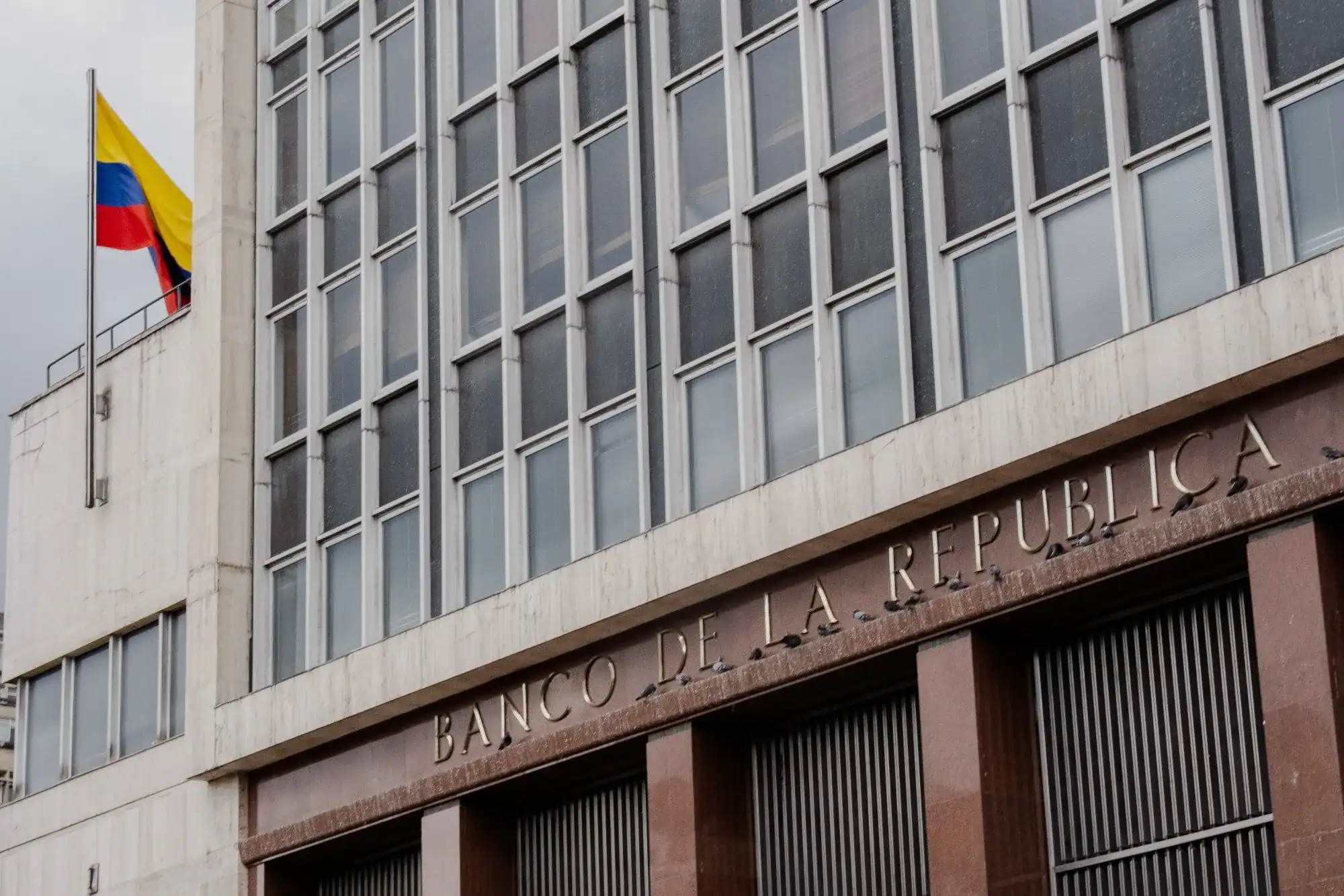
COLOMBIA · MONETARY POLICY
Key Facts
—The ruling. Colombia’s Consejo de Estado, the top administrative court, provisionally suspended on May 26 the rule that required the finance minister’s presence for the central bank’s board to meet, citing Colombia central bank autonomy.
—The trigger. Finance minister Germán Ávila walked out of the Banco de la República session on March 31, 2026 in disagreement with the bank’s policy rate at 11.25 percent, and warned he would not attend further meetings.
—The legal pathway. The Sección Primera issued Auto 00143, suspending Article 35 of Decree 2520 of 1993 after a petition by lawyer Daniel Felipe Useche Daza, with the bank itself supporting the cautionary motion.
—The pushback. President Gustavo Petro and the finance ministry rejected the ruling, with the government saying the board now sits with a leg of its chair missing.
—Latin American impact. The Colombian decision strengthens an institutional firewall around the region’s central banks at a moment of macro and political stress.
The Colombia central bank autonomy dispute reached a new milestone this week. The Consejo de Estado, the country’s top administrative court, suspended the rule that made finance minister attendance mandatory for the central bank’s board to take decisions. The ruling lands amid an open clash between the Petro government and the Banco de la República over interest rates.
What the Colombia central bank autonomy ruling actually says
The Sección Primera of the Consejo de Estado issued Auto 00143 on May 25 and notified parties through May 26. The order provisionally suspends a portion of Article 35 of Decree 2520 of 1993, which created the statutory framework for the Banco de la República’s board, known in Colombia as the Junta Directiva.
The suspended provision required at least five of the seven board members to be present for any session, with one of those five having to be the finance minister. The court left intact the constitutional rule that the finance minister presides over the board, but ruled that presence is not a quorum requirement.
The magistrado, or rapporteur, was Germán Eduardo Osorio. He held that the bank’s functions of regulating the currency, issuing legal tender and administering international reserves cannot be allowed to stall over a minister’s choice to attend or not. The cautionary measure stays in force while the underlying nullity action is decided.
How the Colombia central bank autonomy fight got here
The political trigger arrived on March 31, 2026. Finance minister Germán Ávila left a board meeting after disagreeing with the bank’s interest-rate decision, which kept the policy rate at 11.25 percent against pressure from the executive to ease. He then called a press conference saying he would not return to the board until decisions had what he termed social conscience.
The Banco de la República signaled an institutional alarm. Under the contested decree the minister’s mere absence was enough to block monetary policy, including any rate decision. Bank governor Leonardo Villar said in interviews that conditioning meetings on the minister’s presence put the bank’s independence at risk if used as leverage.
The cautionary motion came from outside the political branches. Daniel Felipe Useche Daza, a public-administration lawyer, filed the nullity action arguing that the decree transformed a procedural duty into a quorum gate, effectively granting the government a veto over an autonomous institution.
Reactions from the Petro government and the central bank
President Gustavo Petro rejected the ruling and so did the finance ministry. Government officials said the design of the board has always required dialogue between elected authority and technical staff. They characterized the suspension as leaving the chair with a missing leg.
The Banco de la República supported the cautionary motion in court filings. The bank argued that subordinating its sessions to ministerial attendance impeded the constitutional mandate of an autonomous institution. The bank also said the rule could lead to indefinite suspension of essential functions.
Ávila has since indicated he will resume attending the meetings while maintaining his criticism of the rate path. The legal change does not strip the minister of his constitutional role as board chair. It removes only the procedural lever that turned attendance into a precondition.
Why the Colombia central bank autonomy ruling matters now
Colombia heads into a presidential first round in 2026 with the dólar oficial trading near 3,631 Colombian pesos. The tasa de usura, or maximum legal interest rate, sits at 28.17 percent and analysts at Corficolombiana expect the Banrep rate to reach at least 12.25 percent by year-end. The institutional clarity matters for investors gauging policy risk.
The ruling also lands as Petro’s term enters its final stretch. The president has clashed repeatedly with autonomous institutions including the bank, the tax authority and the financial regulator. Each clash has tested the boundary between elected government and technical bodies established under the 1991 Constitution.
The cautionary measure is provisional. The Consejo de Estado will still decide the merits of the nullity action before the suspension becomes permanent. That ruling could take months and the timing places the final decision in the orbit of the next administration.
More: Colombia news in English, every day from The Rio Times.
Regional read on Colombia central bank autonomy
Latin American central banks have generally moved toward greater institutional independence over the past three decades. Chile, Mexico, Brazil and Peru each grant their central banks broad operational autonomy, with elected governments retaining influence through appointments and broad macroeconomic policy.
The Brazilian central bank moved to formal independence under a 2021 law. The Banco Central do Brasil now operates with fixed terms for its governor that do not coincide with presidential ones, similar to the Federal Reserve in the United States. Colombia’s framework is older and rests on the 1991 Constitution and the 1993 statute.
Investor attention has focused on Colombia in part because its sovereign yields and currency have absorbed political risk premia tied to the Petro government’s clashes with markets. Bloomberg Línea called the decision unprecedented in Colombian history. Markets responded calmly, with the peso strengthening modestly into the May 28 session.
Frequently Asked Questions
What is the Consejo de Estado and why did it rule on this?
The Consejo de Estado is Colombia’s top administrative court and reviews acts of the executive branch. It ruled on a nullity action against an executive decree from 1993 that set the operating rules for the Banco de la República’s board.
Does the finance minister no longer sit on the board?
The finance minister remains the constitutional chair of the board. The ruling only removed the requirement that the minister be present for the board to meet and take decisions. The minister can still attend, preside and vote.
Is this ruling permanent?
No. The suspension is provisional. The Consejo de Estado still needs to decide the underlying nullity action on the merits before the suspension becomes permanent. That process can take many months.
What is the current Colombian interest-rate setting?
The Banco de la República policy rate stands at 11.25 percent. The tasa de usura, the legal maximum, sits at 28.17 percent. Corficolombiana analysts expect the Banrep rate could climb to at least 12.25 percent by the end of 2026.
How did the markets react?
The Colombian peso strengthened modestly into the May 28 trading session, with the dólar oficial trading near 3,631 pesos. Bloomberg Línea called the decision unprecedented in Colombian institutional history.
Connected Coverage
For context on the regional rate environment, see our piece on Peru’s market read of a divided Congress. Also read our coverage of Brazil’s fiscal trajectory and our analysis of the five-country South American security pact.
The Rio Times — Friday, May 29, 2026 — 03:00 BRT — By Sofia Gabriela Martinez
This article was produced by The Rio Times’ automated newsroom system. How we use AI · Report an error · Editorial responsibility: Matthias Camenzind, Editor-in-Chief