Colombia · ECONOMY
Key Facts
- —What happened Colombia’s ranchers federation counted 9,865 cattle dead from drought on 20 August.
- —How big a jump Losses total about COP 47 billion, or US$15.4 million, across 15 departments.
- —The catch El Niño arrived in June, three months early, and may turn very strong from October.
- —The real story Beef prices will not spike now but lag a year or more into 2027.
- —Where it hits Losses span the Caribbean provinces to Tolima, Huila, Boyacá and the Santanderes.
- —What comes next The dry season starts in December, and reservoirs are already declining from a peak.
The El Niño arrived three months early and is forecast to strengthen from October. This is the damage before the hard part.
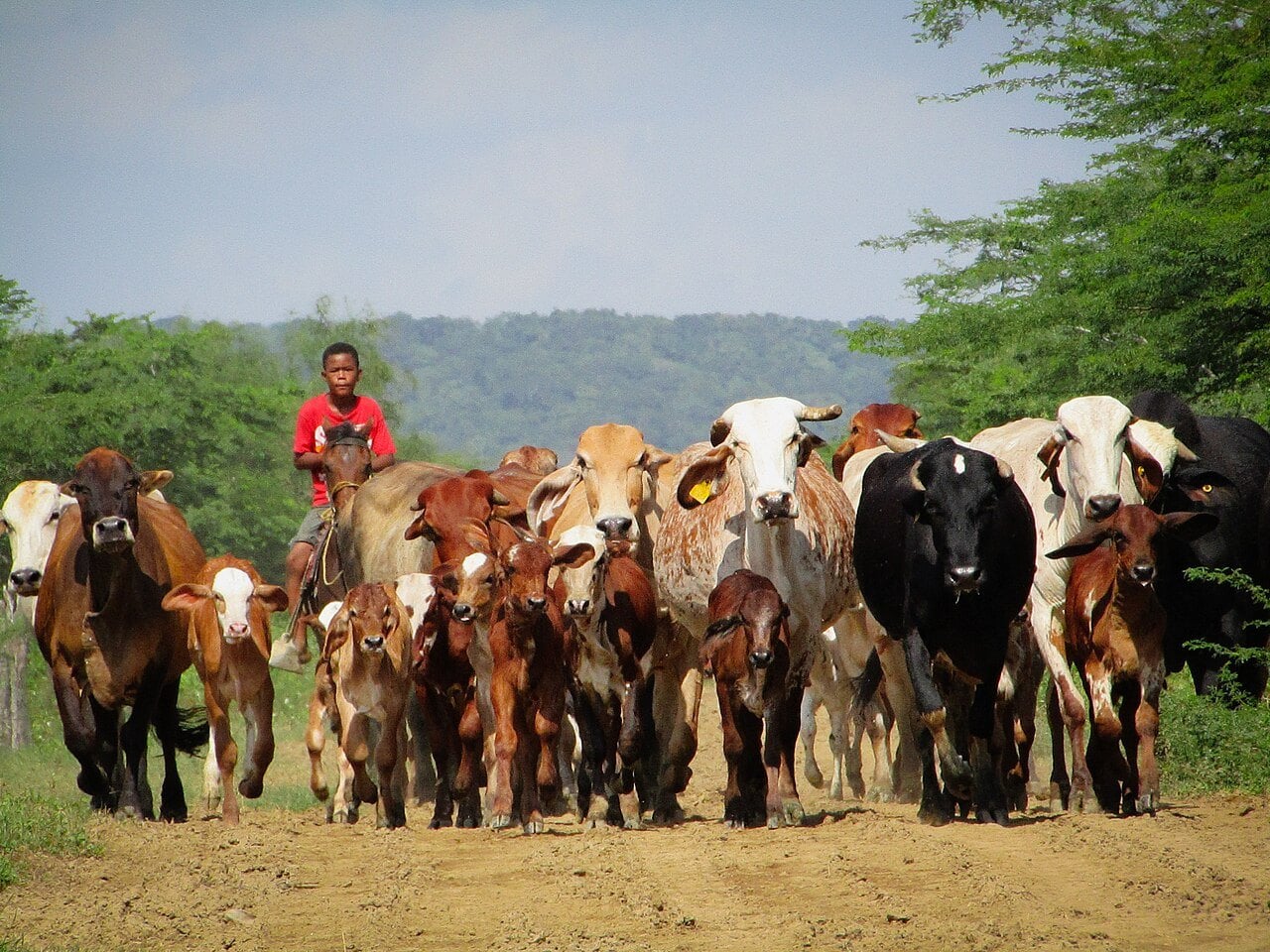
Colombia cattle deaths from this year’s drought have reached 9,865, and the number that should worry you is not that one. It is the calendar. Colombia’s dry season runs from December to March. The El Niño driving these losses arrived in June, three months ahead of forecast, and the grid operator puts the odds of it turning very strong from October at 95%.
What the Colombia cattle deaths figure contains
Fedegán, the national ranchers’ federation, published the count on 20 August through its planning and economic studies office. The headline is 9,865 dead animals. The money attached is about COP47 billion, roughly US$15.4 million.
The breakdown is more useful than the total. COP 27 billion, about US$8.8 million, is the value of the animals that died. COP 11 billion, roughly US$3.6 million, is production that did not happen — milk not given, weight not gained. COP9 billion, some US$2.9 million, is the cost of moving herds to find water and pasture, which is a cost ranchers only incur when the alternative is worse.
Fifteen departments are affected, and the list is the striking part: not just the Caribbean provinces where drought is expected — Cesar, La Guajira, Sucre, Magdalena, Bolívar, Atlántico — but Tolima, Huila, Boyacá, the Santanderes, and out into Casanare, Arauca, Meta and Caquetá. That is most of the country’s cattle map.
One caveat on the count. Earlier in July, Fedegán attributed a separate tranche of losses to rains and drought together. Extreme years in Colombia are rarely dry everywhere; they are dry in the wrong places and wet in the wrong places, and both kill livestock.
Why the water picture is worse than the reservoir number suggests
If you only read the headline reservoir figure you would not be worried. Colombia’s reservoirs passed 80% on 27 July, the highest level of the year.
The grid operator XM is worried anyway, and its reasoning is worth following. Levels have run below its reference trajectory for six weeks, and rainfall has been below average for three months. A reservoir system declining from a high in August, heading into an El Niño that is expected to strengthen, going into a dry season that starts in December, is a different picture from a reservoir system that is simply full.
This matters beyond the cattle because Colombia generates most of its electricity from water. A hard El Niño means the thermal plants take the load, and those plants burn gas the country increasingly imports. The drought that kills the cattle and the drought that raises the power bill are the same drought.
What a shrinking herd does later
Cattle are slow. A cow lost this year is not replaced this year, and the effect of a herd contraction shows up in supply a year or two out rather than immediately.
That is the mechanism worth understanding if you buy food in Colombia: beef prices respond to drought with a lag, and the lag is long enough that by the time it arrives, nobody connects it to the weather that caused it. What happens between now and March determines that more than what has happened so far.
For ranchers, the immediate decisions are grim ones. Moving a herd costs money now against a benefit that is only the avoidance of a worse loss. Selling early floods a market that everyone else is also selling into. Holding on requires water that may not be there in January.
None of those choices is improved by waiting, which is why the August number is more useful as a warning than as a total. Fedegán publishes these counts precisely so that the state has a basis to act before the dry season rather than after it, and Colombia’s record on drought contingency for livestock has generally been reactive.
For the wider economy, the direct number is small. COP47 billion, or US$15.4 million, is not a macroeconomic event in a country of Colombia’s size. What it is, is an early reading — the first quantified damage from a climate cycle whose costly phase has not begun.
Why this matters if you live in Colombia
The practical reading is about sequencing rather than scale. Almost every number in this story is a leading indicator: an El Niño confirmed early, reservoirs declining from a peak, a livestock loss recorded in August before the dry months.
If you run anything that depends on water, power or agricultural supply here — and in Colombia that is most businesses — the planning horizon that matters is December to March, and the time to plan for it is now, while reservoirs are still above 70%.
And if you follow the country’s food prices, keep the lag in mind. The bill for a dry December arrives in 2027, at the butcher’s counter, long after the weather has stopped being news.
More: Colombia news in English, every day from The Rio Times.
How many cattle has Colombia lost to the drought?
9,865 as of the count Fedegán published on 20 August 2026, across 15 departments. Losses are put at about COP47 billion, roughly US$15.4 million.
How bad is the El Niño expected to get?
IDEAM confirmed its onset on 11 June 2026, about three months earlier than forecast, with an 81% probability of very strong intensity in the October–December 2026 window, persisting into early 2027. The grid operator XM puts the probability of a very strong event from October at 95%.
Will this raise beef prices in Colombia?
Not immediately. Herd contractions feed through to supply with a lag of a year or more, so the effect of losses now would be felt in 2027 rather than this year.
Connected Coverage
Sources: Fedegán-FNG Oficina de Planeación y Estudios Económicos; IDEAM and Ministerio de Ambiente; XM; Contexto Ganadero; Infobae; El Colombiano.
Frequently Asked Questions
This article was produced by The Rio Times’ automated newsroom system. How we use AI · Report an error · Editorial responsibility: Matthias Camenzind, Editor-in-Chief
In depth