COP26: Colombia, a country with ambitions in the face of climate change that threatens it
RIO DE JANEIRO, BRAZIL – Colombia’s geographical position, with Atlantic and Pacific coasts and high deforestation rates, make the country one of the most vulnerable to climate change, which is why the government is advocating in Glasgow for economic incentives from the international community for investments in “structural climate action”.
In recent years the country has felt the devastation caused by natural phenomena such as drought caused by the warming of the Pacific waters (El Niño), flooding on the Atlantic coast due to La Niña, accelerated coastal erosion in the Caribbean, and hurricanes outside their usual routes, such as Eta, which devastated the island of Providencia in 2020.
Read also: Check out our coverage on Colombia
To deal with these phenomena, the Colombian government, in addition to proposing that all expenditures and investments in this area remain outside the fiscal rule, wants greater involvement of rich countries in this fight.
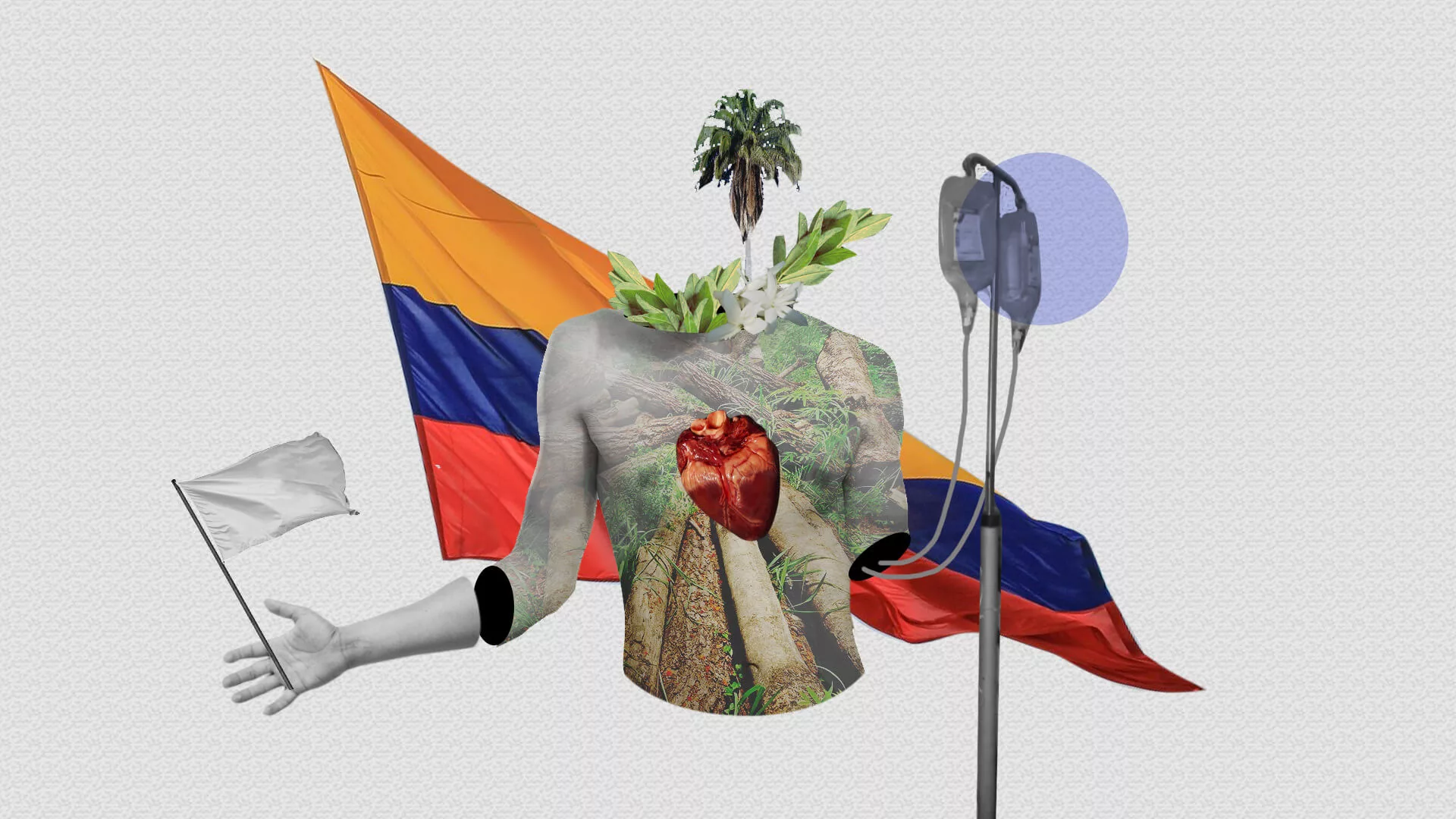
This was stated by President Iván Duque in Glasgow, where he presented a proposal so that “through the multilateral system there can be debt forgiveness or compensation schemes to achieve environmental objectives that are directly related to the reduction of greenhouse gas emissions” by the poorest countries.
Duque also presented an ambitious environmental strategy called E2050, with which the country seeks to reduce greenhouse gas emissions by 51% by 2030 and achieve carbon neutrality by 2050.
The strategy has nine pillars: expansion of knowledge; integrated management of biodiversity; sustainable production and consumption; just transition of the labor force; differentiated rural, marine, and coastal development; resilient cities and regions; diversified energy matrix; sustainable mobility and infrastructure; and increasing the country’s capacity to adapt to the climate crisis.
All this, according to the government, because Colombia, although it only produces 0.6% of the world’s greenhouse gas emissions, is one of the countries that feels the effects of climate change the most, which threatens its rich biodiversity formed by moors, jungles, deserts, mountain ranges, thousands of kilometers of coasts and rivers, and all the fauna and flora that coexist there.
AMBITIOUS GOALS
The director of Greenpeace Colombia, Silvia Gómez, told Efe that these goals are fairly ambitious, especially when compared to those of other regions that are significant emitters of CO2.
However, she wonders “how coherent the government is in coming out with a progressive, pilot, truly avant-garde discourse” when its internal policies are moving in a different direction.
Gómez explains that the government does not have the strength to stop oil production through “fracking”, which can contaminate subsurface water sources. The country has not ratified the Escazú Agreement, the first environmental pact in Latin America. “This is also a government that has plans to open new coal plants when all European governments have decided to stop them by 2025,” she adds.
FORESTS LOST
Another problem is the country is deforestation, which in 2020 cost it 171,685 hectares of forests, an increase of 8% over the previous year when 158,984 hectares were cut down; not even the National Natural Parks awee spared, where 15,886 hectares were lost last year.
The leading causes of deforestation are the conversion of tropical rainforest areas into pastures for cattle ranching, the implementation of practices of extensive cattle ranching, the planting of illicit crops for drug trafficking, and the illegal extraction of minerals.
The government’s plan is for Colombia to have zero deforestation by 2030, which complements the ambitious goal of planting 180 million trees, and 30% of its territory in protected areas.
However, the director of Greenpeace Colombia assures that despite “valuable efforts” to curb deforestation, these strategies “do not attack the primary causes of the problem and its integrality.”
“There are situations of inequality and human rights violations against peasants who end up being the last links in the chain (…) There are measures, as it has undoubtedly been a priority issue for the government, but there is still a long way to go and a much more radical position to stop deforestation,” she says.
WASTED TOOL
The Escazú Agreement, signed in 2018 and considered the first multilateral treaty in Latin America and the Caribbean on environmental issues and support for human rights, would be a fundamental tool to protect those who defend the environment in Colombia, but this year Congress scuttled its ratification.
Although his critics accuse him of not pushing for its approval, the initiative, which carried a message of urgency from President Duque, was filed again this week in Congress.
The Escazú Agreement is paramount because, in 2020, Colombia topped for the second consecutive year the dishonorable global statistic of murdered environmental leaders, with 65 homicides, according to the report “Last Line of Defense” by the British NGO Global Witness.
“It is severe because we are talking about a mediocre and lukewarm political position (that of not pushing for the ratification of the agreement), which shows that the government is not firmly on the side of protecting the forests and the communities that protect the territories,” says Gómez, who does not hide her concern for Colombia’s future in the face of climate change.
More: Colombia news in English, every day from The Rio Times.
Editorial responsibility: Matthias Camenzind, Editor-in-Chief · Editorial standards · Report an error