Six Nations Bring Their Air Forces to Chile for War Games
South America · Defense
Key Facts
—What. Salitre 2026, the largest combined air drill in South America, runs in northern Chile from June 27 to July 12.
—Who. Chile hosts air forces from Argentina, Brazil, Colombia, the United States and Paraguay.
—Where. The hub is the Cerro Moreno air base near Antofagasta, in the Atacama desert.
—The goal. The drill trains the six air forces to fight as one coalition under shared NATO-style procedures.
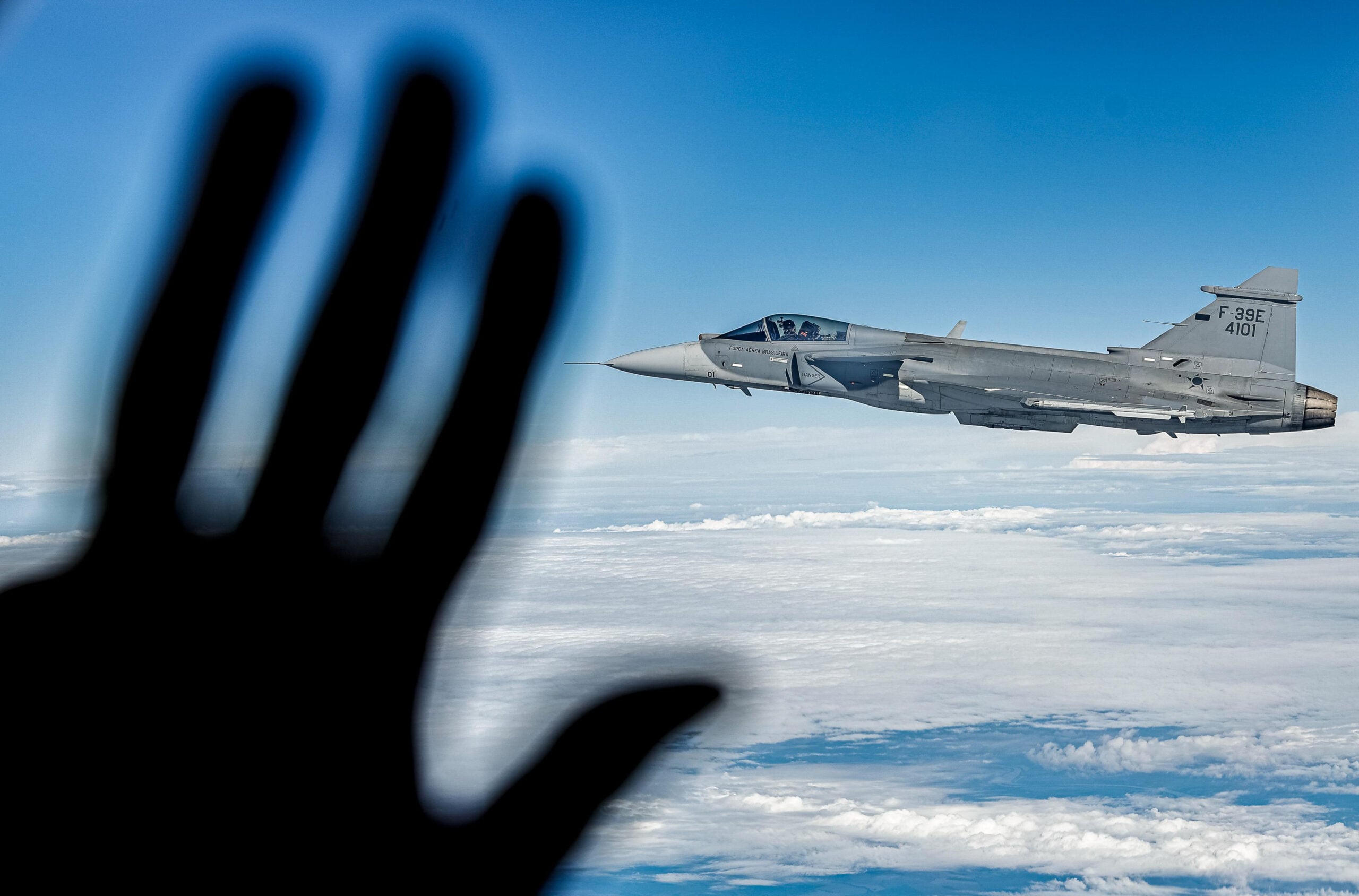
—The debuts. Brazil’s new Gripen fighters and Paraguay’s Super Tucano aircraft make their first appearance here.
—History. Chile has hosted Salitre since 2004; this is the fifth edition.
The biggest air force exercise in South America returns this month, as six nations send fighter jets and crews to the Chilean desert for two weeks of war games designed to make very different air forces fly and fight as a single team.
What is happening, and where
From June 27 to July 12, the skies over northern Chile will fill with foreign warplanes. The occasion is Salitre 2026, a multinational military drill hosted by the Chilean Air Force and built around its base at Cerro Moreno, near Antofagasta in the Atacama, the vast, bone-dry desert that runs down Chile’s north.
Joining the hosts are air forces from Argentina, Brazil, Colombia, the United States and Paraguay. For readers outside the region, the choice of location is not random.
The Atacama offers clear skies and long daylight hours for much of the year, close to ideal conditions for flying complex missions day after day. Chile has used those advantages to host Salitre, whose name comes from the saltpetre once mined in the desert, since 2004.
This is the fifth edition, and the largest drill of its kind anywhere in South America.
Why this air force exercise matters
The point of an exercise like this is not to show off hardware, though there is plenty of that. It is to solve a genuinely hard problem: getting militaries that speak different languages, fly different aircraft and follow different rulebooks to operate together smoothly.
Salitre 2026 is built around a fictional crisis, with the six air forces asked to mount a combined response. That means controlling airspace, protecting forces on the ground and running humanitarian missions, all directed from a single combined command center.
The organizers describe the goal as interoperability to a NATO standard. In plain terms, that means training so a Brazilian jet, an American tanker and a Chilean fighter can plug into one another’s plans and fight as one coalition rather than six separate forces that happen to share the sky.
That skill matters far beyond any single drill. It is what allows neighbouring countries to respond together to a natural disaster, a humanitarian emergency or a security threat without tripping over each other.
New aircraft making their debut
This edition carries some firsts that defense watchers will note. Brazil is expected to bring its new F-39 Gripen E, the Swedish-designed fighter that Brazil now assembles at home, marking the type’s debut at Salitre.
Paraguay, meanwhile, makes its international Salitre debut with the A-29 Super Tucano, a rugged propeller-driven aircraft well suited to border and counter-smuggling patrols. The host Chileans will fly their F-16s.
For a regional air-power audience, seeing these aircraft operate side by side is a snapshot of how Latin America’s fleets are modernizing. The mix also quietly underlines a wider shift.
Several of these air forces are moving toward common platforms and shared training, which makes joint operations easier over time. An exercise that once focused narrowly on dogfighting has grown into a rehearsal for the kind of multi-layered operations modern air forces are expected to run.
The bigger picture for the region
For a foreign reader trying to make sense of Latin American security, Salitre is a useful window. South America is not a region of constant interstate war, and its air forces spend far more time on disaster relief, border surveillance and counter-narcotics than on combat.
An exercise built around coalition operations and humanitarian missions reflects that reality. It also reflects diplomacy: bringing the United States into a drill alongside Argentina, Brazil and Colombia is a statement about who trains with whom, and how closely.
None of this signals rising tension. Salitre is a scheduled, long-planned event, the product of months of coordination meetings, not a response to any crisis.
But it is a real measure of regional cooperation, and of how seriously these countries take the ability to work together when something does go wrong. For two weeks, the Atacama becomes the place where that ability is tested.
More: Chile news in English, every day from The Rio Times.
Frequently Asked Questions
What is Salitre 2026?
It is a large multinational air force exercise hosted by Chile, running from June 27 to July 12 at the Cerro Moreno base near Antofagasta. Air forces from Argentina, Brazil, Colombia, the United States and Paraguay take part alongside the hosts.
What is the purpose of the drill?
It trains the participating air forces to operate together as a single coalition under shared procedures, responding to a simulated crisis. Missions include controlling airspace, protecting ground forces and carrying out humanitarian operations.
Does this mean tensions are rising in the region?
No — Salitre is a long-planned, recurring exercise, first held in 2004, and is not a response to any specific threat. Its focus is cooperation, disaster response and joint training rather than confrontation.
Connected Coverage
Chile Joins the World’s Largest Naval Exercise Off Hawaii
First Brazil Gripen Fighter Rolls Off the Line
This article was produced by The Rio Times’ automated newsroom system. How we use AI · Report an error · Editorial responsibility: Matthias Camenzind, Editor-in-Chief
Read More from The Rio Times