Chile Reasserts Full Sovereignty Over the Strait of Magellan
Chile · Defense & Security
Key Facts
—The statement. Chile’s defense minister, Fernando Barros, said the Strait of Magellan “from its beginning to its end” is Chilean, dismissing any controversy with Argentina.
—The trigger. An Argentine naval-hydrography chief claimed in a viral podcast that the strait’s eastern “mouth” belongs to Argentina, reopening a long-settled question.
—The legal basis. Chile cites the 1881 Boundary Treaty and the 1984 Treaty of Peace and Friendship, which recognize Chilean sovereignty over the strait with guaranteed free navigation for all flags.
—Why it matters. The 570-kilometer strait links the Atlantic and Pacific and handles roughly 1,000 ship transits a year, a strategic alternative to the Panama Canal.
—The tone. Barros ruled out an arms race with neighbors and stressed dialogue within international law, framing Chile’s posture as defensive rather than confrontational.
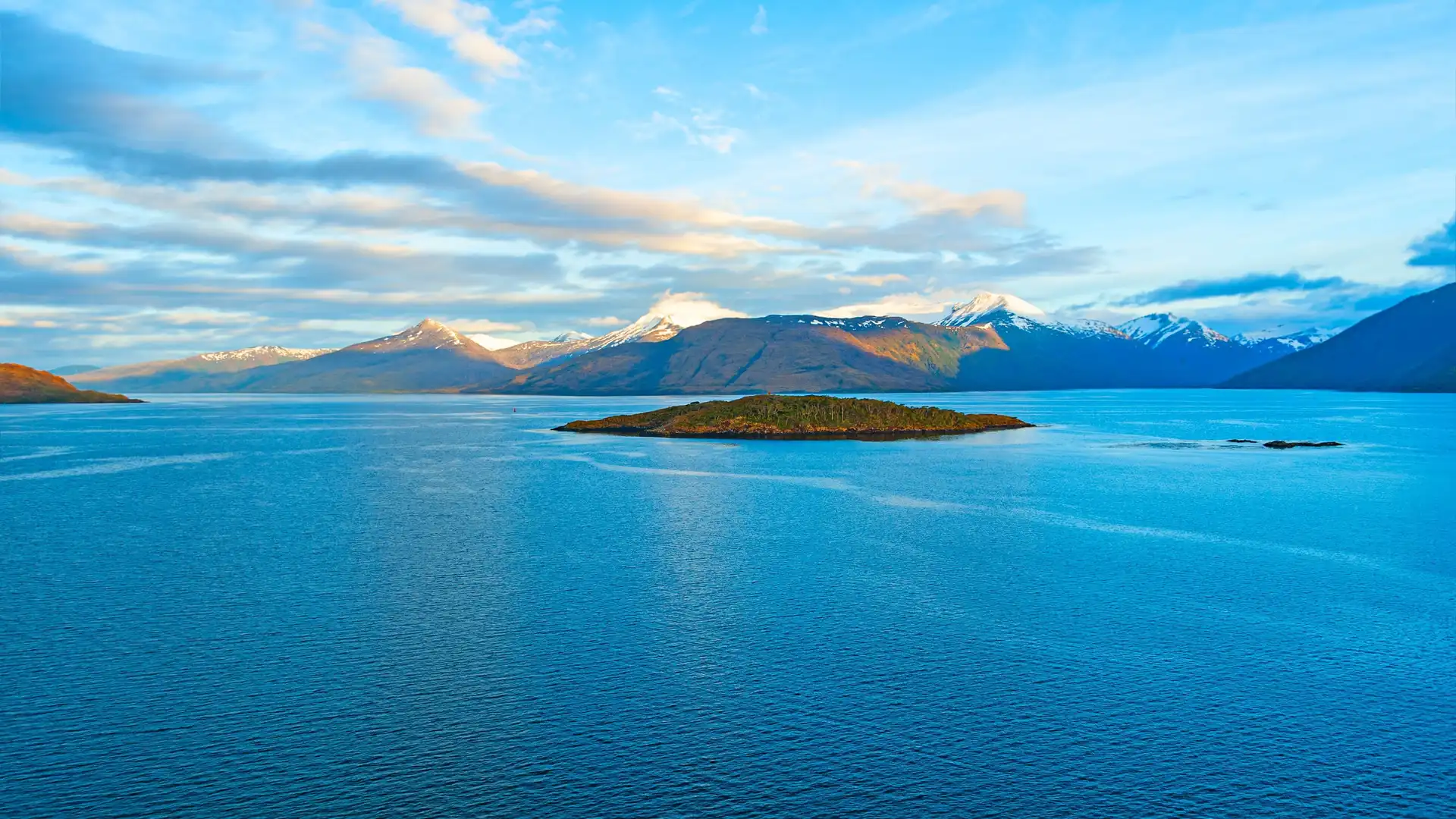
A stray remark by an Argentine naval officer has revived one of South America’s oldest border questions, prompting Santiago to restate, firmly, that one of the world’s great sea lanes is wholly Chilean.
Chile restates its claim on the Strait of Magellan
Chile’s minister of national defense, Fernando Barros, has reaffirmed his country’s sovereignty over the Strait of Magellan, telling a Punta Arenas radio station that “there is no doubt — from the legal point of view, from the factual point of view, from every point of view — that the Strait of Magellan, from its beginning to its end, is Chilean.” He made the remarks during a visit to military units in the Magallanes and Chilean Antarctic Region in late May, and reinforced them days later with a visit to the Armada’s Espíritu Santo lighthouse on the strait’s eastern shore — an installation Santiago casts as evidence of its control over both banks of the waterway.
Barros was careful to separate the legal question from the geography of where the strait ends. “Now, where the Strait of Magellan ends — what lies to the east, and whether you want to call it the mouth, it makes no difference, or whether it is the Atlantic Ocean — the concrete fact is that there is no discussion today about where the Chilean sea begins, which in that part is the Strait of Magellan,” he said. The minister also confirmed that Chile faces a separate challenge of replacing its ageing F-5 fighter jets over the medium term as resources allow, and explicitly ruled out an arms race with Chile’s neighbors.
An Argentine remark reopens an old question
The minister’s intervention answered a controversy that flared after the head of Argentina’s Naval Hydrography Service, Rear Admiral Hernán Montero, asserted that while the strait itself is Chilean, its eastern “mouth” — the stretch between Cabo Vírgenes and Punta Dúngenes — belongs to Argentina. Montero made the claim on a YouTube podcast in late January, and the clip went viral in Chile months later, drawing sharp reactions across the Chilean political spectrum. Lawmakers from the governing left and the opposition alike called the comments improper, and Chile’s foreign minister, Francisco Pérez Mackenna, issued an official rebuttal stating that Chilean sovereignty over the strait “is indisputable” and rests on the 1881 and 1984 treaties, which also guarantee free passage for vessels of all flags.
The episode sits against a broader, slow-burning bilateral file. In March 2025, Argentina notified Chile that a forthcoming national defense directive would repeal Decree 457/2021, an Argentine measure that had declared the Strait of Magellan and the Drake Passage a “shared space” — a claim Chile had formally protested. The decree’s eventual replacement, still pending, is what keeps the issue live, and Montero’s comments landed in that uncertain interval.
Why the waterway carries such weight
For all the diplomatic delicacy, the stakes are concrete. The Strait of Magellan runs about 570 kilometers between the Atlantic and the Pacific and handles on the order of 1,000 ship transits a year, offering a southern alternative to the Panama Canal that gains relevance whenever global shipping routes come under strain. Control of the strait underpins the economy of Punta Arenas, Chile’s southern maritime hub, and feeds into the wider contest for position in the South Atlantic and the approaches to Antarctica, where both countries hold overlapping continental-shelf claims. Free navigation through the strait is treaty-guaranteed regardless of the sovereignty question, but the symbolism of who controls the gateway matters to both capitals.
For now, the exchange looks more like a flare-up than a rupture. Both governments have political incentives to keep the relationship steady — bilateral trade and integration in Patagonia run deep — and Chile has paired its firm legal language with repeated offers of dialogue inside the framework of international law. The test will be whether Argentina’s pending defense directive, when it finally appears, closes the question or leaves just enough ambiguity for the next viral clip to reopen it.
Frequently Asked Questions
Who controls the Strait of Magellan?
Chile, under the 1881 Boundary Treaty and the 1984 Treaty of Peace and Friendship, which recognize Chilean sovereignty over the strait while guaranteeing free navigation for vessels of all nations.
What sparked the latest dispute?
A viral podcast clip in which Argentina’s naval-hydrography chief claimed the strait’s eastern mouth is Argentine, prompting firm rebuttals from Chile’s defense and foreign ministers.
Why does the strait matter globally?
It links the Atlantic and Pacific over 570 kilometers and carries roughly 1,000 ship transits a year, serving as a strategic southern alternative to the Panama Canal.
Is this likely to escalate?
Both governments have signaled they want to manage the issue diplomatically. The key variable is Argentina’s pending defense directive, which is set to replace a 2021 decree Chile had protested.
Connected Coverage
The flare-up revisits the dispute traced in Argentina’s 2025 move to drop its shared-control claim, and unfolds as Chile pushes to strengthen its naval and defense industry under President Kast.
This article was produced by The Rio Times’ automated newsroom system. How we use AI · Report an error
Read More from The Rio Times