Brazil’s Casas Bahia Auctions 367 Lots at Up to 68% Off During Court Recovery

BRAZIL · ECONOMY
Key Facts
- —What happened: Casas Bahia is auctioning 367 lots of appliances and electronics online, with bids open until 4 September.
- —The discounts: Advertised cuts reach 68 percent, and one air conditioner drew a top bid of R$434 (US$84).
- —Why now: The retailer filed for court protection on 16 August, owing R$17.3 billion (US$3.36 billion).
- —The parallel fight: It is battling banks, card firms and labor courts over R$1.19 billion (US$231 million).
- —The catch: The lots come from returns and repair stock, and some carry no guarantee they work.
- —What comes next: Bids close at 15:00 on 4 September, and a full creditor shield is still pending.
The Casas Bahia auction runs online until 4 September, with advertised discounts of up to 68 percent on appliances. The sale unfolds as the retailer fights in court over R$1.19 billion (US$231 million) it says it needs to keep operating.
Inside the Casas Bahia auction
The biggest name in Brazilian home-appliance retail is selling stock online at steep discounts. Behind the sale sits a bigger battle, a court-supervised recovery and a fight for survival.
The Casas Bahia auction opened on Tuesday 25 August on the Kwara platform, a site specialized in corporate sales. It offers 367 lots, and bidding runs until 15:00 Brasília time on Friday 4 September.
The Casas Bahia auction catalogue mixes televisions, refrigerators, stoves, washing machines and smartphones. Advertised discounts reach 68 percent, and the cheapest lots start at R$158 (US$31).
One example is a Hisense window air conditioner with a reference price of R$1,348.50 (US$262). The leading bid on Thursday was R$434 (US$84).
A kit with two stoves, reference price R$2,064.22 (US$401), opened at R$670 (US$130). Another lot bundles fifteen small appliances and starts at R$1,000 (US$194).
The Casas Bahia auction platform lists pickup locations and condition notes for each lot. Buyers should read both before placing a bid.
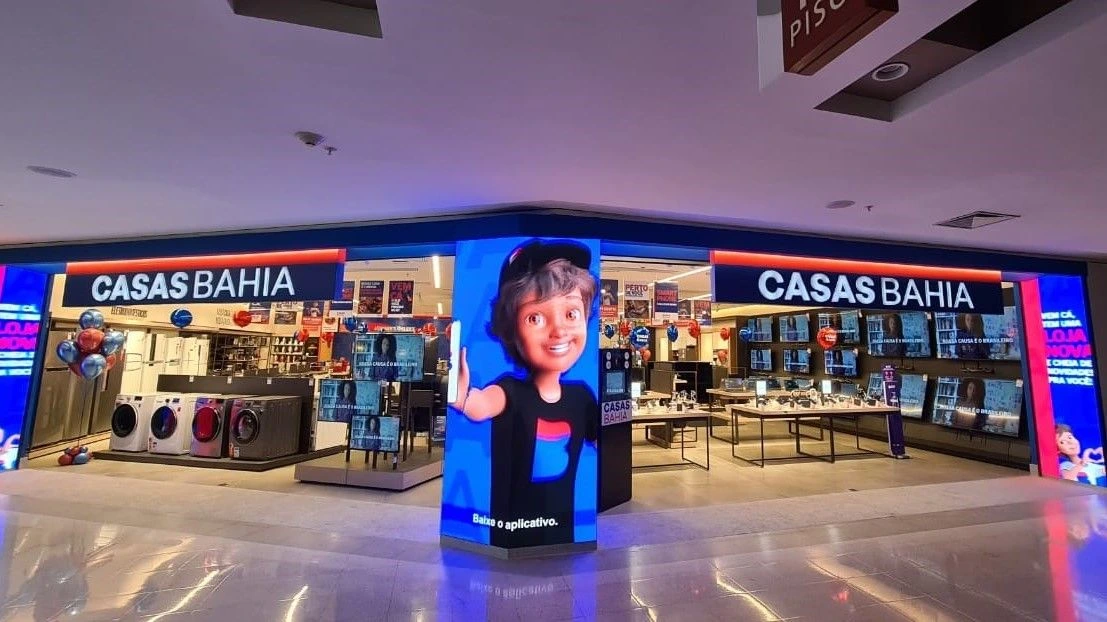
Where the goods come from
The items do not come from regular store shelves. They belong to the company’s technical assistance department, known as DAT, which handles returns and repairs.
That origin matters for buyers. Some lots carry no guarantee that the products work, and the platform sells them as seen.
Casas Bahia says the sales are routine. In a statement, the company called auctions a recurring practice in retail, used to clear returned or repaired merchandise.
The timing still draws attention. The Casas Bahia auction went live nine days after the retailer asked a São Paulo court for protection from creditors.
Live Company IntelligenceGrupo Casas Bahia S.A. — the full investor dossier
Valuation & profitability
Price & risk
$0.9952-wk high
$5.48
Revenue trend · 6y
Ownership
Dividend
A R$1.19 billion fight for cash
Separately, the company is fighting on three legal fronts to free up more than R$1.19 billion (US$231 million). The money would reinforce working capital during the recovery.
The largest front involves R$750 million (US$146 million) deposited in labor lawsuits. Casas Bahia wants those deposits moved to the recovery court and, later, permission to use the money.
Two labor unions oppose the request. They argue each deposit must be reviewed case by case, and the judge has not authorized any movement so far.
The second front concerns R$422 million (US$82 million) debited by Banco do Brasil. The bank had paid guarantees to Apple and Mapfre and then took the money from the retailer’s accounts.
Casas Bahia argues the bank jumped the creditor queue and wants the amount returned. Banco do Brasil declined to comment, and the court has not ruled.
The third front is smaller. Card processors Cielo, Getnet and Rede withheld more than R$18 million (US$3.5 million) as protection against cancelled purchases.
The company also reported blocked access to accounts at BTG Pactual. Its petition does not say how much those accounts held, so that money sits outside the tally.
Lawyers see a strategy to protect cash
Fernando Moreira, a business law professor at Fundação Getulio Vargas, says the three fronts are legally distinct categories. He reads the effort as a strategy to protect cash and working capital.
The size of the dispute, he adds, also signals relevant financial pressure. Thiago Groppo Nunes, a partner at IW Melcheds, sees room for a provisional fix on the bank money.
The judge could order an early return of the R$422 million (US$82 million) and decide later whether the debit was lawful. That would avoid hard-to-reverse damage to the operation.
On the labor deposits, lawyers note that transferring them only changes who decides their fate. Workers would keep their rights but could lose the earmarked guarantee behind each lawsuit.
How deep the hole is
The recovery filing of 16 August lists R$17.3 billion (US$3.36 billion) in debt. About R$16.4 billion (US$3.18 billion) sits with unsecured creditors, mostly banks and large financial institutions.
The filing covers ten group companies, including Cnova, furniture maker Bartira and logistics arms ASAP Log and Cntlog Express. In its petition, the company called this the worst financial crisis since its founding.
Labor claims account for R$754 million (US$146 million). Small suppliers hold another R$154 million (US$30 million).
Insurer Zurich Minas Brasil tops the creditor list with R$1.98 billion (US$384 million), ahead of a receivables fund and Samsung. The nineteen largest names hold roughly 69 percent of the total.
Days before filing, the group closed 298 stores and cut about 1,900 jobs. It had just reported a net loss of R$10.12 billion (US$1.96 billion) for the second quarter.
The closures ran through Thursday 13 and Friday 14 August. Sector sources estimate the total layoffs could reach 3,000.
This is the company’s second restructuring in two years. A 2024 out-of-court deal reshaped R$4.1 billion (US$796 million) of bank debt, stretching maturities and cutting costs.
That agreement, led by Bradesco and Banco do Brasil, won adhesion from about 54 percent of creditors. It extended the average maturity from 22 to 72 months.
What happens next
The Casas Bahia auction ends on 4 September, but the bigger dates sit in court. The company has asked for an early start to the 180-day stay period that blocks individual creditor actions.
That protection has not been fully granted. Until it is, creditors can still move against assets one by one, which explains the rush over deposits and card receivables.
A labor court has already ordered the retailer to rehire workers dismissed in the August closures. Next comes the recovery plan itself, which creditors must approve and the court must confirm.
The company has also sought a rescue loan of R$950 million (US$184 million) to fund operations meanwhile. It insists the Casas Bahia auction is routine, and the proceeds would not change the math either way.
For now, stores stay open and the website keeps running promotions. The judge, the creditors and the auction clock will decide the rest.
More: Brazil news in English, every day from The Rio Times.
Frequently Asked Questions
When does the Casas Bahia auction end?
Bidding on the 367 lots closes at 15:00 Brasília time on Friday 4 September 2026. The sale runs on the Kwara platform, with advertised discounts of up to 68 percent and starting prices from R$158 (US$31).
Are the items in the Casas Bahia auction new?
No. The lots come from the company’s technical assistance department, which handles customer returns and repairs. Some items are sold without any guarantee that they work, so buyers should read each lot’s condition notes.
How much does Casas Bahia owe, and to whom?
The retailer filed for judicial recovery on 16 August 2026 listing R$17.3 billion (US$3.36 billion) in debt. The largest creditors include insurer Zurich Minas Brasil, a receivables investment fund and electronics maker Samsung.
Connected Coverage
This story follows Brazil’s Casas Bahia Confirms It Has Filed for Bankruptcy Protection and Casas Bahia Seeks US$184M Rescue Loan in Court Recovery. On the bank behind the R$422 million dispute, see Banco do Brasil’s exposure to the retailer. The wider restructuring wave is in Brazil’s Habib’s Files for Judicial Recovery as OSX Creditors Back US$1.5 Billion Plan.
Sources: NSC Total and Folha Vitória on the auction lots and prices; CNN Brasil’s Débora Oliveira on the R$1.19 billion dispute, 27 August 2026; Exame on the creditor list; UOL on the company’s statement; filings at the 2nd Bankruptcy Court of São Paulo.
This article was produced by The Rio Times’ automated newsroom system. How we use AI · Report an error · Editorial responsibility: Matthias Camenzind, Editor-in-Chief