Brazil’s Welfare State at Its Limits: 94 Million Rely on Cash Transfers
Brazil’s Ministry of Development reports that 94 million people—44 percent of its 214 million citizens—depend on government cash transfers for basic needs.
Bolsa Família began in 2003 to fight extreme poverty by linking payments to school attendance and health check-ups. By 2014, these measures helped Brazil exit the UN’s Hunger Map.
Yet beneficiary numbers kept rising, revealing persistent structural poverty and labor-market informality. Employers created 1.49 million formal jobs in early 2025, and 77 percent went to aid recipients.
Their average wage remained R$2,161 per month, underscoring ongoing vulnerability despite formal employment. Brazil now spends roughly R$500 billion—about 4 percent of GDP—on social transfers each year, funded by general taxes.
Critics warn that cash alone cannot spur lasting economic growth without vocational training and private-sector expansion. Politicians now court this vast electorate, risking vote-buying and eroding democratic choice.
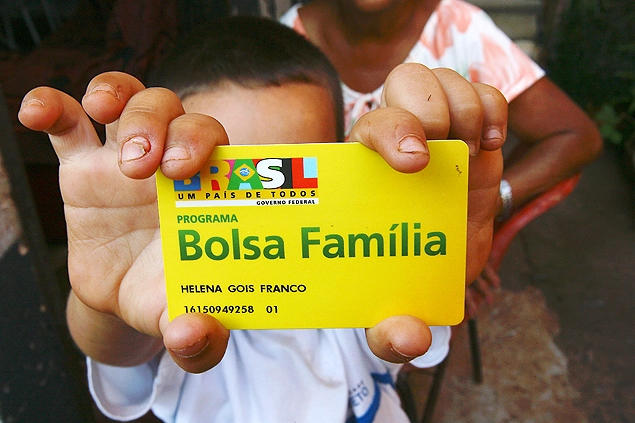
Experts urge combining cash support with skills training, education, and private-sector incentives. This balanced strategy could turn aid recipients into active contributors, not permanent dependents, and secure Brazil’s economic future.
Brazil Tops Social-Aid Dependency Among Emerging Economies
By comparison, Mexico covers 40.6 percent of its population with social-assistance programs such as Prospera and Seguro Popular, spending about 1.8 percent of GDP on these transfers.
Argentina’s safety-net programs reached roughly 30.2 percent of its population in 2021, according to the World Bank. South Africa supports 40.1 percent of its people through social grants, covering 25.4 million recipients, and allocates around 10 percent of its budget to these grants.
These figures place Brazil at the top among peer emerging economies in Latin America and beyond. Nearly half of Brazilians rely on state aid, a share that outstrips Argentina by 13.8 points, exceeds Mexico by 3.4 points, and ranks above South Africa’s 40.1 percent.
This exceptional scale of dependency raises concerns over fiscal sustainability, limited investments in infrastructure and education, and potential electoral influence when so many voters depend on government payments.
More: Brazil news in English, every day from The Rio Times.
Live Market IntelligenceBrazil — Live Market Board
Rio Times · Live Market Intelligence
Brazil — Live Market Board
+0.24%
185,992.03
+0.24%
63,684.18
+0.28%
11,381.18
+1.30%
3,061,512
+1.08%
2,521.85
+0.40%
58,965.05
+1.80%
| Instrument | Last | Change | YoY | Prev. | High | Low | Volume |
|---|---|---|---|---|---|---|---|
| IBOV | 185,992.03 | +0.24% | +21.85% | 185,547.66 | 168,310 | 167,142 | — |
| USD/BRL | 5.16 | +0.01% | -5.13% | 5.16 | 5.18 | 5.14 | — |
| SELIC | 14.00% | — | — | — | — | — | |
| PETR4 | 41.64 | -0.05% | +35.19% | 41.66 | 41.97 | 41.15 | 41,499,400 |
| VALE3 | 72.97 | +0.83% | +30.75% | 72.37 | 73.54 | 72.66 | 17,658,000 |
| ITUB4 | 38.60 | -1.03% | +4.57% | 39.00 | 39.34 | 38.39 | 29,487,800 |
| BBDC4 | 16.85 | +0.36% | +3.50% | 16.79 | 16.90 | 16.67 | 19,416,900 |
| BBAS3 | 19.37 | +0.47% | +0.73% | 19.28 | 19.44 | 19.16 | 11,069,200 |
| B3SA3 | 14.26 | -0.21% | +12.73% | 14.29 | 14.47 | 14.11 | 33,037,800 |
| ABEV3 | 14.89 | -0.80% | +21.91% | 15.01 | 15.07 | 14.81 | 16,453,100 |
| WEGE3 | 47.59 | +0.49% | +29.99% | 47.36 | 48.08 | 47.36 | 3,364,600 |
| PRIO3 | 59.14 | -0.19% | +50.67% | 59.25 | 59.81 | 58.74 | 3,325,600 |
| SUZB3 | 41.33 | +2.35% | -23.55% | 40.38 | 41.48 | 40.35 | 3,914,900 |
| RENT3 | 34.68 | -0.09% | +0.84% | 34.71 | 34.96 | 34.35 | 7,979,100 |
| AZZA3 | 15.89 | -2.63% | -53.76% | 16.32 | 16.42 | 15.82 | 1,330,300 |
| CSNA3 | 4.30 | +0.47% | -42.65% | 4.28 | 4.41 | 4.26 | 10,076,100 |
| GGBR4 | 24.69 | +2.19% | +51.38% | 24.16 | 24.85 | 24.18 | 7,047,600 |
| ENEV3 | 24.21 | -1.38% | +70.49% | 24.55 | 24.64 | 23.99 | 9,297,000 |
This article was produced by The Rio Times’ automated newsroom system. How we use AI · Report an error
Read More from The Rio Times