Brazil’s Unemployment Rate Hits Record Low of 6.2% in Late 2024
Brazil’s labor market has achieved remarkable milestones, painting a picture of economic resilience and growth. The unemployment rate has dropped to a historic low of 6.2% in the quarter ending October 2024.
This figure represents a significant improvement from previous periods. The Brazilian Institute of Geography and Statistics (IBGE) released these encouraging statistics.
The employed population has soared to an unprecedented 103.6 million individuals. This surge marks a 1.5% increase from the previous quarter and a 3.4% rise year-over-year.
Consequently, the employment rate has climbed to a record-breaking 58.7%. These numbers reflect a robust job market and growing economic opportunities for Brazilians.
Simultaneously, the unemployed population has decreased to 6.8 million. This reduction signifies an 8% drop from the previous quarter and a substantial 17.2% decline year-over-year.
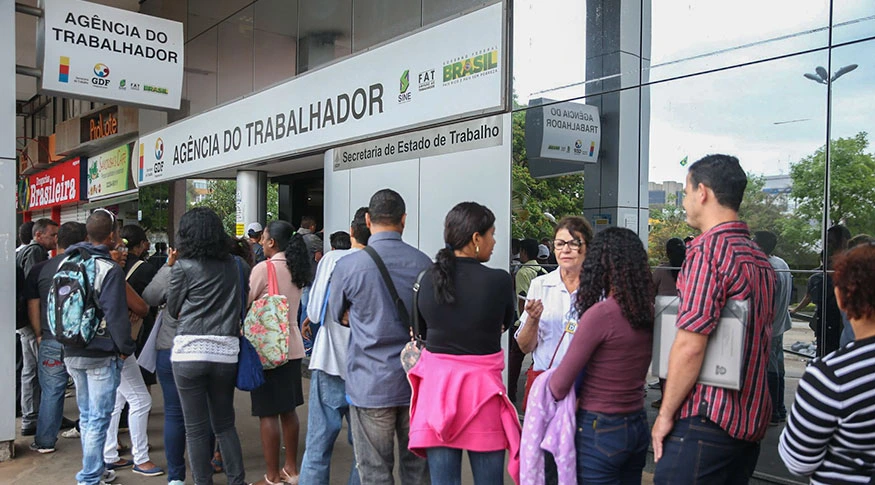
The shrinking unemployment figures suggest a positive trend in job creation and economic activity. The private sector has played a crucial role in this employment boom.
It now employs a record 53.4 million workers. Formal employment in the private sector has reached an all-time high of 39 million. Even informal employment has seen growth, reaching 14.4 million workers.
Brazil’s Labor Market: Growth and Challenges
These figures indicate a diverse and expanding job market. Public sector employment has also contributed to the positive trend. It has grown by 5.8% year-over-year, reaching 12.8 million employees.
The self-employed population remains stable at 25.7 million. These statistics demonstrate a balanced growth across various employment sectors.
Income levels have shown improvement as well. The real average earnings from all jobs have increased by 3.9% year-over-year. The total real wage bill has grown to R$ 332.6 billion.
This represents a 2.4% increase from the previous quarter and a 7.7% rise year-over-year. Rising incomes suggest improved living standards for many Brazilians.
However, challenges persist in the labor market. Regional disparities in unemployment rates continue to exist. Pernambuco, Bahia, and the Federal District still face higher unemployment rates.
Gender and racial inequalities in employment opportunities remain a concern. These issues highlight the need for targeted economic policies and initiatives.
The record-low unemployment rate and increasing employment figures indicate a strengthening Brazilian economy. This trend may influence future monetary policy decisions.
In addition, the robust job market suggests a broad-based economic recovery across various industries. The services sector has been particularly strong in job creation.
These positive labor market indicators point to increased consumer purchasing power. They also suggest potential for sustained economic growth.
However, policymakers must address regional disparities and demographic inequalities. Balancing economic growth with inflation control remains a key challenge.
This article was produced by The Rio Times’ automated newsroom system. How we use AI · Report an error · Editorial responsibility: Matthias Camenzind, Editor-in-Chief
LatAm Markets: Live Signals → — real-time movers, turnover leaders and FX across Latin America.