Brazil’s Economy Minister to Push Liberal Agenda Despite Aides’ Departures
SÃO PAULO, BRAZIL – This week the Brazil’s economic team was stunned by the resignation of two of Paulo Guedes’ top aides: Paulo Uebel and Salim Mattar. The departures, however, are not likely to threaten the liberal agenda of Brazil’s economy czar.
According to Guedes, Mattar, who was in charge of pushing through the privatization of some of the federal government’s largest state run companies, and Uebel, who was trying through an administrative reform to de-bureaucratize the federal public sector, both argued that they were leaving because they were unable to accomplish the work they were appointed to do.
“Salim (Mattar) said ‘Privatization isn’t going anywhere, I prefer to leave’; (Paulo) Uebel said ‘Administrative reform is not being sent to Congress, I’d rather leave’. This is the fact, this is the truth,” Guedes told reporters on Tuesday after the aides handed in their resignations.

Guedes admits that the so-called “stampede” of resignations seen in the past few months at the Ministry was partly due to the frustration of top officials in not being able advance on reforms and projects in their respective departments.
In June, there were other important casualties in the economic team, including Deputy Minister Marcos Troyjo, Treasury Secretary Mansueto Almeida, Secretary of Industry Development Caio Megale, and Banco do Brasil President, Rubens Novaes.
Despite the resignations, political scientists and economists say that Guedes’ liberal agenda continues to be a priority in the Economy Ministry.
“I do not think that these departures from the Ministry of Economy mean the end of liberal ideas. Politics is not binary. It is not yes or no, it supports or does not support. Things in politics are a big ‘it depends’,” Lucas Aragão, a political scientist and partner at Brasilia-based political risk firm, Arko Advice, tells The Rio Times.

“I think Paulo Guedes’ liberal agenda suffered a blow because of the pandemic. Brazil, like the entire world, spent more, entered into more debt. This weakened Paulo Guedes’ liberal agenda, but overall the government continues to support more liberal measures than non-liberal measures,” says Aragão.
Megale, the former secretary of Industry Development, agrees. “The replacements are not weakening Guedes’ agenda but rather solidifying it. The economic team is likely to continue to design policies with a liberal viewpoint,” he told journalists on a video conference on Friday.
Salim Mattar came to the government with the mission of overseeing the gigantic privatization plan promised by Bolsonaro during the 2018 presidential campaign. During the campaign, Guedes supported the privatization of all state-owned companies.
In March 2019, after becoming Minister of the Economy, Guedes stated that privatization would bring in more than R$1 trillion to the federal government. The expectation of the economic team was to reduce the number of companies in which the federal government has shares from 624 to 327.
As late as July of this year, Mattar stated that the federal government intended to transfer twelve companies into the private sector in the first half of 2021.
But according to Mattar, the lack of support by the ‘traditional establishment’ made the privatization process much more difficult and the bureaucracy made the processes take much longer.
“There is something called political will. I am saying that there is no political will to make privatizations,” he said in an interview with CNN Brasil after resigning.
For Aragão, one of the reasons the rhythm of privatizations was slower than predicted by Bolsonaro government is that the most important privatizations, like those of the Post Office and Eletrobras, require the approval of the Brazilian Congress.
“This government in its first year had a very troubled relationship with the national Congress. Privatizations have not yet happened because they need Congressional approval and the government does not have a very good relationship with Congress. Also, although important, (privatizations) have never been one of the government’s top priorities. Nonetheless, many things were privatized but not at the pace Salim and the market wanted,” explains the political scientist.
As for privatizations of major state-owned assets in the short-term, Aragão believes some, like the Post Office and federally-owned banks, will be very difficult to occur, while others may eventually be sold.

“I don’t think the government will even try to privatize any bank. Eletrobras is more likely to be privatized,” says Aragão.
As for former De-bureaucratization Secretary, Paulo Uebel, analysts say he tried, without much success, to attract support within the government for a public administrative reform and restructuring. The strong resistance by civil servants, however, has already shrunk the proposal to a mere fraction of its original. According to Brazilian media, the former secretary was also unhappy with the postponement of the reform until 2021.
Caio Mario Paes de Andrade, president of the state-owned data processing service, Serpro, will occupy the vacancy left by Uebel, while Secretary of Infrastructure Development, Diogo Mac Cord de Faria, will take over for Mattar.
According to Aragão, Mattar and Uebel’s substitutes are expected to continue their predecessors’ work, as they are also part of the liberal group within the ministry.
“The departure of Mattar and Uebel is very bad for Guedes’ liberal narrative but the substitutes are not adverse to the liberal agenda. Mac Cord and Andrade are seen as supporters of Guedes liberal agenda,” says the Arko Advice executive.
As for Guedes’ plans for the economy, analysts say that despite the detour due to Covid-19, the Economy Minister’s project remains in place.
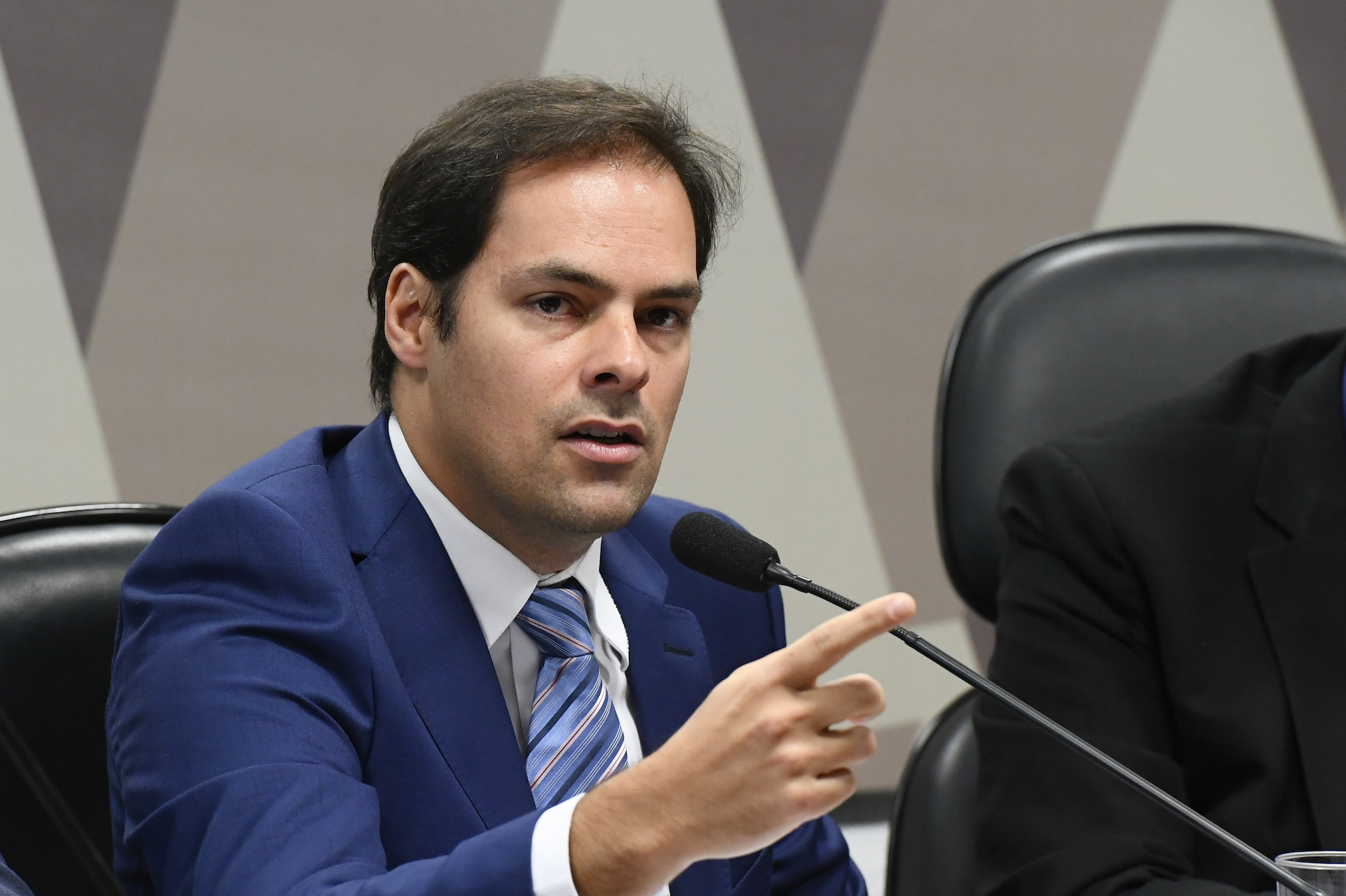
“In this moment of pandemic, it is absolutely difficult to be liberal, but I think the agenda remains more liberal than less so. What would be fatal for Paulo Guedes’ agenda is if the spending ceiling were removed (and so far it has not),” argues Aragão.
During these times of turmoil, there are always rumors of government cabinet members falling from grace, resigning or being replaced. Noting that although it is almost impossible to predict if Guedes will continue to lead the country’s economy, Aragão believes that, in the short term, the ‘Czar’ is likely to remain at the head of the Ministry.
Megale, who worked with Guedes until last month, agrees. According to the former secretary, the head of Brazil’s economy continues to believe in the implementation of his liberal agenda and is unlikely to leave the Bolsonaro government.
More: Brazil news in English, every day from The Rio Times.
Editorial responsibility: Matthias Camenzind, Editor-in-Chief · Editorial standards · Report an error