Brazil’s agriculture minister says discrediting Brazil and the Southern Cone is nothing more than envy
Articles, videos, and comments on social networks trying to associate Mercosur member countries with environmentally harmful practices and methods appear very frequently in the Northern Hemisphere.
Marcos Montes Cordeiro, Brazilian Minister of Agriculture, Livestock, and Supply, has no doubts: these are not spontaneous actions but actual campaigns aimed at discrediting Mercosur agriculture.
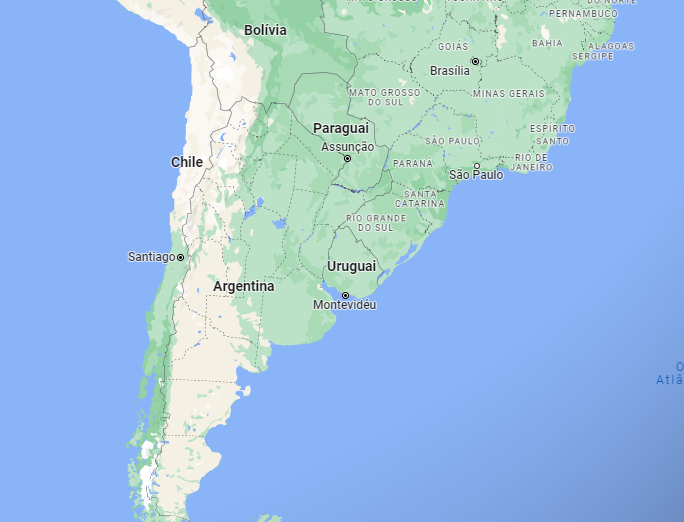
“There is an international campaign against Brazil, but also Argentina and Uruguay, in short, against the ‘Southern Cone’, because we are competitive in [agricultural] areas where they are not,” he said in an exclusive interview with Bichos de Campo.

“Brazil’s competitiveness [in agriculture] makes some people uncomfortable; it makes them uncomfortable that Brazilian productivity is increasing every day. This year alone, we harvested almost 272 million tons of grain and are on our way to 300 million tons. So we are reaching levels they can’t even imagine,” he said.
Montes said European countries – the most critical of Brazil – have changed their official discourse in barely a year since the Russian-Ukrainian conflict erupted.
“Europe has a different discourse today than it did a year ago. Why? When Europe pressures Brazil on the environmental issue [Amazon], it is just a pretext to diminish our competitiveness,” the minister said.
“People don’t know that many countries in Europe and also in the U.S. have begun to release their lands, which are not exactly small, for conservation to include them in agricultural production,” he said.
The minister said that one of the exponents of the smear campaign against Brazil is American actor Leonardo DiCaprio, who regularly publishes publications aimed at conveying that The minister said that environmental management in the South American country is out of control.
“Leonardo DiCaprio doesn’t know the Amazon. He went fishing and walking there and didn’t really know the Amazon. Twenty million Brazilians live there, and we want to give them their dignity too,” Montes said.
Montes explained that in Congress they are pushing a legislative project to legalize land in the Amazon to identify all landowners in the region so that they can be sanctioned if illegal activities are detected in the form of deforestation or illicit extraction of natural resources.
In this sense, the minister said that the four Mercosur member countries must adopt a common position on this matter because “we must show the world that we have sustainable production.” Of course, this requires that the agricultural policies of Brazil, Argentina, Uruguay, and Paraguay coincide in some fundamental aspects.
“Farmers and the government must be friends and speak the same language: both need each other. There must be no confrontation between the two,” Montes said.
“Here in Brazil, some time ago, there was a confrontation between the two sectors: the government was against the big players of the sector and used the small producer to turn him against the bigger ones. Many of these small farmers did not have title deeds and therefore did not have access to credit. They were used politically to stir up internal conflicts,” he explained, referring to the conflicts with the Landless Rural Workers Movement (MST) at the time.
“But with the upgrading of small producers, a period of peace began in the sector, and the conflicts and land invasions disappeared. And the big producers began to produce more and more and fly farther and farther away, while the small producers began to live with dignity,” he added.
The official noted that government subsidies to agriculture represent 1.5% of the value of Brazilian agricultural production and that most of these subsidies go to small producers.
More: Brazil news in English, every day from The Rio Times.
Editorial responsibility: Matthias Camenzind, Editor-in-Chief · Editorial standards · Report an error