A Homegrown Bet on Brazil Rare Earths Takes On the Foreign Giants
BRAZIL · ECONOMY
Key Facts
—Who. ADL Mineração is a fully Brazilian-owned company focused on rare earths and other critical minerals.
—The plan. It is pursuing a separation plant in Belmonte, Bahia, with investment of up to R$3bn ($580m).
—First phase. An approved first stage is a R$250m ($48m) plant to concentrate heavy minerals.
—A milestone. In April, ADL became the first private Brazilian firm in decades to export the rare-earths mineral monazite.
—Why rare. Brazil holds the world’s second-largest reserves, yet most projects are run by foreign companies.
—The prize. The hard, high-value step is processing, which China dominates with about 90% of the market.
The race for Brazil rare earths has been led mostly by foreign money, but one homegrown company is now betting hundreds of millions of dollars to prove a Brazilian-owned player can compete for the prize.
A local champion in the Brazil rare earths race
ADL Mineração is a name few outside the industry would recognise, but it is trying to do something unusual. The fully Brazilian-owned company, led by chief executive Francesco Cristoforetti, wants to build a rare-earths separation plant in the town of Belmonte, in the northeastern state of Bahia, with investment that could reach R$3bn ($580m).
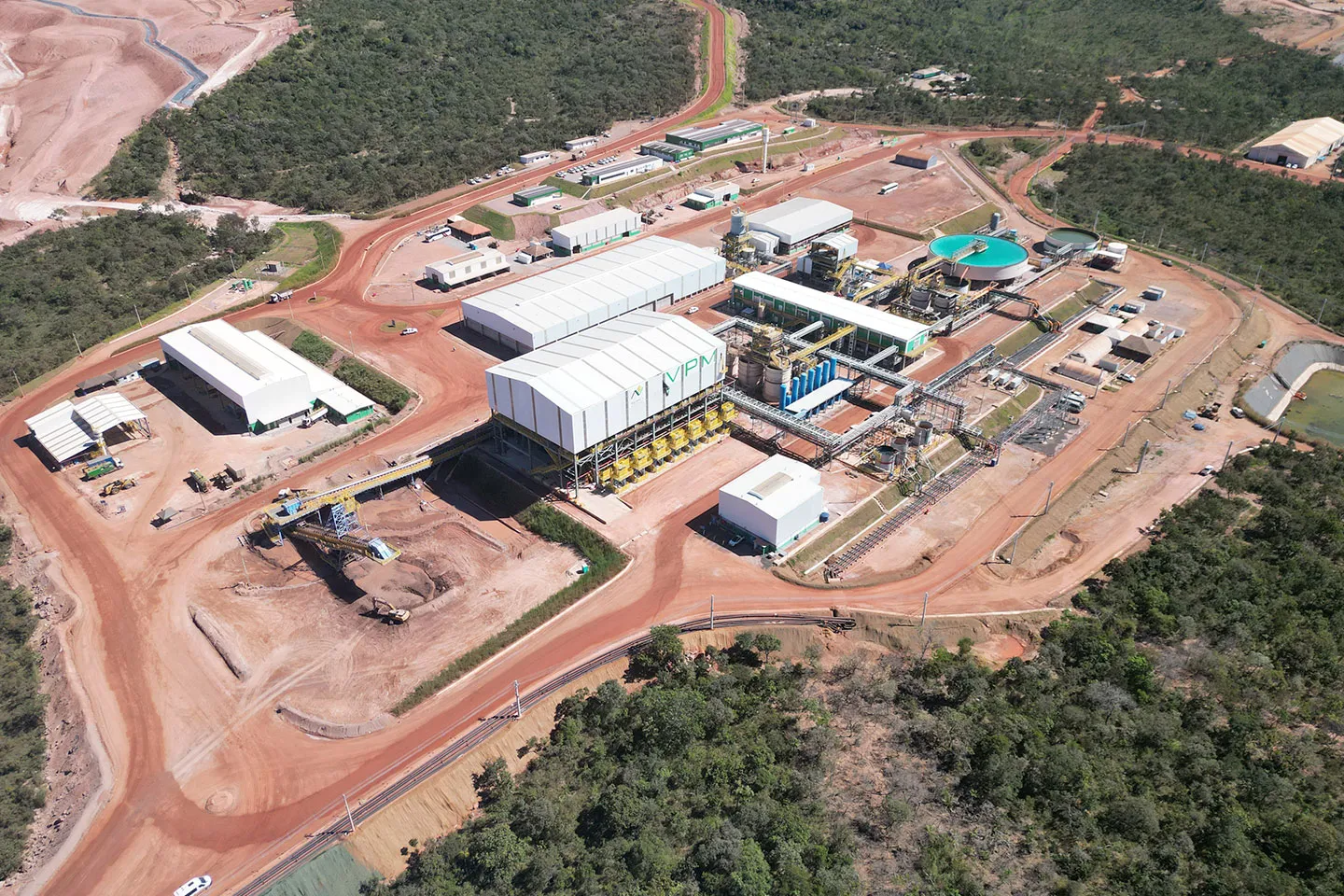
The project is being built in stages, starting with an already-approved first phase, a smaller plant worth around R$250m ($48m) that will concentrate heavy minerals near the town. A larger and more sophisticated separation unit is planned for a second phase, whose location is still being contested between Belmonte and a rival site in the state of Rio de Janeiro.
Why rare earths matter
Rare earths are a group of metals essential to the modern economy, used in the powerful magnets inside electric-car motors and wind turbines, as well as in electronics and defence equipment. Despite the name, they are not especially scarce in the ground; the difficulty lies in processing them into pure, usable materials.
That processing step is where the real power sits, and China controls roughly 90% of it worldwide. The United States, Europe and their allies are scrambling to build their own supply chains, which is why mineral-rich countries like Brazil have suddenly become so courted.
The foreign-owned crowd
Here is the twist that makes ADL stand out. Brazil holds the world’s second-largest rare-earths reserves, yet the companies developing them are largely foreign, which is exactly the gap ADL is trying to fill as a national alternative.
The biggest local producer, Serra Verde, was sold to a Washington-backed group in a deal our reporting identified as crystallizing a model Brasília had been trying to prevent, while Australian firms are building refining projects in Minas Gerais and a Chinese company snapped up another Brazilian miner. As The Rio Times has reported, Washington has poured money into the sector, including a large financing deal for Serra Verde aimed at securing supply for American buyers.
Against that backdrop, a Brazilian-owned firm investing its own money to climb the value chain is a notable counterpoint, and it speaks to a wider debate inside the country about who should profit from its natural wealth.
A first shipment, and a bigger goal
ADL has already made history of a sort. In April, it became the first private Brazilian company in decades to export monazite, a mineral rich in rare earths, sending a pilot shipment abroad and aiming to reach a few thousand tonnes a year to buyers in Canada, the United States and China.
Cristoforetti has said improvements to Brazil’s mining rules in recent years were decisive in making that export possible. The bigger ambition, though, is not just to dig minerals and ship them raw, but to process them at home, capturing more of the value that has long flowed to other countries.
What to watch
The Belmonte plan fits a policy the government has pushed hard, with President Lula insisting that foreign companies should industrialise minerals inside Brazil rather than simply export them raw. A homegrown firm doing exactly that is the kind of story officials like to point to.
For now, the caution is that much of this remains a plan, because while the first phase is approved, the larger separation unit and its location are not yet settled, and turning ambition into a working processing hub will take years and steady financing. Still, in a field crowded with foreign names, a Brazilian challenger trying to climb the value chain at home is worth watching.
More: Brazil news in English, every day from The Rio Times.
Frequently Asked Questions
What is ADL Mineração planning?
The Brazilian-owned company plans a rare-earths separation plant in Belmonte, Bahia, with investment of up to R$3bn ($580m). An approved first phase is a R$250m ($48m) plant to concentrate heavy minerals.
Why does it stand out?
Brazil holds the world’s second-largest rare-earths reserves, but most projects are run by foreign companies from the US, Australia and China. ADL is a rare fully Brazilian-owned player chasing the high-value processing step.
What did ADL achieve in April?
It became the first private Brazilian firm in decades to export monazite, a rare-earths mineral, with plans to reach a few thousand tonnes a year to Canada, the United States and China.
Why do rare earths matter so much?
They are essential to magnets in electric cars, wind turbines, electronics and defence gear. The hard part is processing, which China dominates with about 90% of the market, making non-Chinese supply strategically valuable.
Connected Coverage
US Secures Brazil Rare Earths in $565 Million Deal
Why Latin America Is Key to the Global Rare Earth Race
Brazil Mining 2026: Complete Sector Guide
This article was drafted with automated assistance and reviewed before publication. How we use AI · Report an error · Editorial responsibility: Matthias Camenzind, Editor-in-Chief