Brazil Senate Passes Pension Bill 73-1, and the Government Heads to Court
Politics
Key Facts
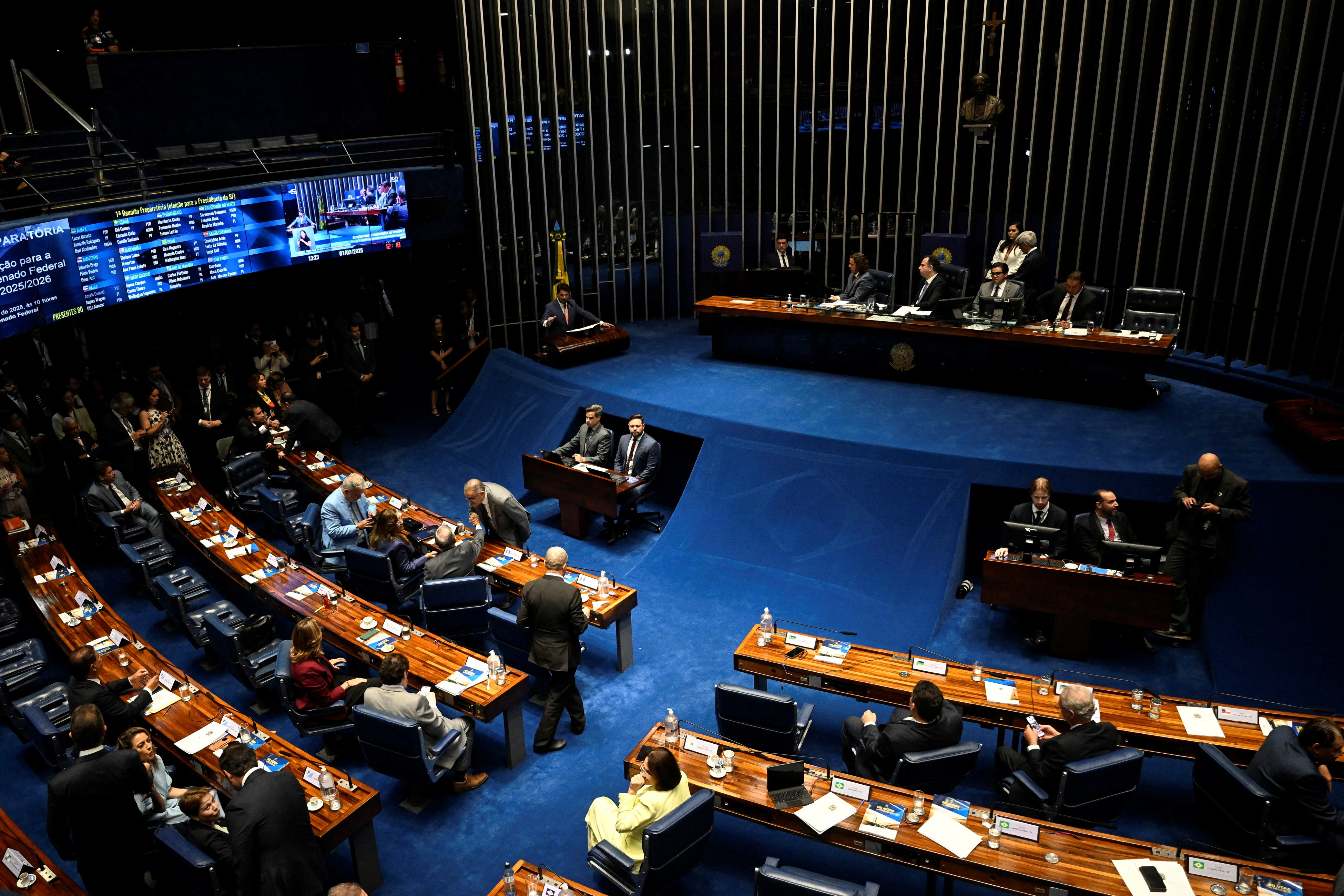
—The vote. Brazil’s Senate approved PEC 14/2021 in two rounds on July 14, 2026, by 73 votes to 1, with one abstention. It now goes to promulgation, which no presidential veto can stop.
—Two price tags. The Finance and Planning ministries put the budget impact at R$3bn ($585m) a year; press accounts cite the Social Security Ministry estimating an actuarial deficit of approximately R$27 billion over the first ten years (about R$2.7 billion per year).
—The pipeline. The same two ministries count nine bills in Congress worth R$111bn ($21.6bn) a year in combined spending and forgone revenue.
—Court threat. Finance Minister Dário Durigan said the government will likely go to the Supreme Court if the amendment names no revenue source.
—Who benefits. Roughly 370,000 community health and endemic-disease agents, retiring at 57 for women and 60 for men instead of 62 and 65.
—The politics. Eight of the nine senators from Lula’s own party voted for it. The government’s Senate leader abstained.
The Brazil pauta-bomba stopped being hypothetical last night. The Senate passed the health-agents pension amendment by seventy-three votes to one, and the government’s own party supplied most of them.
A pauta-bomba, in Brasília’s political shorthand, is a bill that is popular to vote for and expensive to pay for. It forces a government either to find money it does not have or to break its own spending rules. Our reporting has shown that these measures often carry a political subtext: the Senate’s 2025 health-pensions vote, for instance, was widely read as institutional payback after President Lula passed over a Senate favorite for a Supreme Court seat.
This one is now beyond recall. Because it is a constitutional amendment, it goes straight to promulgation by Congress, and no presidential veto can touch it.
What the Brazil pauta-bomba vote actually did
The Senate approved PEC 14/2021 in two rounds on Tuesday evening. The official tally was seventy-three in favour, one against, one abstention.
Community health agents and endemic-disease agents are the door-knockers of Brazil’s public health system, the people who track pregnancies, vaccinations and dengue outbreaks house by house. The rapporteur called them the health service in flesh and bone, and put the category at more than 370,000 people.
They will now retire at a minimum age of 57 for women and 60 for men, with 25 years of contributions and service. The general rule requires 62 and 65.
Transition rules soften the landing further, and this is the part the headlines skip. Until the end of 2030 the floor is 50 for women and 52 for men, which is twelve and thirteen years below the general rule, rising in steps until 2041.
The amendment also bars temporary or outsourced contracts for these workers except in declared health emergencies. States and municipalities must regularise existing informal contracts by the end of 2028.
Why two numbers, and why the gap matters
Reports of the vote carried a figure of approximately twenty-seven billion reais over the first ten years. The Senate’s own account carries three billion a year, attributed to the Finance and Planning ministries.
Both are correct, and they measure different things. The larger number is an actuarial impact on the pension system’s long-run balance; the smaller is the annual hit to the federal budget.
Divide the actuarial figure of approximately twenty-seven billion reais across the ten-year horizon cited by Brazilian outlets and it lands near two point seven billion reais a year — almost exactly the budget number. The two figures are the same elephant measured from different ends.
A third estimate circulates too. The social security ministry has put the actuarial imbalance as high as fifty-four billion reais spread over the next eight decades.
The court fight, and the awkward detail
Finance Minister Dário Durigan said the government would probably take the matter to the Supreme Court. His argument is that the constitution and the fiscal responsibility law require any new pension benefit to name the revenue that pays for it.
He was explicit that the trigger is the missing funding source, not the benefit itself. Had the amendment carried compensation, he said, the government would not sue.
Here the record complicates the case. The Senate’s own summary states that the approved text indicates how the Union will fund the extra cost, through complementary financial assistance to states and municipalities and transfers to the national pension regime.
That is precisely why the ministries’ budget estimate is three billion a year rather than the full actuarial sum. Whether that assistance counts as a compensating revenue source under the court’s own precedents is the question a case would turn on.
The precedents cut both ways and are recent: the national nursing wage floor and the payroll-tax exemption rollover both reached the court on similar reasoning. Justice Gilmar Mendes has already said publicly that new spending requires named budget sources.
The nine bills behind this one
The health-agents amendment is one item on a list. The Finance and Planning ministries counted nine proposals moving through Congress with a combined annual impact of one hundred and eleven billion reais, mixing new mandatory spending with forgone tax revenue.
The single largest is not a pension at all. A bill raising the ceiling for the simplified small-business tax regime carries an estimated fifty billion reais a year in forgone revenue, nearly half the total.
Behind it sit a municipal revenue-sharing amendment at ten billion, a religious-property tax exemption at ten billion, social-assistance funding at nine billion, a tax-regularisation programme at eight point eight billion and a doctors’ pay floor at eight point four billion.
Against that list, last night’s amendment is small: three billion against one hundred and eleven is under three percent of the annual pipeline. What it establishes is not cost but precedent, in an election year, with a Senate that just voted seventy-three to one.
The official numbers have been moving too. The Finance Ministry’s executive secretary, Rogério Ceron, said in an interview that measures under discussion could reach two hundred billion reais, a figure eighty percent above the consolidated estimate his own ministries published hours later.
Why does the Brazil pauta-bomba matter to a foreign investor?
Brazil’s investment case rests on the credibility of its fiscal rules, and the central bank holds interest rates high partly because that credibility is in doubt. Each mandatory spending commitment that passes without funding raises the odds that rates stay higher for longer, which feeds directly into the currency and into how global funds price Brazilian assets.
Can the government still stop the pension amendment?
Not through the presidency. A constitutional amendment goes to promulgation by Congress and cannot be vetoed, so the only remaining route is the Supreme Court, which is what the finance minister has signalled.
What should expats and residents in Brazil watch next?
Watch whether the government actually files at the Supreme Court and how the court treats the funding-source question, because that answer governs the eight bills still in the pipeline. For anyone paid in reais or holding local assets, the fiscal path feeds the interest rate and the exchange rate more directly than any single benefit does.
Frequently Asked Questions
What is a 'pauta-bomba' in Brazilian politics?
A pauta-bomba is a bill that is popular to vote for but expensive to pay for, forcing the government to either find money it does not have or break its own spending rules.
What did the Senate vote on and what was the result?
The Senate approved PEC 14/2021, a health-agents pension amendment, in two rounds on July 14, 2026, by 73 votes to 1, with one abstention. Because it is a constitutional amendment, it goes straight to promulgation by Congress and no presidential veto can stop it.
Who benefits from this amendment and how?
Roughly 370,000 community health and endemic-disease agents benefit, as they can now retire at 57 for women and 60 for men instead of the previous ages of 62 and 65.
Connected Coverage
Brazil Senate Fires Off Spending Bills That Rattle Markets and Lula
Brazil Fiscal Squeeze Deepens as Finance Chief Warns on Spending
This article was produced by The Rio Times’ automated newsroom system. How we use AI · Report an error · Editorial responsibility: Matthias Camenzind, Editor-in-Chief