Traffic Jams in São Paulo: a Constant Headache For City Residents
SÃO PAULO, BRAZIL – Last week Chile’s national football (soccer) team, on their way to compete in a Copa America quarter-final game against Colombia, experienced a little of what thousands of residents of São Paulo city face every day – they got caught in a traffic jam. The game had to be delayed for twenty minutes due to the late arrival of the players.

“Everything was well-planned, but we still couldn’t make it on time,” Chile’s coach, Reinaldo Rueda, told reporters after the game.
“There was some anxiety inside the bus, but we tried to make sure that it didn’t affect the players during the game,” he said. In the end, Chile beat Colombia and advanced to the semi-finals against Peru, scheduled for Wednesday night, July 3rd.
São Paulo City, with one of the world’s largest populations, also has the largest fleet of motor vehicles in the country. According to officials, there are more than 8.5 million cars, motorcycles, buses and trucks in São Paulo on any given day, with over one million of those coming in from outside the city.
In 1997, city officials implemented in the center part of the city a “rodizio” – a vehicle restriction during morning and afternoon peak hour for one fifth of the fleet each day (depending on the car’s license plate). The measure, however, postponed only slightly the increase of motorized transportation in the city.
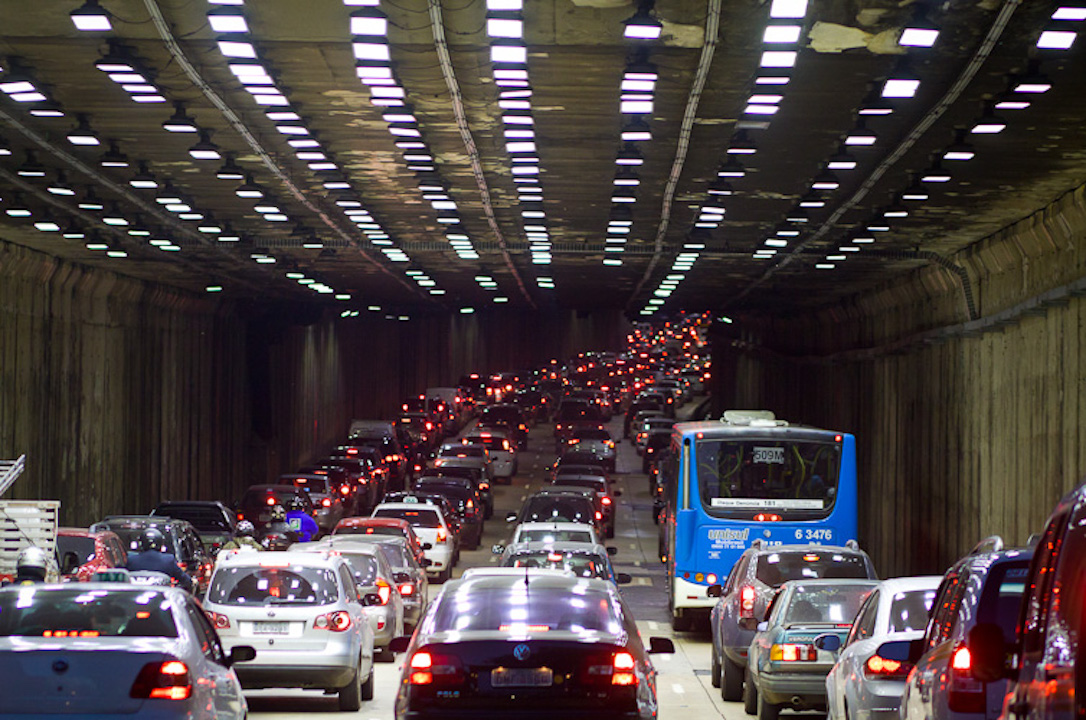
The traffic situation did not improve much upon implementation of the “rodízio”. Many of those with money purchased a second car, and what felt like a relief for a few years, returned to being a headache. Today, enormous traffic jams of up to 100 km long are common. With heavy rains, or on the eve of weekends and holidays, those jams can reach up to 200 km in length.
A survey, released this past April and conducted by Foundation of Economic Research (Fipe), showed that residents of São Paulo city and its metropolitan region lost, on average, 23.4 minutes per workday in traffic jams between 2016 and 2018.
During that period, those who used an automobile to get around took almost 35 percent more time than expected to get to their destinations. The survey concluded that, in the last three years, 1.4 million hours had been wasted in traffic jams by those who use cars in the city. The numbers, they say, do not include the use of other means of transport like buses and motorcycles, only automobiles.
The Fipe research concludes that traffic congestion is one of the major problems faced by residents of São Paulo, “generating economic and welfare losses for residents and visitors from the cities of the region.”
“The solution to the city’s traffic is better and more efficient public transportation,” architect and urban planner, Pablo Hereñú told The Rio Times.
According to Hereñú, what is needed in the city is not so much an increase in the public transportation network (metrô and buses) but more efficiency and reliability. “To attract those who are willing to switch from private auto or taxis to public transportation we need a system that is reliable; that will get them there at the expected time,” he says.
“Especially on buses, we need a redistribution of routes to optimize the network itself and increase capacity,” says the architect, noting that there is no need to have nearly empty buses run during off-peak hours.
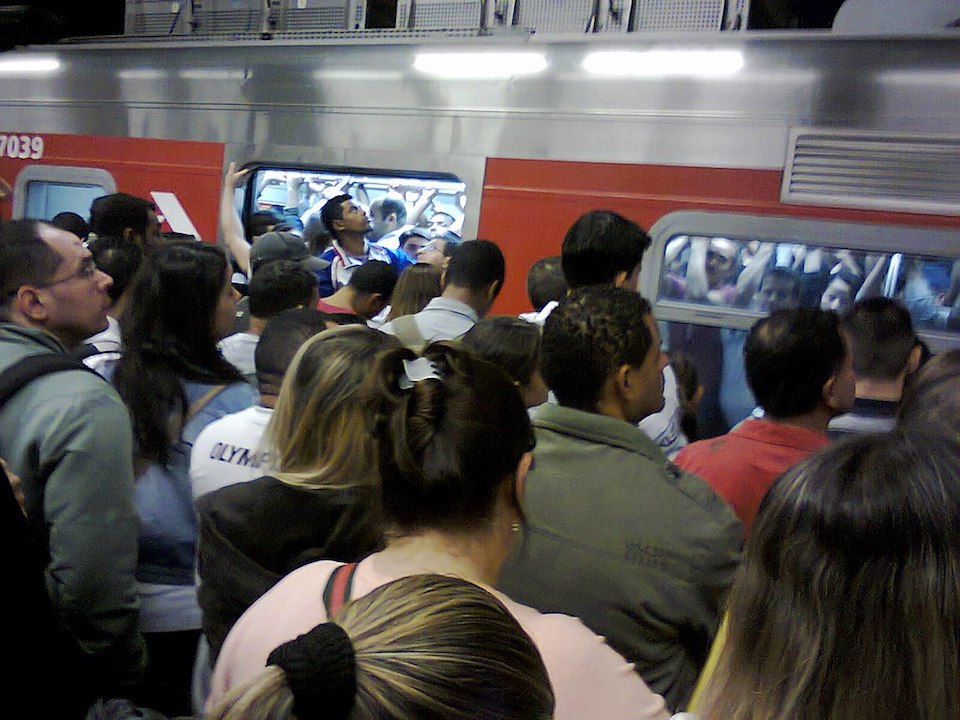
The introduction of transportation apps, such as Uber and 99Taxi, says Hereñú, actually have worsened the situation, by placing more, not fewer, cars on streets and highways. “The people using these transportation apps are those who used public transportation, not those who used their automobiles,” explained the urban planner.
Still, for Hereñú, one of the best means of getting around short distances is the old-fashioned way: walking. “Walking to wherever one needs to go is the best. It improves the city’s condition as a whole, not only traffic congestion but when you walk you occupy public places in the city that have been forgotten, you socialize with neighbors and help neighborhood commerce,” he says.
Chile will now play Peru in Copa America’s semi-final in Porto Alegre. That southern city also has some traffic problems, but this time Chile’s team is likely to leave early so as not to arrive late at the stadium.
More: Brazil news in English, every day from The Rio Times.
Editorial responsibility: Matthias Camenzind, Editor-in-Chief · Editorial standards · Report an error
Living in or visiting São Paulo? See this month's events and our São Paulo city guide with rents, safety and upcoming concerts.