In São Paulo’s Deadliest Covid-19 Neighborhood, Elderly Residents Await Hospital Space
SÃO PAULO, BRAZIL – “Oh son, my life is chaos.” These are Ilma Paulino’s first words when asked how the coronavirus pandemic is affecting her routine. A resident of Vila Teresinha, a sub-district of Brasilândia, in São Paulo, she lives with her two children -one of them with depression- and needs to look after her epileptic sister.
Because of her visits to the doctor and daily care, she has not been able to hold a steady job for two years. She supports herself with the help of a minimum wage from her sister’s INSS (Brazilian Social Security Institute) pension and odd jobs as a housemaid, which yielded around R$200 per week.
“I used to get those jobs, but now I’m not even getting that. People are afraid of having people in their homes,” the woman says. While chatting, she is handed a basic basket by the community group ‘Preto Império’, which works in partnership with the Uneafro pre-school network and the ‘Alma Preta’ journalism agency. “If they weren’t helping me, I’d be lost,” says the woman, who requested the emergency basic income from the federal government, but has not yet obtained an answer.

At home, Ilma keeps her routine of washing her hands well and keeping everything clean. Her brother, who is over 60 years old and lives in another street, is intubated in the Vila Penteado General Hospital’s ICU. According to her niece, who daily tells her his medical reports, he has not been responding to treatment. “And I’m leading my life, as God wants. But as far as it will go, I don’t know”.
Ilma’s account portrays some of the difficulties faced by residents of Brasilândia, a favela located in the northern part of São Paulo and one of the city’s most populous: there are approximately 300,000 inhabitants spread over 43 sub-districts.
According to data from the mayoralty, Brasilândia accounts for the highest number of confirmed or suspected coronavirus deaths. On Monday’s report, the region recorded 103 confirmed or suspected deaths. This higher figure is mainly owed to the higher number of inhabitants.
Another factor that further exposes the region is the delay in the inauguration of the Brasilândia Municipal Hospital, pledged by the city to open in May. But when the death rate is considered, Brasilândia accounts for 36.5 deaths per 100,000 inhabitants. Belém (east zone), Pari (center) and Artur Alvim (east zone) figure at the top, with rates above 56 deaths per 100,000 inhabitants.
Tuesday morning, April 28th, between 9 AM and 2 PM, most of the streets had very little traffic – some roads were completely empty – while the majority of stores – except markets, grocery stores and some workshops and bars – remained closed.
Crowds are punctual: they occur in places where public works are being carried out, in lines at the Caixa Econômica Federal (Federal Savings Bank) and Lottery Houses, and in the distribution of packed lunches by the state government’s ‘Bom Prato’ program. Among those walking the streets or using public transports, most wore protective masks to cover their mouths and noses.
“Thank God I have my family to help me, they are giving me great strength,” says Maria de Fátima Nunes, a 62-year-old retired seamstress. She lives with her three daughters, three sons-in-law and eight grandchildren. Everyone has been avoiding leaving home for the past few weeks. In addition to her retirement pension of one minimum wage, the family manages to remain isolated because of the daughters, all of whom are registered employees, despite a 50 percent cut in salary.
Because of food restrictions, the family also relies on the donation of organic food delivered by ‘Preto Império’. “Otherwise, I would have to go out to get food and everything. But I get very depressed because I’m isolated. It makes me very sad because I want to do things and I can’t”.
The awareness of people like Maria de Fátima and her family is recent, from a few weeks ago, as the number of cases and deaths has increased throughout the neighborhood, according to several reports.
“Even so, many put on their masks and, when it’s time to chat, they take them off,” explains Elaine Reis, 44. One can see, as in the other neighborhoods of São Paulo, people chatting at a short distance in bars and outside their homes or teenagers flying kites.
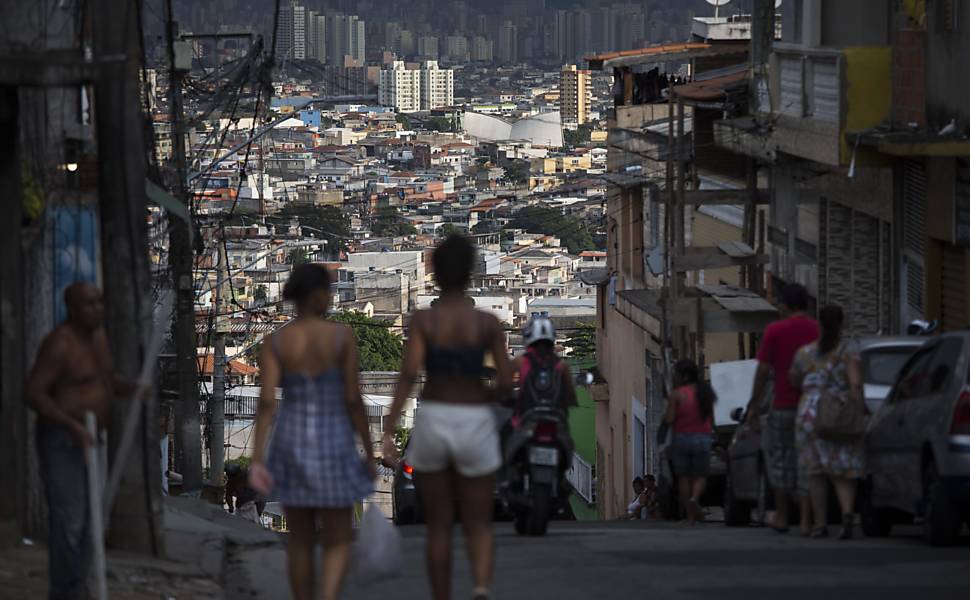
There are also reports that the traffic on the streets increases on weekends. A health worker and resident of the region, Elaine argues that information on the risks of covid-19 has been spreading not only through the media, but also on the streets.
“The other day a sound car drove by explaining, advising how everyone should behave. But not everyone is taking care, worrying about whether they will have a future. There are still many people who don’t wear masks to go out and aren’t fully quarantined”, she explains. Elaine is not referring to the workers who cannot stop – “they are being more careful,” she says – but rather to those who “act as if they were on vacation”.
Her husband is an app driver and saw business decrease. He remains in isolation most of the time along with their daughter, as well as other relatives who live in attached homes. It’s up to Elaine, who is at the forefront of the fight against the coronavirus, to support her family.
“Spending on food, water and electricity has increased. We also had to spend twice as much on a faster Internet, because the other one wasn’t enough with everyone at home using it,” the woman says. “On the other hand, our monthly income decreased by about 60 percent. We had to go into debt, parcel out our credit card payments, which have abusive interest rates…”. Her husband was accepted in the government’s emergency basic income program, but for bureaucratic reasons, he is still waiting for the R$600 to be released by the Caixa.
Dimas Reis, 32 years old, born and raised in Brasilândia and today the coordinator of the Preto Império group, confirms that there are people, mostly youths, who “are belittling what is happening and have no notion of the impact” of the pandemic.
“It’s like what happened in a home around the corner, where the grandmother was isolated but her grandson went out all the time. The grandmother ended up infected, but the grandson is still fine,” she says. However, she explains that all the neighborhoods on the outskirts of São Paulo have “similar conditions of education, food and poor sanitation” and are more exposed to the coronavirus “because of the absence of the State”.
The peripheral favela neighborhoods, particularly in the northern and eastern zones, account for the majority of Covid-19 deaths. In parallel, municipal and state hospitals, many of them located in the peripheries, have an ICU bed occupancy rate higher than 80 percent – some, such as the Emílio Ribas reference center, have already reached 100 percent.
Casual workers
Dimas points out that another factor that is very common in the São Paulo and Brazilian favelas, is casual work.
“People need to kill a lion a day and try to secure their livelihood, and many cannot isolate themselves. Isolation is necessary, but it is hugely impacting on families. They have no means, no prospect of sticking to their plans, of paying their fixed bills, of eating…”, he explains.
As a result of this situation of vulnerability, Preto Império has enrolled some 200 low-income families through community health agents. By last Tuesday it had already distributed 300 food baskets with oil, rice, beans and pasta, in addition to delivering 150 packed lunches a week.
“I was touched by a father who came on foot from another neighborhood with his son to ask for food, despite knowing that we were already delivering and trying to solve it. Seeing that and not being able to help that day was very painful,” he says.
Another of those who benefited from Preto Império’s donations is stonemason Ivanilson Ramos do Nascimento, 47. He lives with his father, a 77-year-old retiree who is paid a minimum monthly wage, his brother and two nephews. Like Ilma, he has no fixed work since 2013 and supports himself with odd jobs.
“I’m self-employed and I used to make about R$2,000 a month. But now there is no work, I have been idle for almost two months,” he explains.
However, Ivanilson needs to interrupt his social isolation to do some jobs as a mason, painter and electrician which, he says, he cannot refuse. “I can’t work from home. My service is manual, right? If I don’t go there personally to do it, I get nothing. But today I can’t even raise R$400 a month,” he says. He also applied for the government’s emergency basic income and is waiting for a reply.
“We own our home, and that helps, but there’s water and light to pay for. We’re getting by because we help each other, but we’re in need. My ex-wife and my children’s situation is easier. She works as a cleaning lady and has been fired, but at least she is getting her second unemployment benefit”.
“I think everybody at home got it”
In the two-bedroom, one-bathroom home where the seven people in teacher Michele Tamara Fernandes Teixeira’s family live, only her father-in-law and her husband did not have any symptoms associated with the coronavirus. Her mother-in-law was the first to develop symptoms such as fever and fatigue. She ended up hospitalized after being diagnosed with urinary infection in the Municipal Emergency Room 21 de Junho, in the region of Freguesia do Ó.
“She was never tested for Covid-19, we’ll never know what she had, but she still has no sense of taste”, says the teacher.
As there was no confirmation of the disease, and the diagnosis was only urinary infection, the teacher accompanied her mother-in-law during her five days in hospital. And it was exactly there, inside the hospital, that she believes she was infected. “I wasn’t given a mask to wear inside the hospital,” she says. “Not for me and not for her; we remained in a ward with seven other people, and nobody wore a mask”.
A few days later, Michele began to have diarrhea and relentless fever. She sought three private hospitals and only in the last one was she tested for covid-19, after an x-ray showed spots on her lung. She was hospitalized for two days.
When she returned home, it was her son’s turn to spend another two days in hospital with similar symptoms. Unable to isolate herself in such a small house for so many people, the domino effect on the family ensued, affecting the youngest daughter and then the eldest, who eventually became short of breath. Of the five symptomatic family members, only Michele and her son were able to perform the Covid-19 test. And only hers tested positive.
In her opinion, everything could have been prevented if her mother-in-law, the first to fall ill, had been tested so that the rest of the family could protect themselves from contagion. “If they had tested her or given me a mask at the hospital where she stayed, none of this would have happened,” says Michele. “In the end, I think everyone at home had it, but my husband and father-in-law were asymptomatic.
Brasilândia Hospital still not operating
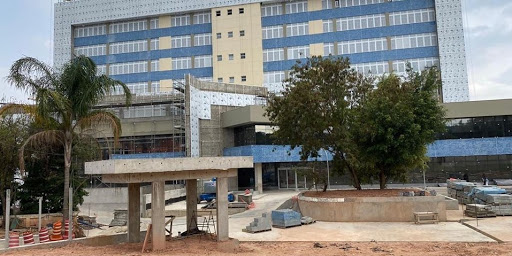
Brasilândia has 17 Basic Health Unit (UBS) clinics, in addition to other municipal facilities, but the only large center for complex care in the region is the Vila Penteado General Hospital, managed by the State Government. Residents are still waiting for the inauguration of the Brasilândia Municipal Hospital.
The Municipal Health Department ensures that the building will be delivered in May. “The facility will include 150 ICU beds and 30 exclusive transition beds for the treatment of people with the novel Coronavirus. When ready, it will be a hospital and maternity ward with 305 beds and will benefit 2.2 million people in the region,” it states.
“The municipal administration has restarted, as of 2017, several works left idle by the previous administration in areas like health and education, which led to the review of the initially planned deadlines,” he adds.
The municipal administration also says it has been carrying out preventive community actions and joining with local leaders and neighborhood associations to disinfect the streets, distribute masks and relay information through sound cars.
“The health care facilities have been providing daily care for users with symptoms of influenza syndrome. When mild, they are given medication and directed to home isolation. These patients are monitored daily and monitored again up to the fifth day. If their symptoms worsen, they are referred to field hospitals, according to clinical criteria”.
Source: El País
More: Brazil news in English, every day from The Rio Times.
This article was produced by The Rio Times’ automated newsroom system. How we use AI · Report an error · Editorial responsibility: Matthias Camenzind, Editor-in-Chief