Visa exemption could generate up to US$155 million per year in tourism in Brazil
By Alexandre Saconi
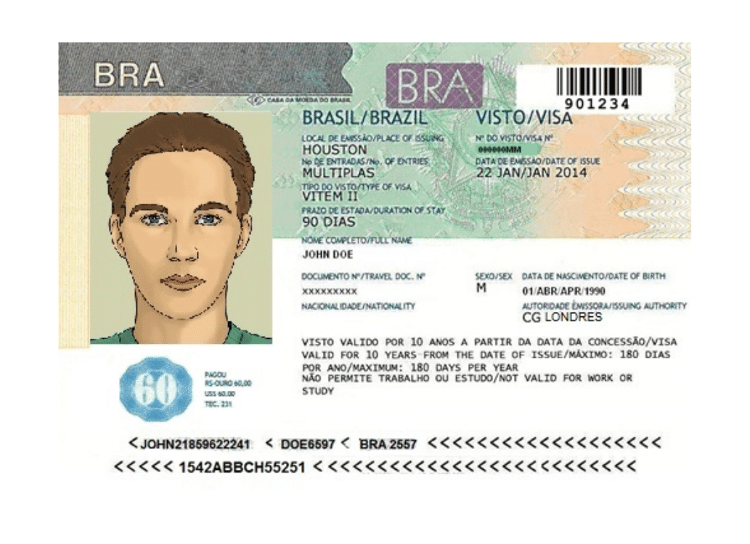
The country could generate at least R$800 million (US$155 million) more annually in tourism without resuming visa requirements for citizens from Australia, Canada, the United States, and Japan.
The conclusion is from a study by Glauber Santos, professor of the Graduate Program in Tourism at the University of São Paulo.
If not for the pandemic, the first year in the effect of the visa waiver for these countries could have resulted in an extra 200,000 international travelers entering from these nations alone in its first year in effect.

In March 2023, the government announced that it would again require visas for the four countries, a measure the tourism sector has strongly criticized.
GROWTH
According to the academic, while the visa waiver was in effect before the pandemic, between July 2019 and the end of February 2020, an increase of 80,000 tourist arrivals from those countries and a total of R$328 million more in international tourism revenue was recorded.
Santos concluded that keeping the pace of growth and observing data from previous decades compared to the beginning of the end of the requirement, the visa exemption could generate up to R$800 million more per year, just taking into account citizens of the four countries.
Although the study is an estimate, it points out that visa waivers have indeed brought more tourists and money to Brazil.
“We can reject the idea that the visa waiver would not impact Brazil’s tourism,” says Glauber Santos
The data were observed based on the history of tourist arrivals from the four countries since 1989 and the growth trend in the flow during the eight-month period in which the measure was in force before the pandemic began.
THE AIRLINE INDUSTRY FEARS THE IMPACT
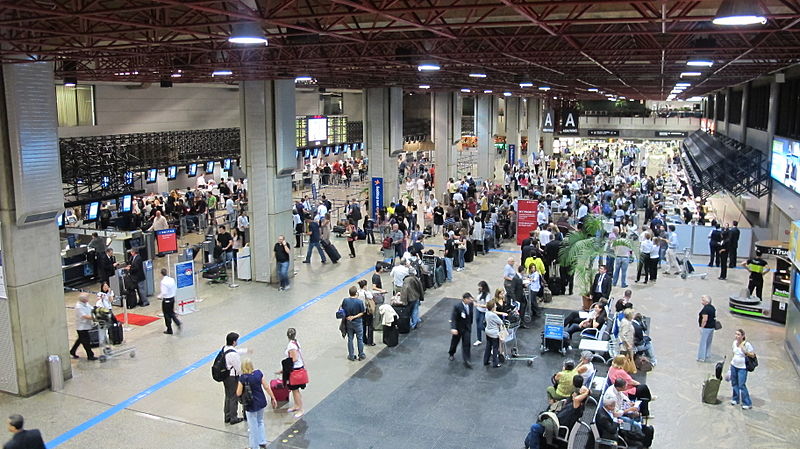
The end of the reciprocal collection of visas between the countries is a measure praised by airline industry members, which fear the impacts of the return of the requirement.
A letter sent to Minister Daniela Carneiro (Tourism) by entities in the area revealed that Brazil has not yet recovered connectivity with other countries.
According to Eduardo Sanovicz, president of Abear (Brazilian Association of Airlines), it is essential to maintain this exemption when the country has not yet returned to the level of pre-pandemic flights.
According to the executive, the repeal that occurred in 2019 was a demand from the industry for 30 years.
“I understand that some countries require visas from Brazilians because these countries, when the Brazilian economy went through bad times, saw very large waves of illegal or clandestine migration.”
“But there are no records, for example, that anyone from New York wants to move to Brazil or from Tokyo wants to migrate clandestinely to the Northeast,” says Eduardo Sanovicz
“This concept of Itamaraty is something outdated, from the 20th century, that, more than diplomacy, seems like a law of talion.”
“Brazil’s interest is to attract more tourists, more foreign exchange and hard currency, generating a positive impact in terms of income and employment, and mainly inclusion,” says the executive.
RECIPROCITY
In the first half of March, the federal government announced that it would resume the visa requirements for citizens from Australia, Canada, the United States, and Japan as of October 1 this year.
The measure was taken after consultations with these countries about a possible visa exemption for Brazilians.
According to the MRE (Ministry of Foreign Affairs), the decision aims to respect the principle of reciprocity and equal treatment among nations.
In a statement, the MRE says that the exemption granted in 2019 by the government of former president Jair Bolsonaro meant a break with the pattern of Brazilian migration policy.
“Brazil does not grant unilateral exemption of visit visas, without reciprocity, to other countries,” the ministry notes.
The government says it is still negotiating the agreements for visa exemption with the four countries in attention to the interests of Brazilian citizens.
With information from UOL
This article was produced by The Rio Times’ automated newsroom system. How we use AI · Report an error
In depth
Read More from The Rio Times