The largest cave in Mato Grosso, Brazil, about 600 million years old, is open for visitation for the first time
By Kessillen Lopes and Poliana Mazzo
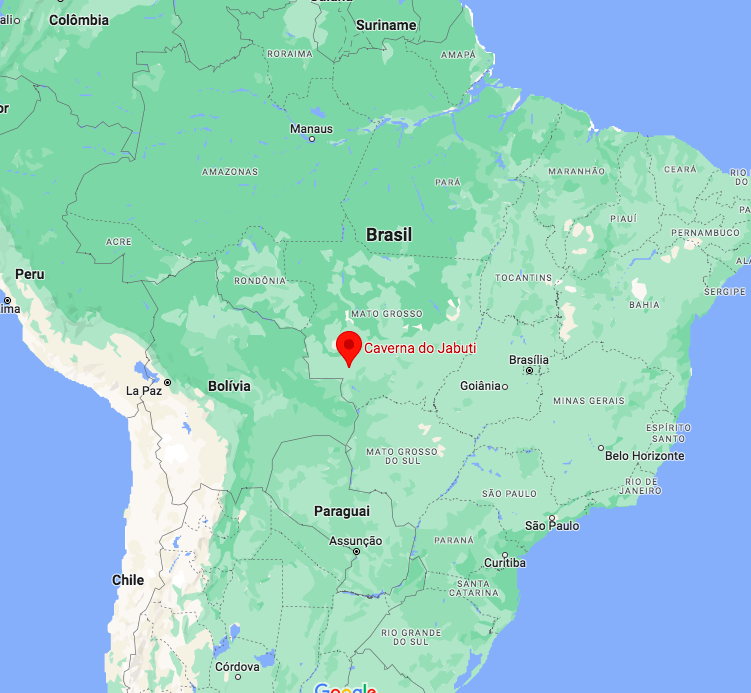
The Jabuti Cave in Curvelândia, 311 km from Cuiabá in the state of Mato Grosso (MT), is considered the largest in the state and was opened for visitation on Thursday (30) for the first time since its discovery.
The site is approximately 4 km long.
It is as if there were 33 soccer fields, one behind the other, in a straight line.
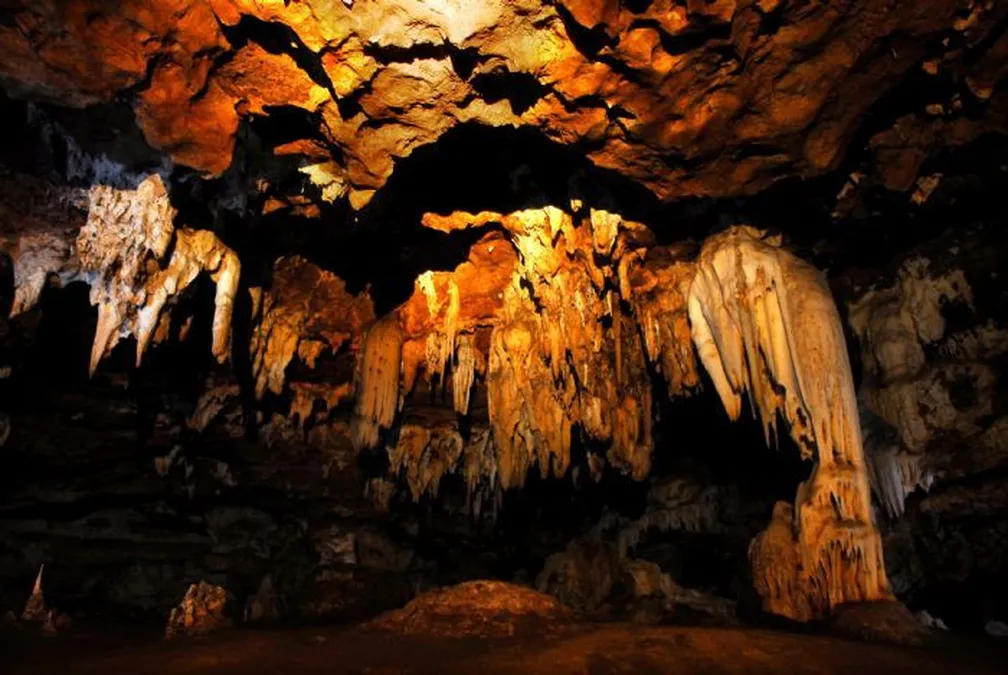
According to researchers, the sandstone and limestone rock formation is 580 to 620 million years old but was only discovered 40 years ago by local explorers.
The resident Mauro de Moura was the one who found the cave, in 1982.
After the discovery, a group of researchers started working on mapping and licensing the site.
The Jabuti Cave is the first natural monument in Mato Grosso.
It was listed as a historical and artistic heritage site in 2014.

Biologist Fabiana Bezerra took part in the team that mapped out the cave 18 years ago, when they discovered it was the largest in the state.
The cave is all signposted and it is even possible to take a self-guided tour, but, because it is a natural monument of protection, it is very fragile, has many crystals, and people may want to take them, so it is only possible to take a tour with a guide.
Visit the Jabuti Cave

The place has large ornamented rooms, naturally, with large columns and an infinity of speleothems
VISIT THE JABUTI CAVE


THE TOUR
The “Caverna do Jabuti” trip begins with a walk of approximately 300 meters to the monument’s entrance.
The place has large ornate rooms, naturally decorated with large columns and infinite speleothems.
The visitation, accompanied by a guide, is charged R$50 (US$10) per person.
The tour takes place in 15 different environments inside the cave and lasts approximately two hours and 15 minutes.
According to Espeleoturismo Curvelândia, access is very easy due to the height of the rooms that allow you to walk upright in all environments, having to bend slightly only in some passages to another room.
After the first room, which is the entrance, it is possible to see the following points formed by stalagmite and stalactite:
- Bowl
- Center Point
- Our House
- Sugar Loaf
- Expansion of the Universe
- Altar of Sacrifice
- Bride’s Skirt
- Curtain
- Travertine
- Dried Cow
- Temple
- Twin Tower
- Cocada
- Reflection Hall
The last hall visited during the tour is considered the ‘postcard’ of the site and one of the most beautiful places in the cave, with giant stalactites.
With information from g1
This article was produced by The Rio Times’ automated newsroom system. How we use AI · Report an error
Read More from The Rio Times