The effects of Boric’s dangerous 2023 Budget: IMF warns it will bankrupt the State
After the good performance of public finances in 2022, Chile would again deepen the deficit as of the 2023 Budget presented by the Socialist Government.
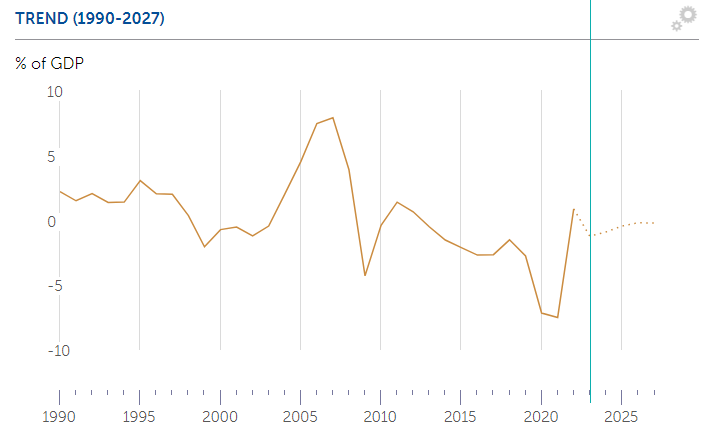
The IMF forecasts an imbalance close to 1.2% of GDP by the end of the year.
Gabriel Boric’s government continues to threaten the fundamental pillars of the growth model that boosted Chile’s economy in the last 40 years.
The 2023 Budget threatens to abandon fiscal discipline, severely increasing the need for internal and external indebtedness.
The International Monetary Fund (IMF) estimates that Chile’s primary deficit will reach 0.68% of GDP in 2023 after having recorded a comfortable surplus on a cash basis of around 2.14% of GDP in December 2022.
Likewise, according to the agency’s estimates, the consolidated fiscal deficit would reach 1.2% of GDP.
Despite the fact that the 2023 Budget allows for a significant increase in tax resources, expenditures will grow even more.
Public investment expenditures will grow by 5.5% annually in 2023, and social security spending will increase by up to 8%.
But in contrast to these measures, by 2023, the Chilean economy is expected to enter a recession along with Argentina.
Since most of the distribution of new expenditures is concentrated in direct transfers and not public consumption per se, the measures will not have a major positive “multiplier effect”.
On the contrary, the increased tax burden will contribute to actively constraining the economy’s aggregate supply and its ability to recover the pre-pandemic growth trend.
Taxes will be especially distortionary for the tradable sector of the Chilean economy.
Boric’s government authorized the imposition of withholding taxes on mining exports at rates varying from 2% to 32%, and the wealth tax (the counterpart of Argentina’s property tax) will come into force at rates ranging from 1% to 1.8% on taxable assets.
The pension reform is the second unbalancing factor of the reforms, not only because of the increase in the State’s fiscal obligations for the coming years but mainly because of the retraction of domestic credit in local currency.
The Chilean capital market was developed based on the savings of the individually funded system, and the pension reform systematically penalizes it.
The Socialist Government boasted about the strong fiscal results achieved in 2022, eliminating the primary deficit and reaching a financial surplus for the first time in 10 years.
However, it should be noted that the 2022 Budget was prepared by the government of former President Sebastián Piñera and precisely sought a major reorganization of the State’s finances.
The fiscal measures of the previous administration were perceived (and enjoyed) by Gabriel Boric’s administration, but the real Budget of socialism will take place as of this year and with its due consequences in terms of fiscal responsibility and public spending.
The economy’s growth explains about 80% of the sustainability of public revenue, and only the remaining 20% corresponds to changes in tax rates in the short term.
The arrival of recession in 2023 conditions Minister Mario Marcel’s goals for the current fiscal period.
With information from Derecha Diario
More: Chile news in English, every day from The Rio Times.
Editorial responsibility: Matthias Camenzind, Editor-in-Chief · Editorial standards · Report an error