Uruguayan Navy expands its options in the search for OPVs
By Gabriel Porfilio
The Uruguayan Navy is expanding its options in the search for a new OPV for its fleet.
It is already negotiating with five different shipyards, with three more expected to join soon.
After several attempts to purchase ocean patrol vessels (OPV), which have lasted for almost ten years and several governments, the Uruguayan Minister of Defense, Javier García, has instructed the Commander in Chief of the Navy, Admiral Jorge Wilson, to define as soon as possible the acquisition of vessels that meet the needs of the Force.
The last offer received consisted of three Norwegian Nordkapp ships.
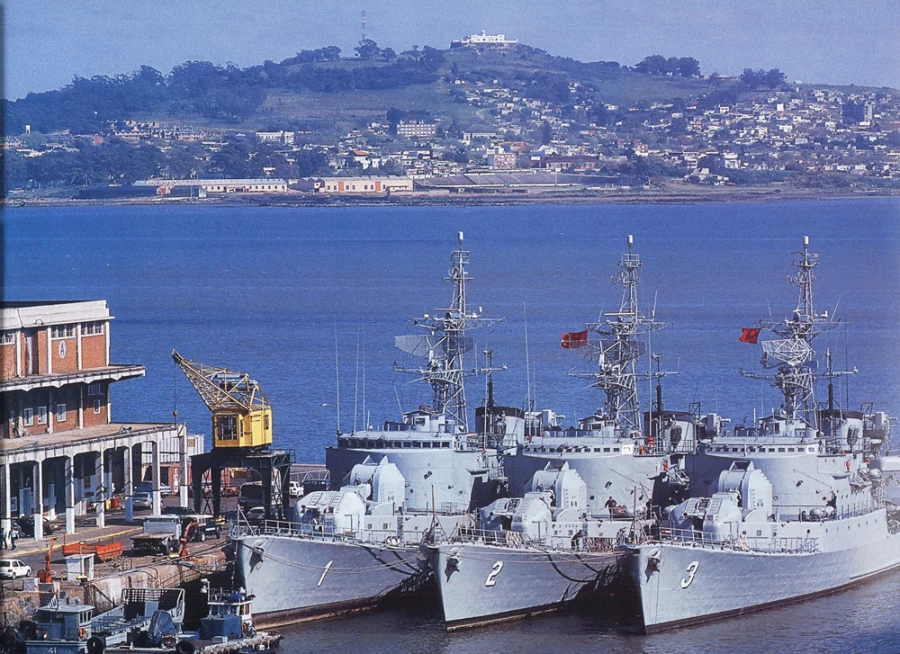
Still, it was rejected by the Navy since the Ministry made it clear that the purchase of the ships should be as they were and where they were, without assuring the necessary funds for their re-motorization, hull surveys, and eventual modifications so that they could be brought into port.
From that moment on, the Ministry indicated to the Navy that it should now start a search for ships that comply with the requirements set by the Sea Force.
Although it has not been officially disclosed, it is speculated that the purchase would be around US$100 million, as mentioned by the Minister at the beginning of the last process.
However, unofficial versions indicate that the financial availability could be even lower.
In this case, and unlike the previous processes, the bidders must present their financing program to be evaluated.
VESSELS
The search now focuses on new and used units, and the Navy has already contacted the three shipyards that bid for the last one, namely Kership, Damen, and CSTC, to update their offers based on some of the same requirements as the original ones.
Among them, a displacement of 1500 tons, hangar for the Agusta Bell 412 of the Naval Aviation, capacity to launch RHIB boats by stern, and a more modest electronic suite than the one requested in the last order, but complying with the basic requirements necessary for the fulfillment of the mission.
Of these three shipyards, at least Kership and Damen have already submitted updated offers, in addition to those submitted by Cotecmar of Colombia, with its OPV 93, and the Spanish shipyard Cardama, with an ocean patrol vessel of more than 1,500 tons displacement.
It is expected that more offers will be approached to the Navy for new and used vessels, in a process that aims that, at the latest, during 2024, at least one of the ships, if it is new construction, will be doing sea trials.
The possibility of countries such as France, Italy, and South Korea, among others, offering second-hand solutions is very solid, particularly because the budget is relatively low for purchasing new units, even for reduced requirements.
THE DECISION
Although the Navy currently bears full responsibility for choosing its ships, the decision to purchase will always rest with the political power, which is ultimately the authority in charge of signing off on any such acquisition and authorizing the expenditure.
The most important variables concerning the previous calls are that the Navy’s requirements have been substantially reduced, especially in electronics and armament, and financing, which now allows bidders to submit their proposals instead of Uruguay setting the payment schedule as it was in the previous call.
With a pressing situation in terms of ships and increasingly shorter times to find a solution to the almost non-existent operational capabilities of the Force, the next few months will be decisive in determining whether a viable alternative can be found during this Government or whether it will be necessary to continue waiting until a new Administration takes office in 2025.
With information from Infodefensa
Editorial responsibility: Matthias Camenzind, Editor-in-Chief · Editorial standards · Report an error
Read More from The Rio Times