Analysis: What Brazil Could Lose by Taking Sides in 5G War Between China and USA
RIO DE JANEIRO, BRAZIL – For some time now, technology experts have been talking about the day when appliances will be connected to the Internet, self-driving cars will be on the streets, cities will be smart, and a doctor will be able to remotely perform surgery on a patient using a robot. In order for all this to become a reality, a 5G telecommunications network is required.
5G is the fifth generation of digital data transmission technology and will succeed 4G. It will lay the foundations for the full use of digital technologies such as the internet of things, drones, advanced robotics, and artificial intelligence. For industries, this means the full use of the 4.0 Industry concept. In other words, it is a subject of utmost importance for both individuals and companies.
While many countries are already setting up 5G infrastructure, Brazil finds itself caught up in a diplomatic discussion that could compromise the country’s technological development.

The main players in a dispute that is both economic and geopolitical are the United States, the European Union, and Japan, on one side, and China, on the other.
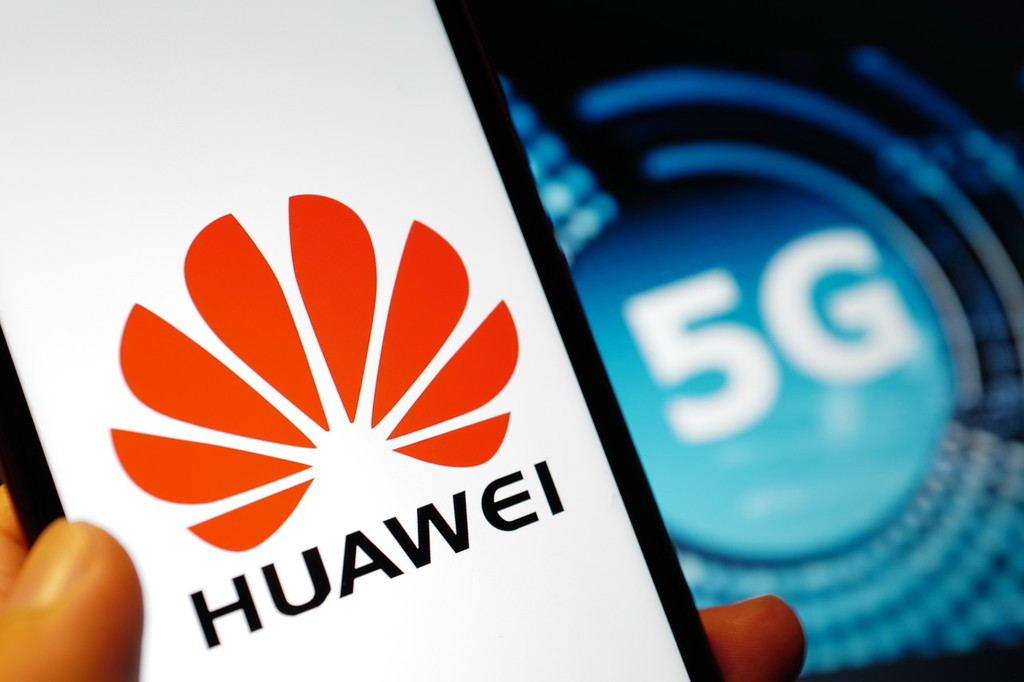
In short, this is the scenario: the American government is leading a global crusade to prevent Huawei, a Chinese telecommunications company, from supplying equipment for the installation of countries’ 5G networks. The official allegation is that Huawei conducts espionage for the Chinese government and accesses sensitive data through its equipment.
The concern is that, in the event of a war that would place Western countries against China, the Chinese government would use Huawei’s infrastructure to sabotage transport, data transmission, or electrical systems of enemy countries.
“As friends and partners of Brazil, we warn the country of unreliable suppliers to the 5G network. Our concerns are related to security, intellectual property rights, and privacy,” the U.S. Embassy briefed in a note.
Huawei, of course, denies this. It says it is a private company, whose mission is to generate profit for shareholders and value for customers. Where does the truth lie? Today, it is impossible to tell.
The background of this dispute is economic. As mentioned above, 5G is essential for the development of economies in coming decades. The potential for wealth generation is immense and revolves trillions of dollars. Whoever masters the technologies for creating and managing networks will have a tremendous market. And that is where the European Union and Japan enter, albeit discreetly, as allies of the Americans.
Huawei is pointed out by several specialists as the company currently best positioned to capture the majority of the value of 5G networks. And replacing 4G opens an opportunity for European, Japanese, and American companies. “Weakening Huawei is in the interest of some of the largest economies on the planet, which want to open space for their domestic companies,” says a source in the industry.
This is why each country that announces the implementation of 5G is faced with the debate on banning Huawei – along with pressure and accusations from the American government.
Now it is Brazil’s turn. When we finally give clear indications of implementing the network, the world’s attention focuses on us. The National Telecommunications Agency (ANATEL) is preparing to hold the 5G band auction in the first semester of 2021, in April or May. The bands are like roads, miles from the surface, where the data will transit (like a video that reaches your smartphone).
In October, a United States delegation landed in Brasília to pressure the government to ban Huawei. In exchange, it dangled a carrot of US$1 billion (R$5 billion) in financing for projects in the area of energy, infrastructure, and telecommunications. In a meeting with entrepreneurs, U.S. security advisor Robert O’Brien said the Chinese company may have access to strategic information from companies and the government.
Last month, the Organization for Economic Cooperation and Development (OECD) recommended that Brazil should not restrict competition between 5G technology suppliers. “It is important to carefully organize the 5G auction to ensure a competitive market,” said OECD Secretary-General Angel Gurría.
But the latest government developments suggest that the OECD’s appeal is unlikely to be heeded. Last Tuesday, November 10th, the Secretary of Bilateral and Regional Negotiations in the Americas, Pedro Miguel da Costa e Silva, announced the Brazilian government’s support for the so-called Clean Network, an American initiative that aims to limit the advance of Chinese companies in the installation of 5G.
According to the newspaper O Globo, after the announcement of Brazil’s accession to the program, Huwaei began preparing a legal offensive against the threat of being excluded from the 5G auction. The company is said to have already hired a specialized office, with operations in Brasília, to prepare for a litigation scenario.
The question is: what should Brazil do? And in what way could a ban (or otherwise) of Huawei affect the implementation of 5G in the country?
The impact of low competition: higher prices
Nowadays, the technology used in data and voice transmission networks is globally controlled by three multinationals: Ericsson, Nokia, and Huawei. In other words, it is a restricted market. In Brazil, there are no official data about each company’s market share. But specialists on the sector estimate that the market share is relatively evenly balanced, with a slight advantage for the Chinese, although in São Paulo, Ericsson has a predominant share.
This is why many fear that the exclusion of Huawei will reduce competition, which tends to raise the prices of products under the ancient law of supply and demand. “To restrict the participation of any company implies reducing the competition and runs against the country’s interests,” says Paulo Tavares, 5G specialist at Accenture.
Operators, which will ultimately be responsible for implementing 5G in the country, agree. “Rationally, the more options to negotiate, the better the prices for the network implantation”, says Marcio Carvalho, Claro Marketing director.
Carlos Roseiro, Huawei Brazil Integrated Solutions director, says that Huawei’s equipment is more efficient than that of its competitors, and, therefore, would have better prices. “If, in a market with three players, one is removed, the competition’s drop raises costs”, he says. “And, the higher the cost, the slower it will be to implement 5G in the country.”
The two major competitors, Finnish Nokia and Swedish Ericsson, have different arguments. “Mobile broadband in China is two and a half times more expensive than in Brazil and most suppliers are Chinese companies,” says Wilson Cardoso, CSO of Nokia. “This demystifies the concept that not having Chinese manufacturers will make 5G more expensive in the country.”
Eduardo Ricotta, Ericsson’s CEO in Latin America’s Southern Cone, says the company has been in Brazil for 20 years and has an important market share. “We have state-of-the-art technology and price to compete.”
An Oxford Economics study, commissioned by Huawei, showed that restricting the participation of a supplier in the construction of the 5G network can raise the cost of implementation from eight to 29 percent. The study analyzed eight countries, including the United States, India, Japan, and Germany. In addition to increasing investment costs, the restriction on competition would reduce per capita GDP by US$100 per person, on average, through 2035, compared to the scenario of unrestricted competition.
How to increase competition
Banning Huawei in the country will not necessarily limit competition for Nokia and Ericsson. In order to foster an ecosystem with more players, Brazilian operators may adopt a model called OpenRAN (an acronym for open radio access network).
In OpenRAN, equipment and software from different manufacturers are compatible with each other. In the former model, which applies to 2G, 3G, and 4G technologies, the whole system belongs to the same company.
The impact of OpenRAN in the telecommunications sector would be similar to what occurred in the computer industry a few decades ago. When machines and software did not communicate with each other, the market was controlled by a few companies, such as IBM.
From the moment the machines and software from different suppliers became compatible, competition flourished. The result was unprecedented growth in computing – and all the innovations that changed the lives of people and companies. “OpenRAN allows the emergence of new suppliers, increasing competition,” says Leonardo Capdeville, CTIO of TIM Brasil.
And what to do with the existing Huawei network?
Banning Huawei may result in a delicate situation: what to do with the installed Chinese infrastructure?
In recent interviews, Huawei’s president in Brazil, Sun Baocheng, said that this imbroglio could delay the implementation of 5G by up to four years. This is because the exchange of the equipment installed in the operators’ networks would take time to be accomplished. There would also be financial impacts for operators, which would be forced to buy new machines.
“If operators were forced to remove our equipment, it would be almost half of the country’s telecommunications infrastructure,” says Huawei’s Roseiro. It’s hard to estimate the cost of this exchange.
In any event, the harnessing of all the potential that 5G offers, requires “stand-alone” networks, which currently do not exist in the country. In other words, it is an infrastructure to be installed. To reduce eventual losses, operators must wait for the Brazilian government’s decision to expand the network without running the risk of losses. This is what the operators have been signaling.
Other obstacles
The participation (or not) of the Chinese is but one of the potential obstacles to the efficient implementation of 5G in Brazil. Two further hindrances are the auction model and the traditional red tape. The main concern of all players is that the government will take advantage of the auction to profit, that is, to charge the operators for the use of frequencies and to pocket the funds.
Under the model championed by operators and supply companies, the concession of spectra is granted in exchange for commitments to invest in the network’s creation and expansion. “It is crucial that the auction has no revenue goal but rather an investment incentive,” says the CTIO of TIM Brazil.
According to Capdeville, if this occurs, it will weaken the cash flow of companies, which lose strength to invest in the expansion of 5G. “By accelerating the network’s implementation, the government reaps the benefits for the economy, which includes tax collection.”
Another relevant point is the municipal laws on the installation of antennas. The implementation of 5G will require many more antennas than 4G – up to three times more, depending on the region. “Brazilian regulations are bureaucratic and may delay the arrival of 5G to the population,” says Tavares, from Accenture.
TIM’s Capdeville says that, in an optimistic scenario, it can be expected that in 2022 the country will start to see the implementation of the 5G network and in three years the coverage may reach 50 percent. If the auction model is similar to 4G, the expectation climbs to six years.
The cost of the delay
An Ericsson study showed that the revenue potential for Brazilian operators with 5G is R$332 billion accumulated until 2030. The profit will be even higher for the Brazilian productive sector. A study conducted by consultancy Omdia at the request of Nokia showed that the advent of 5G can add US$1.2 trillion to GDP between 2021 and 2035. The six sectors most impacted are information technology and communications (US$ 241 billion), government (US$189 billion), industry (US$181 billion), services (US$152 billion), retail (US$88 billion), and agriculture (US$76 billion).
Agility in the expansion of 5G is essential to capture this benefit. “The longer the implementation of 5G is deferred, the more the economic impact is delayed,” says Nokia’s Cardoso. But perhaps the largest gains are still impossible to be quantified: the gain arising from innovations which, today, have not yet been created.
When 4G was created, who could have predicted that it would allow the development of the shared economy and the emergence of companies like Uber and Airbnb, which generate billions of dollars in wealth? “The financial impact of 5G is immeasurable and the possibilities are much greater than with 4G,” says Ricotta, from Ericsson. “And we will only realize them with the arrival of 5G.”
What is the ideal scenario? Brazil should be free to decide – and should not restrict the market. By doing so, it can place Brazilian companies in a privileged global competitive position. “If our market is open, companies will have at their disposal the best innovations, including Huawei’s, which would place them in a position of advantage in relation to companies in countries that have banned the Chinese technology,” says a sector source.
Source: InfoMoney
More: Brazil news in English, every day from The Rio Times.
This article was produced by The Rio Times’ automated newsroom system. How we use AI · Report an error · Editorial responsibility: Matthias Camenzind, Editor-in-Chief
LatAm Markets: Live Signals → — real-time movers, turnover leaders and FX across Latin America.