Brazilian Indigenous Yanomami Chief Wins “Alternative Nobel” Prize
SÃO PAULO, BRAZIL – Brazilian indigenous chief, Davi Kopenawa, of the Yanomami tribe, is one of this year’s winners of the Right Livelihood Award, promoted as an “Alternative Nobel Prize”. Kopenawa’s Hutukara Yanomami Association is sharing the award with the indigenous leader.

“With the 2019 Right Livelihood Award, we honor four practical visionaries whose leadership has empowered millions of people to defend their inalienable rights and to strive for a livable future for all on planet Earth,” said the entity on Wednesday during a press conference to announce the winners.
“David Kopenawa, along with the Hutukara Yanomami Association, is successfully resisting the ruthless exploitation of indigenous lands in the Amazon while protecting our common planetary heritage,” said Ole von Uexkull, executive director of the Right Livelihood Foundation.
For the past 30 years, Kopenawa has traveled around world in defense of the Yanomami people. For his efforts, he was nicknamed the “Dalai Lama of the Rainforest” and was key figure in the pushing for the official recognition of Amazonian Yanomami territory in 1992.
“I am very happy to receive the award. It comes just at the right time and it is a show of trust in me and Hutukara and all those who defend the forest and planet Earth. The award gives me the strength to continue the fight to defend the soul of the Amazon forest,” said Kopenawa.
The Yanomami people are one of the most populous indigenous tribes in Brazil with about 38,000 members. They live along the Brazil-Venezuelan border, deep in the Amazon forest, according to Survival International. With over 9.6 million hectares, the Yanomami territory in Brazil is twice the size of Switzerland.
The tribe first came in contact with Brazilians during the 1940s. During the 1970s they were suddenly surprised with ‘invaders’ in their territory, when Brazil’s military government decided to build a road through the Amazon along the northern frontier. “With no prior warning bulldozers drove through the community of Opiktheri. Two villages were wiped out from diseases to which they had no immunity,” says Survival International.
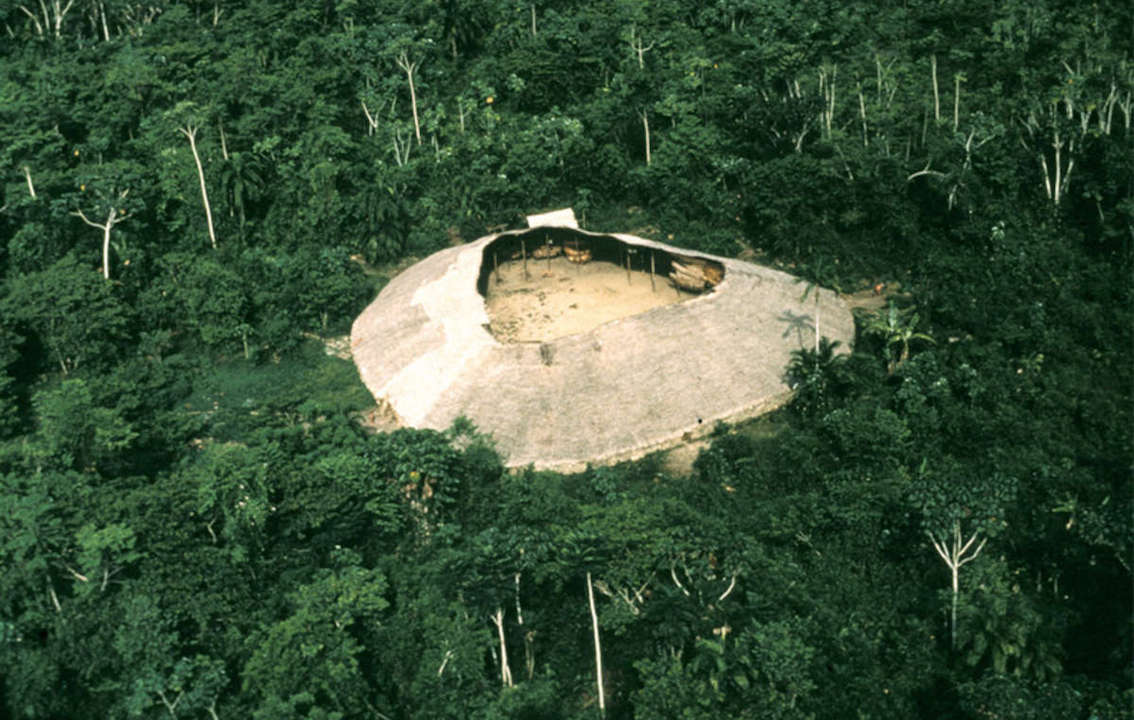
Brazil’s ‘gold rush’, in the 1980s, saw up to 40,000 Brazilian gold-miners invading Yanomami land, destroying many villages and exposing the indigenous to diseases to which they had no immunity. “Twenty percent of the Yanomami died in just seven years,” notes the NGO.
It was during that time that Kopenawa led a long international campaign, forcing the Brazilian government to expel miners from the land and demark what is now known as ‘Yanomami Park’.
“Davi is unique. His ideology is continually informed by his shamanism. He remains unimpressed and entirely unswayed by the supposed benefits of the industrialized world, which he sees through with penetrating gaze. He remains by far the most consistent and effective indigenous voice raised in defense of Amazonia, and so of our wider world. No one deserves this prize more,” said Survival International Director, Stephen Corry.
The Right Livelihood Award was created in 1980, by Swedish-German philanthropist Jakob von Uexkull who decided to honor people and entities fighting for a just, peaceful and sustainable world.
This is the sixth time that representatives from Brazil are among the winners. The award was given to agronomist and ecologist José Lutzenberger in 1988; the Catholic Church’s Land Pastoral and the Landless Rural Workers Movement (MST) in 1991; liberation theologist Leonardo Boff in 2001; architect and social activist Chico Whitaker Ferreira in 2006; and Amazon region Catholic Bishop Erwin Kräutler in 2010.
More: Brazil news in English, every day from The Rio Times.
This article was produced by The Rio Times’ automated newsroom system. How we use AI · Report an error · Editorial responsibility: Matthias Camenzind, Editor-in-Chief