New Brazilian Labor Regulations to Save R$68 Billion in Ten Years
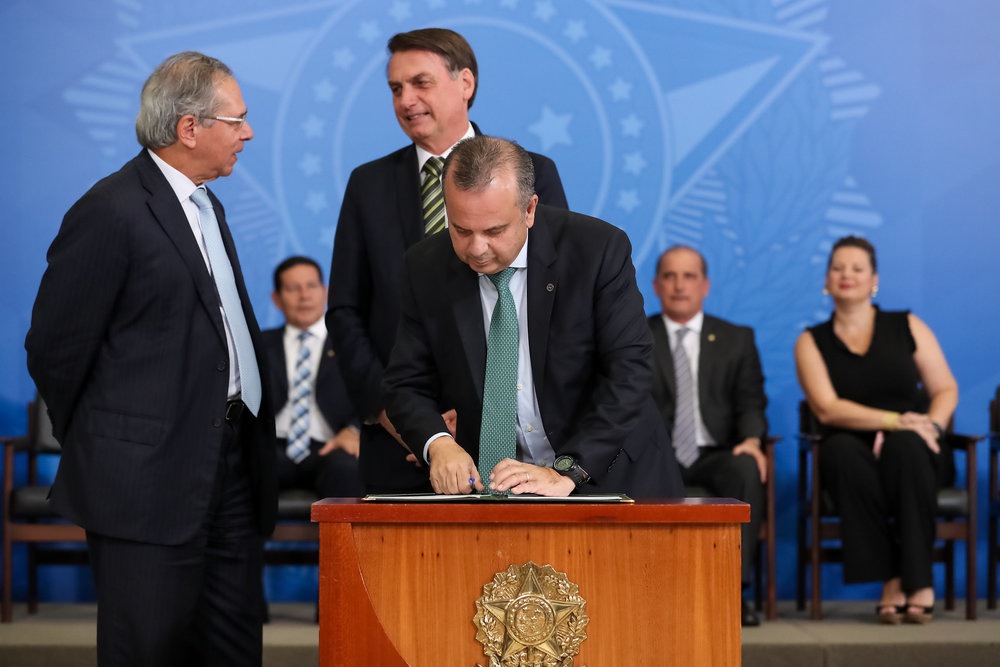
RIO DE JANEIRO, BRAZIL – The new work health and safety rules, enacted on Tuesday, July 30th, by president Jair Bolsonaro, will save at least R$68 billion (US$17 billion) over the next ten years.
The estimate was released by the Economic Policy Secretariat (SPE) of the Ministry of Economy while solemnly signing the new rules.

These amendments affect three of the 36 regulatory standards (NRs).
NR 1, which deals with general provisions on health and safety at work; and NR 12, which deals with safety in the operation of machinery and equipment, were updated with a less strict set of rules.
NR 2, which provided for prior inspections, was repealed.
According to the special secretary for social welfare and Labor of the Ministry of Economy, Rogério Marinho, all standards were debated by representatives of the government, workers, and employers in the Permanent Tripartite Parity Commission. He reaffirmed that international standards of social dialogue and safety will remain in force.
Economy Minister Paulo Guedes said the government is freeing up the economy by setting in motion the social welfare reform and the modernization of labor relations. “Labor relations in Brazil are obsolete and are weapons of mass destruction for jobs. Today we have thirty to forty million Brazilians who are unemployed, informally employed or no longer seeking employment,” he said.
According to Onyx Lorenzoni, the presidential chief of staff, the government has taken an essential step to “stop it from breathing down the citizen’s neck.”
In his opinion, the revision of the rules aims to simplify the generation of jobs, particularly for smaller companies.
“We want a simplified, unbureaucratic Brazil. The measures have a precise target, the micro and small businesses, which are Brazil’s largest employers. Our goal for the second half of the year is employment, employment, and even more employment,” he said.
Cutting red tape
NR 1 will have differentiated handling for small business employers, relaxing the safety and health rules.
Micro and small companies will be exempted from preparing environmental risk, medical control, and occupational health prevention programs when they do not engage in activities involving chemical, physical, or biological hazards. The new NR 1 text further updates the training regulations.
The subject, which was scattered over 232 sections, sub-sections, subparagraphs or clauses from other NRs, will now feature a single chapter within the standard.
The total or partial use of training when a worker changes jobs within the same activity will be permitted.
According to the SPE, these measures should produce savings of R$25 billion in ten years.
Established in the 1970s and revised in 2010, NR 12, according to the tripartite commission, was regarded as difficult to enforce, since it was not aligned with international standards for the protection of machinery and lacked legal guarantees over its correct application.
According to the SPE, the update will reduce costs for the industry by R$43.2 billion over the next ten years, resulting in an increase from 0.5 percent to one percent in industrial production.
Written in 1983, NR 2 demanded a prior labor inspection to open small businesses, such as stores in shopping malls. According to the Ministry of Economy, its repeal reduces red tape as well as state intervention in the private sector.
Consolidation
The government further announced the incorporation of some 160 decrees on labor standards in four texts.
The first group of decrees encompasses nineteen texts that deal with labor rights set out in various laws, such as Christmas bonus, transportation vouchers, and authorization for payroll deductions, among others.
The second text groups 51 decrees that govern 36 occupations. Eight decrees that dealt with old legislation, with no current impact, were repealed.
The third text groups the decrees concerning the International Labor Organization (ILO) conventions.
To date, Brazil has signed 97 conventions, of which 77 are in force. The original decrees and the chronological order in which they were adopted in Brazil have been upheld.
Lastly, the Secretariat of Labor of the Ministry of Economy proposes the issue of a decree to govern the National Labor Council and the Permanent Tripartite Parity Commission.

According to the government, the decree is intended to enable social discussion on labor relations and occupational health and safety standards.
Accident reduction
Marinho additionally announced that a national strategy for reducing work-related accidents would be implemented.
Later this year, the government will initiate a review of the National Policy on Safety and Health at Work, enacted by decree in 2011.
In addition, a cooperation agreement between the Special Secretariat of Labor and Welfare and the Federations of Industries of the States of Rio de Janeiro (Firjan) and Santa Catarina (Fiesc) provides for the development of actions to reduce the number and incidence of occupational diseases.
More: Brazil news in English, every day from The Rio Times.
This article was drafted with automated assistance and reviewed before publication. How we use AI · Report an error · Editorial responsibility: Matthias Camenzind, Editor-in-Chief