Brazil Markets: Ibovespa & the Real — August 20, 2026
Key Facts
- —What happened Brazil’s Ibovespa rose 0.90% to 167,830 points, ending an 11-session losing streak on Tuesday.
- —How big a jump The real strengthened 0.82% to 5.1757 per dollar, with the US dollar index falling 0.81%.
- —The catch The index remains 15.5% below its 52-week high, making this a relief bounce, not a reversal.
- —Who it touches Petrobras and Vale led gains, while steelmaker Gerdau fell 5.2% and retailer Magazine Luiza dropped 5.4%.
- —What comes next The key test is whether the real holds below 5.20 and the Ibovespa reclaims 170,000 points.
Today’s Focus
Brazilian shares finally found a footing on Tuesday, with the Ibovespa closing up 0.90% at 167,830 points to end a punishing 11-session slide. The real gained in tandem, firming to 5.1757 per dollar in a session marked by weaker demand for the American currency worldwide.
The bounce was led by the names that dominate the index: Petrobras, the state-controlled oil giant, and Vale, the world’s largest iron ore producer. Their gains signalled that global investors were willing to step back into Brazil’s most liquid, economically sensitive stocks after a period of prolonged selling.
The move did not create a new high — far from it. The index is still 15.5% below its 52-week peak, but it offered some relief to a market that had been looking oversold and heavily discounted in recent sessions.
What matters today. The size and breadth of the gain matter less than the fact that steady selling finally paused, giving traders a chance to reassess value in Brazil.

01 The session in one read
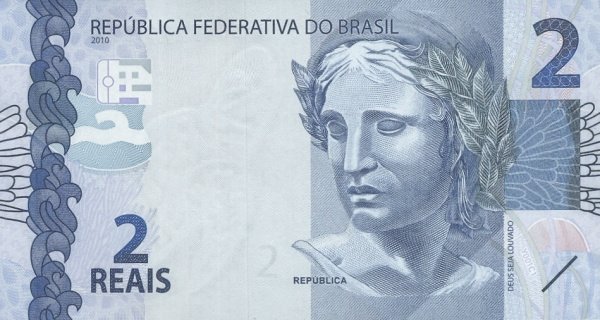
After eleven straight losing sessions — the longest such streak since 2023 — the Ibovespa, Brazil’s main stock index, bounced on Tuesday. The benchmark closed at 167,830 points, a gain of 0.90%, offering breathing room to a market that had been relentlessly sold down.
The real, Brazil’s currency, also found support. One dollar bought 5.1757 reals at the close, a fall of 0.82% for the American currency, meaning the Brazilian currency strengthened.
The recovery was broad but not uniform. The classic engine-room stocks — the oil producer Petrobras and the iron ore miner Vale — rose solidly, and the big banks mostly followed. Yet some consumer and steel names bucked the trend, a hint that investors were still being selective.
For a market that had spent more than two weeks falling, the day’s most important feature was simply that selling pressure abated. The index remains well below its 52-week high of 198,657 points, which it reached earlier in the year.
One session of gains after eleven declines does not by itself mark a turning point. The rally in commodity-linked shares and the softer dollar suggest the move was driven by external mood and some technical repricing rather than a clear shift in Brazil’s domestic outlook.
The key variable to watch is whether the real can hold below 5.20 per dollar and whether heavyweight shares can build on these gains in the days ahead — or whether this was simply short covering in an oversold market.
02 The day’s numbers
| Measure | Level | Change | Read |
|---|---|---|---|
| Ibovespa (Brazil’s main stock index) | 167,830 | +0.90% | First gain after 11 down sessions; still 15.5% below 52-week high |
| USD/BRL (reals per US dollar) | 5.1757 | -0.82% | Real strengthens as the dollar slides globally |
| 52-week range (Ibovespa) | 134,432 – 198,657 | — | The index sits closer to the low end of its range |
| 52-week range (USD/BRL) | 4.8909 – 5.5901 | — | The real is 7.4% off its weakest level of the past year |
The Ibovespa close of 167,830 points is a modest recovery from the depths of the recent slide. It still leaves the index 15.5% below its 52-week high, which tells you the bounce is a repair job rather than a breakout.
On the currency side, USD/BRL at 5.1757 is a notable move. A falling dollar globally, combined with some renewed interest in Brazilian assets, helped the real claw back some ground after a difficult stretch. Rio Times · Live Market Intelligence
Live Market IntelligenceBrazil — Live Market Board
Brazil — Live Market Board
Instrument Last Change YoY Prev. High Low Volume
IBOV
192,114.55
+2.63%
+21.85%
187,197.46
168,310
167,142
—
USD/BRL
5.16
+0.01%
-5.13%
5.16
5.18
5.14
—
SELIC
14.00%
—
—
—
—
—
PETR4
41.64
-0.05%
+35.19%
41.66
41.97
41.15
41,499,400
VALE3
72.97
+0.83%
+30.75%
72.37
73.54
72.66
17,658,000
ITUB4
38.60
-1.03%
+4.57%
39.00
39.34
38.39
29,487,800
BBDC4
16.85
+0.36%
+3.50%
16.79
16.90
16.67
19,416,900
BBAS3
19.37
+0.47%
+0.73%
19.28
19.44
19.16
11,069,200
B3SA3
14.26
-0.21%
+12.73%
14.29
14.47
14.11
33,037,800
ABEV3
14.89
-0.80%
+21.91%
15.01
15.07
14.81
16,453,100
WEGE3
47.59
+0.49%
+29.99%
47.36
48.08
47.36
3,364,600
PRIO3
59.14
-0.19%
+50.67%
59.25
59.81
58.74
3,325,600
SUZB3
41.33
+2.35%
-23.55%
40.38
41.48
40.35
3,914,900
RENT3
34.68
-0.09%
+0.84%
34.71
34.96
34.35
7,979,100
AZZA3
15.89
-2.63%
-53.76%
16.32
16.42
15.82
1,330,300
CSNA3
4.30
+0.47%
-42.65%
4.28
4.41
4.26
10,076,100
GGBR4
24.69
+2.19%
+51.38%
24.16
24.85
24.18
7,047,600
ENEV3
24.21
-1.38%
+70.49%
24.55
24.64
23.99
9,297,000
03 Why it moved — a softer dollar and oversold stocks
The session’s direction owed much to external conditions. The American dollar index, which measures the US currency against a basket of major peers, dropped 0.81% — a sizeable daily fall that rippled through emerging-market currencies, including the real.
Brazil’s equity market had become deeply oversold after eleven straight declines. When the global mood brightened, investors moved to cover short positions and pick up beaten-down commodity-linked names that dominate the Ibovespa.
The move in Petrobras and Vale — the two largest weights in the index — was central. Both are exporters whose earnings benefit from a stronger real in some ways but whose share prices are heavily tied to global sentiment and commodity cycles.
There was no major domestic catalyst or central-bank decision driving the bounce. It was a case of external relief meeting an exhausted local market that had priced in a great deal of pessimism.
04 The day’s movers
| Driver | Level / Move | Change | Note |
|---|---|---|---|
| Petrobras PN (PETR4) | Most traded | +1.2% | Oil giant led turnover with $413m; global energy sentiment firmed |
| Itaú Unibanco (ITUB4) | Most traded | +0.5% | Brazil’s largest private bank gained on turnover of $263m |
| Vale (VALE3) | Most traded | +0.8% | Iron ore miner rose with $259m traded; recovery in commodity appetite |
| Petrobras ON (PETR3) | Most traded | +1.3% | Common shares outpaced preferreds on strong volume |
| Gerdau (GGBR4) | Biggest loser | -5.2% | Steelmaker fell on concerns over domestic construction demand |
| Oncoclínicas (ONCO3) | Biggest gainer | +14.5% | Healthcare name surged, leading all domestic gainers |
| Magazine Luiza (MGLU3) | Loser | -5.4% | Retailer fell as consumer spending worries persisted |
Petrobras was the session’s engine. Both its preferred and common shares rose more than 1%, with combined turnover north of $556m — evidence that the state-controlled oil giant is where global investors go first when they want Brazil exposure.
The laggards told their own story. Gerdau, the steelmaker, slumped 5.2% on domestic construction concerns, while Magazine Luiza fell 5.4%, a sign that Brazil’s consumer economy is still viewed with caution despite the broader market bounce.
05 The regional scoreboard
| Index | Country | Change |
|---|---|---|
| Ibovespa | Brazil | +0.90% |
| IPC | Mexico | +0.41% |
| IPSA | Chile | +0.49% |
| Merval | Argentina | -0.59% |
| COLCAP | Colombia | -0.30% |
| BVL Perú | Peru | +1.33% |
The regional picture was mixed but mostly positive for Latin America’s main boards. Peru led the way, rising 1.33%, while Brazil’s 0.90% gain put it in the middle of the pack.
Argentina was a notable exception, with the Merval slipping 0.59% in a session that saw political tensions and local concerns weigh on sentiment. The live market board above carries the full closes for all regional indices.
06 The technical picture
The Ibovespa’s recovery to 167,830 points is encouraging but leaves the index well inside a correction. It is 15.5% below its 52-week high and still closer to the bottom of its 12-month range than the top.
The day’s bounce did not reclaim the 170,000 level, which looms as the first psychological target. A sustained move above that zone would be needed to argue that the downtrend has genuinely reversed.
On the currency side, USD/BRL at 5.1757 is significant because it breaks below the 5.20 threshold that had acted as a ceiling. If the real can hold these levels, it could ease imported inflation pressures and support further stabilisation in local assets.
07 What to watch
- Petrobras and Vale trading: Whether the heavyweight commodity names can hold their gains will signal if institutional buying is real or just short covering.
- USD/BRL at 5.18: A hold below this level would confirm the real’s recovery; a move back above it would suggest the bounce was temporary.
- Ibovespa 170,000 level: A close above this psychological mark would be the first concrete sign that the corrective phase is easing.
- Gerdau and retail sentiment: The steep losses in Gerdau and Magazine Luiza show domestic economic worries remain; watch if these names stabilise with the broader market.
Background: Ibovespa Slides for a 9th Straight Session as Citi Drops Brazil’s Real on a Likely Lula Win.
Background: Biggest B3 Foreign Outflow Since 2021 Rattles Brazil’s Real.
More: Brazil news in English, every day from The Rio Times.
Frequently Asked Questions
What is the Ibovespa?
The Ibovespa is Brazil’s main stock index, tracking the most traded shares on the São Paulo stock exchange, known as B3. It is the key benchmark for the Brazilian equity market.
Why did the real strengthen on Tuesday?
The real strengthened because the US dollar fell broadly against many currencies. When the dollar weakens globally, emerging-market currencies like the real often gain.
Is the stock market recovery a sign of a new trend?
Not yet. One gain after eleven declines is a relief bounce. The index remains 15.5% below its 52-week high, meaning the broader trend is still corrective until proven otherwise.
Why did Gerdau and other steelmakers fall?
Gerdau dropped 5.2% on concerns about domestic construction and infrastructure demand. Steelmakers are particularly sensitive to Brazil’s economic growth expectations.
This article was produced by The Rio Times’ automated newsroom system. How we use AI · Report an error · Editorial responsibility: Matthias Camenzind, Editor-in-Chief
LatAm Markets: Live Signals → — real-time movers, turnover leaders and FX across Latin America.