Brazil Leads Condemnation as Latin America Weighs Costs of Middle East Escalation
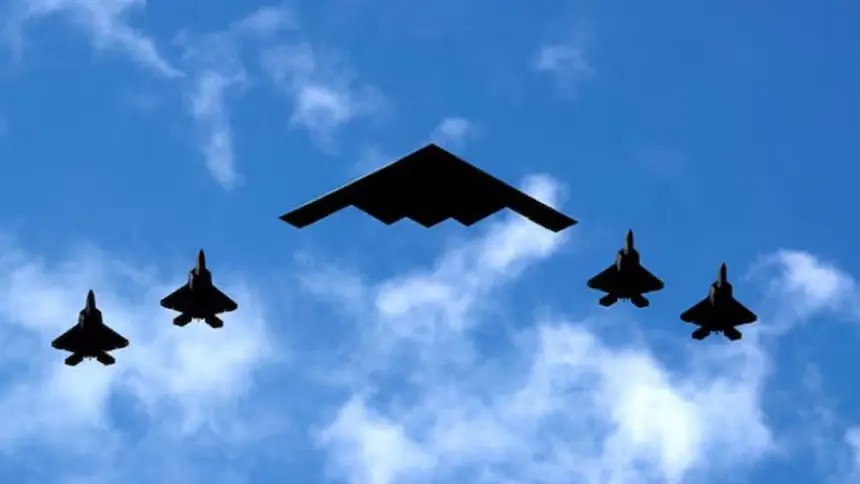
Official government statements confirm that on June 21, 2025, the United States and Israel bombed three Iranian nuclear facilities—Fordow, Natanz, and Isfahan—citing the need to block Iran’s nuclear ambitions.
The attacks killed Iranian military officers and scientists. Most Latin American governments quickly condemned the strikes, calling them violations of international law and a threat to global stability.
Brazil’s government issued a firm condemnation, stating that the attacks on Iran’s nuclear sites represented a “clear violation of sovereignty and international law.”
The Foreign Ministry warned that the strikes could plunge the Middle East into a large-scale conflict, risking peace, security, and the world economy.
President Lula da Silva repeated these concerns at the G7 summit, warning that the escalation “threatens to turn the Middle East into a single battlefield, with immeasurable global consequences.”
Lula called for restraint, dialogue, and a stronger United Nations role. He also highlighted the economic risks, noting that global energy security cannot exist in a world at war.
Uruguay’s Foreign Ministry expressed “deep concern at the dangerous escalation of violence in the Middle East following the recent airstrikes against nuclear facilities in the Islamic Republic of Iran.”
Uruguay called for restraint and dialogue, and evacuated its only resident citizen from Tehran for safety, but kept its embassy open. Venezuela, Cuba, Bolivia, Chile, Colombia, and Mexico also condemned the strikes.
Venezuela and Cuba described the attacks as illegal aggression and a breach of the UN Charter. Bolivia and Chile called the bombings arbitrary and warned of the risk to global peace. Colombia rejected the “unilateral use of force” and urged negotiations.
Mexico called for urgent diplomatic dialogue and the restoration of peaceful coexistence. These countries stressed the need to respect international law and avoid further escalation.
Argentina, under President Javier Milei, did not issue an official condemnation. Instead, Milei signaled support for Israel by reposting messages celebrating the strikes and announcing plans to move Argentina’s embassy to Jerusalem.
Paraguay reaffirmed Israel’s right to self-defense and reopened its embassy in Jerusalem. Peru and Ecuador expressed concern about the escalation, urging all parties to respect international law and avoid further violence, but did not directly condemn the U.S. or Israeli actions.
Latin America Divided on Middle East Strikes
This regional split reflects both ideological alignments and economic interests. Left-leaning governments in Brazil, Venezuela, Cuba, Bolivia, and Chile denounced the strikes and called for respect for the UN Charter.
Centrist and right-leaning governments, such as Argentina and Paraguay, either supported Israel or avoided direct criticism of the U.S. Latin American countries depend on stable global trade, especially in energy and agricultural exports.
Instability in the Middle East threatens oil prices and shipping routes, which could harm their economies. Latin America’s leaders see unilateral military action as a risk to both international law and their own economic security.
Their calls for restraint and negotiation reflect a pragmatic desire to avoid disruptions that could impact trade, investment, and regional stability.
Official statements show that while Latin America is not united, most countries reject escalation and seek to protect their interests by urging negotiation over conflict.
More: Argentina news in English, every day from The Rio Times.
This article was produced by The Rio Times’ automated newsroom system. How we use AI · Report an error · Editorial responsibility: Matthias Camenzind, Editor-in-Chief