Flavio Bolsonaro Is Under Investigation in Brazil Over Dark Horse, a Film About His Father
BRAZIL · ELECTION 2026
Key Facts
- —The status An inquiry, not a charge. No indictment, no prosecution and no defendant in this matter.
- —The offences Police are examining money laundering, unauthorised transfers abroad, and active and passive corruption.
- —The film Dark Horse, a biopic of Jair Bolsonaro starring Jim Caviezel, financed by banker Daniel Vorcaro.
- —The sum A contract for US$24 million in 14 instalments. Police say about US$12.3 million was actually paid.
- —The wording Police call the senator Vorcaro’s “interlocutor direto” rather than a name in other people’s messages.
- —The catch The distributor suspended the film’s release on Friday. It was due out the same day.
Nobody has been charged. But an inquiry authorised in July became documentary fact on Friday, and it names the man polling level with Lula three weeks before the vote.
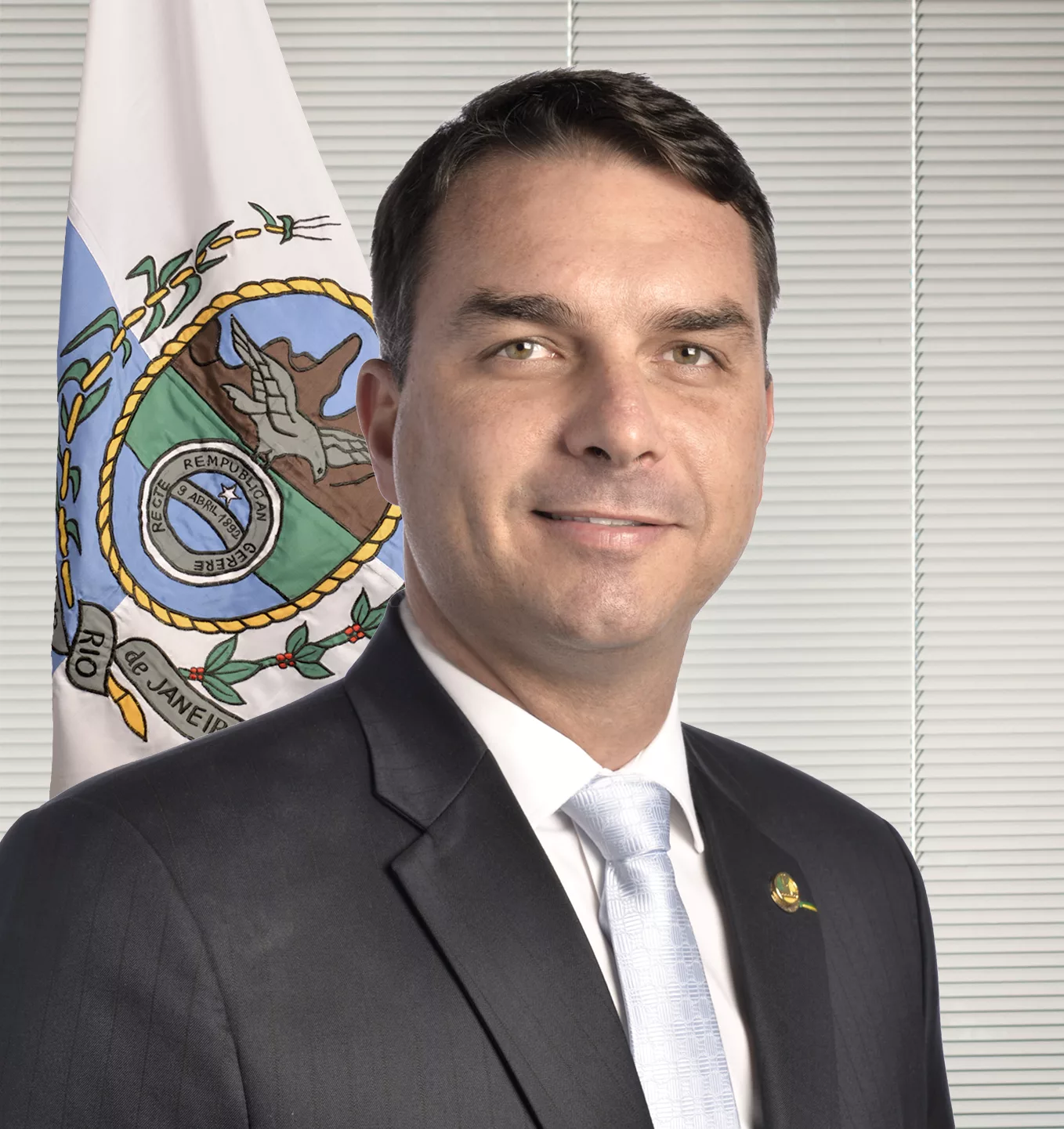
The man most likely to face Lula in Brazil’s presidential runoff is under criminal investigation. The subject is Dark Horse, a film about his father.
Senator Flávio Bolsonaro has not been charged. There is no indictment, no prosecution and no defendant, and an inquiry in Brazil can be archived without any charge at all.
What exists is an inquérito, opened on 22 July at the request of the Federal Police. It became documentary fact on Friday, when parts of the Banco Master file were unsealed.
What Is Actually Being Investigated
G1 and BBC News Brasil set out the suspected offences. They are money laundering, unauthorised transfers abroad, and active and passive corruption.
That second item matters and is often mistranslated. Evasão de divisas means sending money or assets abroad without declaring them.
It is an offence against Brazil’s financial system. It is not tax evasion, which is a separate crime under separate law.
The distinction is the whole theory of the case. Police are tracing money that left Brazil, not money withheld from the tax authorities.
The Federal Police requested the inquiry on 8 July. The prosecutor general’s office did not oppose it on 21 July, and Justice André Mendonça authorised it the following day.
What Dark Horse Is
Dark Horse is a biographical film about Jair Bolsonaro. The American actor Jim Caviezel plays him and Cyrus Nowrasteh directs.
The project originated with Mário Frias, a former culture secretary who is now a federal deputy for the PL. It is produced by Go Up Entertainment.
Its financing came from Daniel Vorcaro, the former controlling shareholder of Banco Master. That bank no longer exists.
Brazil’s central bank decreed its extrajudicial liquidation on 18 November 2025 and police arrested Vorcaro the same day. He was later moved to house arrest, then returned to preventive detention on 4 March 2026, where he remains.
The Money, as Police Describe It
Every figure here is an allegation in an open inquiry. None has been tested in court.
The Intercept Brasil first reported the arrangement on 13 May 2026. A contract found on Vorcaro’s phone provided for US$24 million in fourteen instalments.
That was about 134 million reais at the time, roughly US$26 million today. Rather less than that was paid.
Police say about 62.8 million reais, some US$12.3 million, was actually paid. The producer says 75.1 million reais, about US$14.7 million, was spent.
Investigators traced US$12,333,335 moving from a company called Entre Investimentos to the Havengate Development Fund in Texas. The transfers ran from February to September 2025.

The Business Plan Police Do Not Believe
The clearest laundering indicator investigators point to is the revenue forecast. Valor Econômico reported on the film’s business plan.
Its optimistic scenario would beat Brazil’s all-time box-office record by more than three times. No Brazilian film has come close.
That record belongs to Minha Mãe é uma Peça 3. Metrópoles reported the plan projected up to 500 million reais, about US$98 million.
Police call this a descompasso with realistic market parameters. In plain terms, they do not believe anyone expected the film to make that money.
A forecast nobody believes is a classic laundering marker, because it justifies moving a sum far larger than the underlying business supports. It is an argument, not a finding.
What the Police Say the Senator Did
The distinction they draw is the heart of the case. They say he was not simply a name in other people’s messages.
Their phrase, quoted by Poder360 and Valor, is that he was Vorcaro’s “interlocutor direto”. His conduct is described as “cobranças de pagamentos, reuniões presenciais e acompanhamento do andamento das gravações”.
In English: chasing payments, meeting in person, and following the progress of filming. That is the allegation the inquiry was opened to test.
There Are Two Inquiries, Not One
A great deal of coverage has collapsed them. The distinction matters because they concern different money.
Mendonça supervises the first, into Vorcaro’s private transfers. That is the one in which the senator is an investigated party.
Justice Flávio Dino supervises the second, into whether public money reached the producer through parliamentary budget amendments. He authorised an operation on 10 September involving 49 search warrants.
Its targets included Mário Frias and the producer Karina Gama. Investigators allege budget amendments of 2 million reais from Frias, about US$393,000.
They allege one million reais from deputy Marcos Pollon, some US$196,000. A further 150,000 reais, about US$29,000, is attributed to deputy Bia Kicis.
What the Senator Says
He has not denied approaching Vorcaro, though he did deny it initially before the contacts were documented. He denies that doing so was improper.
On 13 May he framed it as private sponsorship with no state support. His line was “Zero de dinheiro público, zero de lei Rouanet”.
The Rouanet law is Brazil’s cultural tax incentive. Attacking it is a familiar move on the Brazilian right.
That defence is now directly contested. The 10 September operation rests on the allegation that public money did reach the producer.
The route alleged is budget amendments, not the Rouanet law. On that reading the denial is technically true and substantively beside the point.
In a televised interview on 28 August he called the matter closed. He described it as a son seeking private sponsorship for a private film about his own father.
He responded again on 11 September while campaigning in Manaus. He said he faced the disclosure with “muita tranquilidade” and called total transparency the best thing that could have happened.
He also framed the timing politically. In an election, he said, people will try anything to destabilise and will invent things where there is nothing.
Eduardo Bolsonaro’s Role
His brother appears in the file, and the attribution needs care. A contract reported by The Intercept Brasil listed Eduardo Bolsonaro as an executive producer with fundraising duties.
He denies having acted as a producer. He says the contract existed only to keep the Hollywood director attached, and that he later left the role.
What investigators themselves say is narrower and more specific. Police state that he directed how the film’s money was managed abroad.
He has acknowledged putting US$50,000 of his own money in at the outset, after an initial denial, and says he was repaid. He denies receiving money from Vorcaro or from the American fund.
He is no longer a federal deputy. His mandate was annulled and he was convicted of coercion, receiving four years in a semi-open regime.
The Film Will Not Be Released
Dark Horse was due out on 11 September, three weeks before the vote. It did not open.
Paris Filmes refused to distribute it on 23 June. On 26 August the release was pushed back until after the election.
The premiere was postponed again on 10 September, after the police operation. The distributor suspended the release entirely on 11 September.
The timing had already drawn a legal challenge. An attempt to bar the film during the campaign reached the electoral court.
Justice Kassio Nunes Marques declined to block it. He did not rule on the merits.
Where It Stands This Weekend
On Saturday Mendonça lifted secrecy on roughly forty further proceedings tied to the Banco Master case. He acted on a request from the prosecutor general relayed through the court’s president.
He also said he had released everything available to him. The film’s American producer told police he will not hand over documents without an order from a United States court.
The Supreme Court sits on Tuesday 15 September on a separate question. It will decide whether to open an investigation into Justice Alexandre de Moraes and his own dealings with Vorcaro.
Why the Timing Is the Story
Brazil votes on 4 October. Datafolha’s poll of 11 September put Lula on 46% against the senator’s 44% in a runoff.
The pollster itself reports that as a tie. Rejection rates for the two men are identical at 46%.
Two other surveys this week put him marginally ahead. AtlasIntel had 46.4% to 46.2% and Futura had a similar gap, all inside the margins of error.
So a criminal inquiry became public three weeks before a presidential vote, into a candidate level in the polls. It emerged from files a justice was ordered to release by the court’s president.
Supporters read the disclosure as interference; opponents read the conduct as disqualifying. Both readings can be argued from the same documents.
That is the problem when a country’s courts and its election collide. What is not in dispute is that money moved, and that nobody has yet been charged with anything.
More: Brazil news in English, every day from The Rio Times.
Frequently Asked Questions
What is Dark Horse?
It is a biographical film about former Brazilian president Jair Bolsonaro, financed by Daniel Vorcaro of Banco Master. Jim Caviezel stars and Cyrus Nowrasteh directs. Its release was suspended on 11 September 2026.
Is Flávio Bolsonaro charged with a crime?
No. He is subject to a formal police inquiry authorised by the Supreme Court on 22 July 2026. There is no indictment, no prosecution and no defendant, and an inquiry may end without charges.
What offences are being investigated?
Money laundering, unauthorised transfer of funds abroad, and active and passive corruption. Unauthorised transfer abroad is an offence against Brazil’s financial system and is not the same as tax evasion.
What does he say?
That he sought private sponsorship for a private film about his father, that no public money or cultural tax incentive was involved, and that the disclosure vindicates him.
Does this stop him running?
No. An open investigation does not bar a candidacy in Brazil, and he remains the main challenger to Lula for the 4 October vote.
Sources: Reuters, BBC News Brasil, G1, Valor Econômico, Poder360, CartaCapital, Agência Pública, The Intercept Brasil, Metrópoles, Congresso em Foco, Al Jazeera, Agência Senado.
This article was produced by The Rio Times’ automated newsroom system. How we use AI · Report an error
Read More from The Rio Times