Brazil Eyes Defense Boost Amid International Arms Race
Countries around the world are increasing their military budgets for 2024, driven by conflicts such as the war in Ukraine and tensions in the Indo-Pacific.
This global trend is influencing Brazil’s defense spending decisions.
NATO countries are striving to allocate 2% of their GDP to defense. In 2023, more NATO members are expected to reach this goal compared to the previous year.
Influenced by the Ukraine conflict, Germany plans to meet this target by 2024.
The Stockholm International Peace Research Institute (SIPRI) noted a record high in global defense spending in 2022.
This upward trend is continuing into 2023 as conflicts and geopolitical tensions persist. The USA is also planning a 3% increase in its military budget.
After the Cold War, military spending decreased, allowing funds to be directed to other sectors.
However, the Ukraine-Russia conflict has shifted this trend, with an increased need for defense spending, as noted by the IMF.
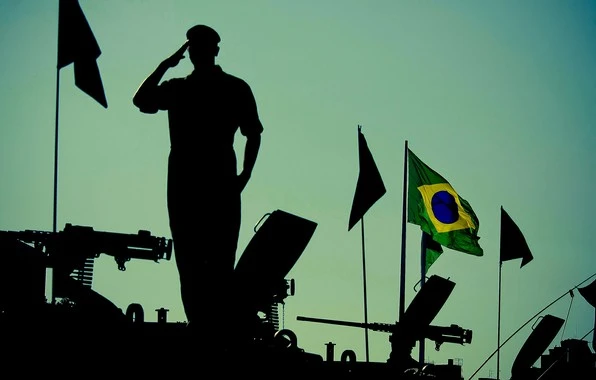
Brazil is considering raising its defense spending in response to these global changes.
Brazil’s defense spending has decreased in recent years
Brazil is planning to increase its defense budget, with Senator Carlos Portinho proposing a constitutional amendment for a 2% GDP allocation.
This move, driven by regional tensions with Venezuela and Guyana, aims to modernize Brazil’s military arsenal.
Economist Marcos Barbieri views this as a response to global conflicts and notes a need for greater defense focus in Brazil.
Under Jair Bolsonaro’s presidency, defense spending fell from 1.4% to 1.2% of GDP.
Barbieri highlights Brazil’s relatively low spending compared to global standards, citing the country’s size and lack of major military alliances.
Barbieri advises that simply increasing the budget is insufficient; it should be strategically allocated, especially towards innovative projects.
Such targeted spending could yield broader societal benefits.
The anticipated increase in defense spending presents opportunities for Brazil’s domestic industry, especially for firms like Embraer.
Their KC-390 aircraft, increasingly popular in the medium transport market, is sold to NATO members and countries like South Korea and Saudi Arabia.
Recent Brazilian governments have backed military exports, a trend supported since the 2008 National Defense Strategy.
However, financial challenges have affected investment capabilities.
High personnel costs limit flexibility in Brazil’s military budget. Barbieri calls for more strategic funding allocation.
In 2023, BNDES increased its support, and the New PAC allocated R$52.8 ($11) billion for defense initiatives.
More: Brazil news in English, every day from The Rio Times.
This article was produced by The Rio Times’ automated newsroom system. How we use AI · Report an error · Editorial responsibility: Matthias Camenzind, Editor-in-Chief