Braskem Asks Creditors for Time as the Chemical Giant Fights On
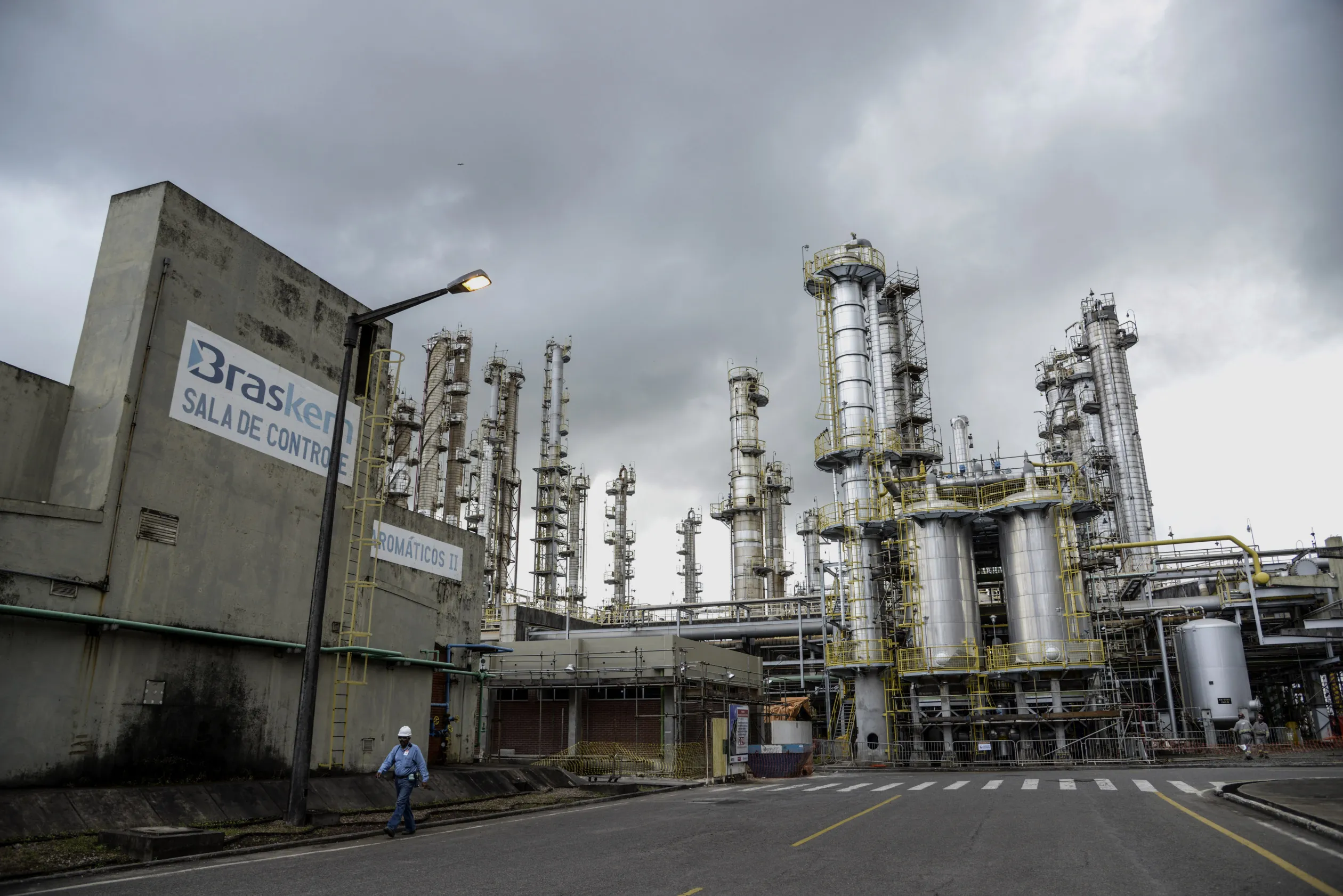
Brazil · Markets
Key Facts
—The plan. Braskem will ask creditors for longer maturities, lower interest and more grace time.
—What it rules out. No swap of debt for shares, and no fresh cash from the new owners.
—The debt. Gross borrowings run to about $9.4 billion (R$48.5bn).
—New hands. A board controlled by private-equity firm IG4 and oil major Petrobras was seated on June 8.
—The clock. Bond interest payments fall due in July, and a plan is expected this month.
—Why it matters. Braskem is Latin America’s largest petrochemical maker, and its fate touches Petrobras and many investors.
A high-stakes Braskem debt restructuring is taking shape, with the newly installed owners of Latin America’s largest petrochemical maker preparing to ask creditors for breathing room rather than a rescue, even as a heavy debt load and looming payments press in.
What the Braskem debt restructuring will ask for
Braskem, the largest petrochemical company in Latin America, is preparing to put a plan in front of its lenders that boils down to a single request: time. According to people close to the talks, the company will ask creditors to push back the dates when its debts come due, to accept lower interest payments along the way, and to grant longer grace periods before repayment resumes. The aim is to give the business room to rebuild its cash generation before it has to meet its obligations in full. One person involved put it bluntly, saying the company’s problems cannot be solved in less than five years.
Just as telling is what the plan leaves out. The new management has ruled out converting debt into equity, the route being used in the parallel rescue of the fuel group Raízen, and it has also ruled out an injection of fresh capital by the new controlling shareholders. Selling off major assets is off the table for now too. In other words, this is meant to be a renegotiation of terms, not a fire sale or a handover of ownership to creditors. For lenders, that means the recovery of their money depends on Braskem slowly returning to health rather than on a quick cash payout.
How Braskem ended up here
To understand the urgency, it helps to know the numbers and the backstory. Braskem carries gross debt of roughly $9.4 billion (R$48.5bn), a burden built up over years of low prices for the raw materials it turns into plastics, high interest rates in Brazil, and the heavy cost of cleaning up after a ground-collapse disaster in the northeastern city of Maceió. By the end of last year its debt stood at close to fifteen times its annual cash generation, far above the level the market considers safe, and the company reported a loss of more than R$10 billion ($1.94bn) for 2025.
Ownership has also been in flux for years. Braskem was long controlled by Novonor, the renamed Odebrecht conglomerate brought low by Brazil’s sprawling Lava Jato corruption scandal, and repeated attempts to sell it failed—our reporting has shown that the drawn-out sale process itself deepened uncertainty around the company. That impasse finally broke this year. A fund advised by the private-equity firm IG4 Capital took over a large block of Novonor’s debt that had been backed by Braskem shares and converted it into a controlling stake, to be shared with Petrobras, the state-controlled oil company that has long been Braskem’s other major shareholder. On June 8, shareholders seated a new board reflecting that arrangement, clearing the way for the management overhaul that now drives the restructuring.
Live Company IntelligenceBraskem S.A — the full investor dossier
Valuation & profitability
Price & risk
$3.5252-wk high
$13.78
Revenue trend · 6y
Ownership
Dividend
The risks still on the table
The timing is tight. Braskem faces interest payments on its international bonds in July, and the new team wants the shape of a plan ready this month, working from a detailed short-term cash-flow map to judge what the company can realistically pay and what must be renegotiated. Adding to the complexity is a Mexican joint venture, Braskem Idesa, which is already in default and assessing restructuring alternatives under United States bankruptcy law. Because the parent company has a financial-support arrangement with that subsidiary, the two restructurings have to move in step, and trouble at the Mexican unit could trigger extra obligations back in Brazil.
For foreign readers weighing the company’s prospects, the central tension is straightforward. Braskem‘s new owners are betting that patience from creditors, combined with a broad overhaul of finances and operations, can carry the business through a deep downturn in the global plastics market. Creditors, for their part, must decide whether to accept slower, smaller payments in the hope of a fuller recovery later, or to push for tougher terms now. With Petrobras pointedly declining so far to commit new money, the burden of the rescue falls largely on lenders’ willingness to wait. The plan due this month will be the first real test of that patience.
More: Brazil news in English, every day from The Rio Times.
Frequently Asked Questions
What is Braskem proposing to its creditors?
It plans to ask for longer repayment deadlines, lower interest payments and more grace time, while ruling out swapping debt for shares or taking fresh capital from its new owners.
How much does Braskem owe?
Its gross debt is about 9.4 billion dollars, a load that grew through weak petrochemical prices, high Brazilian interest rates and the cost of the Maceió disaster.
Who controls Braskem now?
A board controlled jointly by the private-equity firm IG4 Capital and the state oil company Petrobras was seated on June 8, replacing the previous owner, Novonor.
Connected Coverage
Petrobras Tightens Grip on Brazil Chemicals Giant Braskem at June Vote
Odebrecht’s Last Crown Jewel Is Changing Hands
This article was produced by The Rio Times’ automated newsroom system. How we use AI · Report an error · Editorial responsibility: Matthias Camenzind, Editor-in-Chief
LatAm Markets: Live Signals → — real-time movers, turnover leaders and FX across Latin America.