China’s Currency Is Quietly Building a Home Inside Brazil’s Financial System
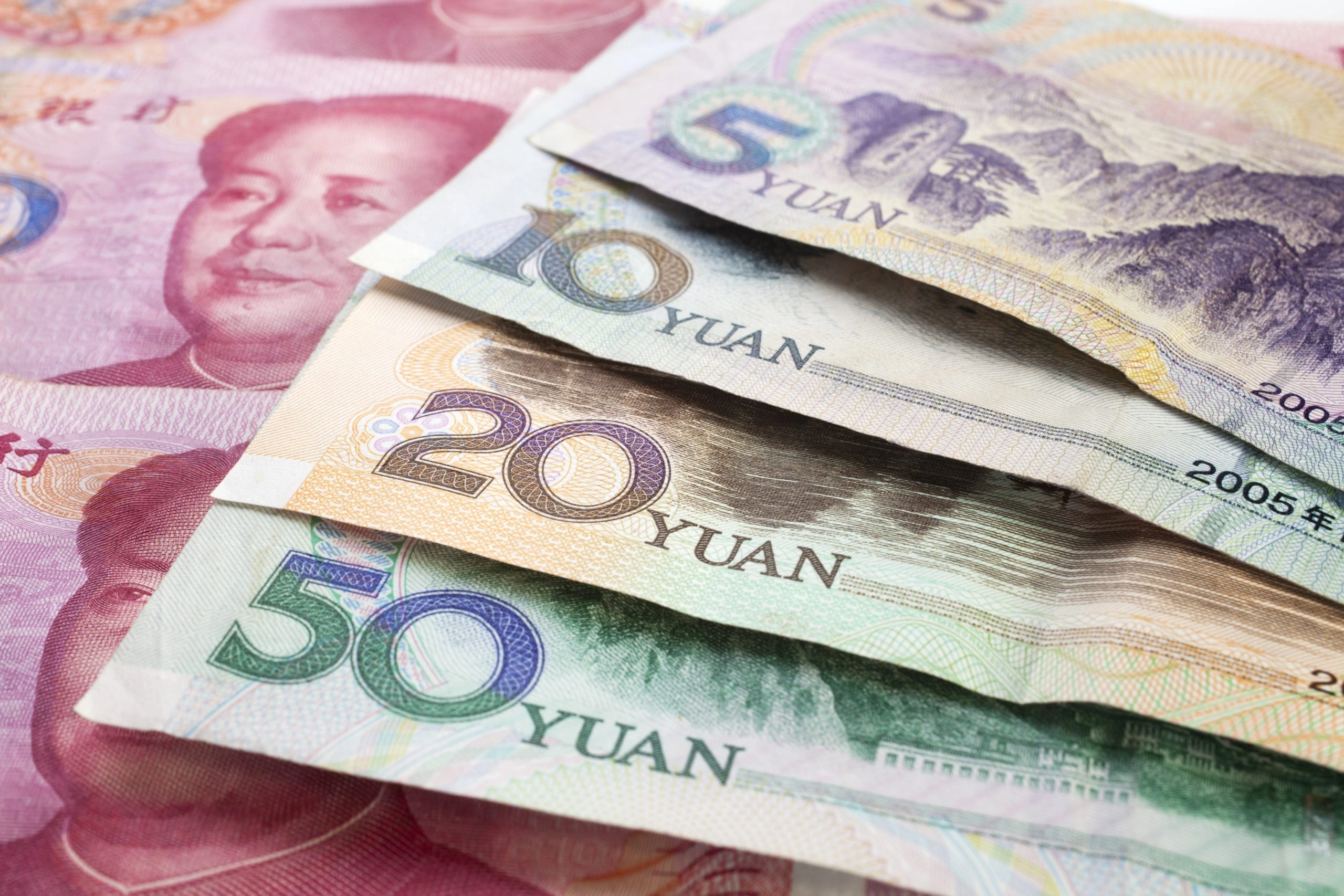
Economy
Key Facts
—The reserves. Since 2023 the renminbi has been Brazil’s second-largest reserve currency, ahead of the euro.
—The plumbing. Brazilian banks now link directly to CIPS, China’s cross-border payment network.
—The bond. Brazil has started the process to issue its first sovereign bond in Chinese currency.
—The investment. Brazil became the top global destination for Chinese investment in 2025, up 45 percent.
—The driver. United States tariffs and trade tension are pushing Brazil to diversify its partners.
The Brazil China yuan relationship is quietly moving beyond soybeans and iron ore. Chinese banks, payment systems and currency are taking root in Brazil’s financial system, building a partnership that no longer runs only through the dollar.
The shift is deliberate. Faced with rising trade tension with the United States, Brasília is working to diversify where it borrows, trades and holds its money.
How the Brazil China yuan link is deepening
Start with the reserves. Since 2023 the Chinese currency has been the second-largest holding in Brazil’s central-bank reserves, having overtaken the euro, though it still trails the dollar by a wide margin.
That is a notable vote of confidence. A central bank only parks reserves in a currency it expects to stay useful and stable, so the ranking says something about where Brazil sees the world heading.
The trade plumbing is being laid. One Brazilian bank became the first with a direct link to CIPS, China’s cross-border payment system, and the first to close a loan in Chinese currency with a local company.
New players keep arriving. Brazil now hosts a branch of a major Chinese bank, and a Chinese trade-payments platform has launched locally to help smaller firms settle in the Chinese currency.
From trade flows to sovereign debt
The boldest step is on debt. Brazil has formally begun the process to issue its first sovereign bond in Chinese currency, a so-called panda bond, sold inside China’s domestic market.
It follows a wider pattern. The move comes after Brazil sold its first euro bond in over a decade earlier this year. That is part of a plan to spread its borrowing across several currencies rather than lean on the dollar alone.
The point is partly to set a marker. A government bond in Chinese currency creates a price reference that makes it easier for Brazilian companies to raise money in China later.
Live Market IntelligenceBrazil — Live Market Board
Rio Times · Live Market Intelligence
Brazil — Live Market Board
-0.51%
175,710.05
-0.51%
69,734.34
+0.38%
10,766.85
+1.81%
2,848,945
—
2,506.51
+0.06%
| Instrument | Last | Change | YoY | Prev. | High | Low | Volume |
|---|---|---|---|---|---|---|---|
| IBOV | 175,710.05 | -0.51% | +19.56% | 176,608.23 | 178,526 | 175,157 | — |
| USD/BRL | 5.34 | -1.32% | -0.84% | 5.42 | 5.42 | 5.30 | — |
| SELIC | 13.75% | — | — | — | — | — | |
| PETR4 | 53.31 | -1.06% | +77.70% | 53.88 | 53.70 | 52.83 | 43,239,500 |
| VALE3 | 62.88 | -2.33% | +1.98% | 64.38 | 64.43 | 62.80 | 24,652,300 |
| ITUB4 | 41.42 | -0.67% | +11.30% | 41.70 | 42.60 | 41.15 | 28,160,700 |
| BBDC4 | 15.69 | -1.63% | -13.88% | 15.95 | 16.30 | 15.67 | 65,766,400 |
| BBAS3 | 17.59 | +0.69% | -15.59% | 17.47 | 18.31 | 17.51 | 67,844,600 |
| B3SA3 | 15.27 | +1.33% | +21.71% | 15.07 | 15.78 | 15.20 | 75,282,000 |
| ABEV3 | 15.40 | +0.20% | +26.75% | 15.37 | 15.68 | 15.31 | 27,307,400 |
| WEGE3 | 45.78 | +2.81% | +10.06% | 44.53 | 47.08 | 45.06 | 9,823,200 |
| PRIO3 | 69.21 | -2.71% | +87.14% | 71.14 | 70.98 | 69.15 | 6,663,200 |
| SUZB3 | 47.14 | -0.55% | -3.79% | 47.40 | 47.84 | 46.10 | 7,151,800 |
| RENT3 | 31.14 | -1.67% | -20.73% | 31.67 | 32.68 | 31.02 | 19,092,400 |
| AZZA3 | 16.72 | +1.15% | -42.24% | 16.53 | 17.42 | 16.72 | 4,875,400 |
| CSNA3 | 4.76 | -4.99% | -47.09% | 5.01 | 5.14 | 4.76 | 14,327,900 |
| GGBR4 | 24.87 | -2.28% | +36.28% | 25.45 | 26.20 | 24.79 | 7,507,900 |
| ENEV3 | 26.79 | +0.45% | +49.78% | 26.67 | 27.35 | 26.30 | 12,263,000 |
Trade and investment underpin it all
The foundation is trade. China has been Brazil’s top trading partner since 2009, buying its soybeans, oil and iron ore, while Brazil imports Chinese manufactured goods in return.
Investment is surging too. In 2025 Brazil became the leading destination for Chinese investment worldwide, with inflows up 45 percent on the year before.
Exports tell the same story. Brazilian sales to China kept growing this year even as shipments to the United States fell, widening the gap between its two largest trading partners.
Yet the currency shift is still small. Imports paid for in Chinese currency roughly doubled in a year, rising from about $2bn to close to $4bn. That is barely one percent of Brazil’s total imports.
The base is tiny for now. Even at $4bn, yuan-settled imports are a rounding error against the hundreds of billions Brazil trades each year, which shows how early this shift really is.
Why it matters for a foreign investor
The direction of travel is the story. Brazil is not abandoning the dollar. But it is steadily building the option to rely on it less, one bank, bond and reserve holding at a time.
There is a clear risk attached. Deeper ties to Beijing invite a reaction from Washington, which sees Latin America as strategically important and has already reached for tariffs.
Currency risk cuts both ways too. Borrowing or holding reserves in Chinese currency exposes Brazil to swings in the yuan and to China’s tight capital controls, so the shift is not cost-free.
The politics color every move. With an election looming and Washington watching, each step toward Beijing is read as strategy as much as treasury management.
For an outsider, it is a barometer. How fast the Chinese currency spreads in Brazil is one of the clearest gauges of how far the global economy is splitting into competing blocs.
How deep is the Brazil China yuan relationship?
It now spans trade, investment, reserves and finance. The Chinese currency is Brazil’s second-largest reserve holding, Brazilian banks link to China’s payment network, and Brazil has begun issuing its first sovereign bond in Chinese currency.
Why is Brazil moving closer to China’s currency?
Rising trade tension with the United States, including new tariffs, is pushing Brazil to diversify its partners and funding sources. Deepening ties with China, its top trading partner, reduces reliance on the dollar and spreads its risk.
Is Brazil replacing the dollar with the yuan?
Not for now, and not soon. The dollar remains dominant and payments in Chinese currency are barely one percent of Brazil’s imports, but Brazil is steadily building the option to rely on the dollar less over time.
More: Brazil news in English, every day from The Rio Times.
Frequently Asked Questions
Is the Chinese yuan replacing the US dollar in Brazil?
No, the dollar is still dominant and yuan-settled imports are barely one percent of Brazil's total imports. But Brazil is steadily building the option to rely on the dollar less over time.
Why is Brazil moving closer to China's currency?
Rising US tariffs and trade tension are pushing Brazil to diversify its partners and funding sources, reducing its reliance on the dollar.
What is a panda bond and has Brazil issued one yet?
A panda bond is a sovereign bond sold inside China's domestic market and denominated in Chinese currency. Brazil has formally begun the process to issue its first one, but has not completed the sale yet.
This article was drafted with automated assistance and reviewed before publication. How we use AI · Report an error · Editorial responsibility: Matthias Camenzind, Editor-in-Chief
Brazil runoff, Sunday, October 25: Brazil runoff date. Latest: Brazil runoff polls, Flávio 51%, Lula 49%.