Petrobras Tightens Grip on Brazil Chemicals Giant Braskem at June Vote
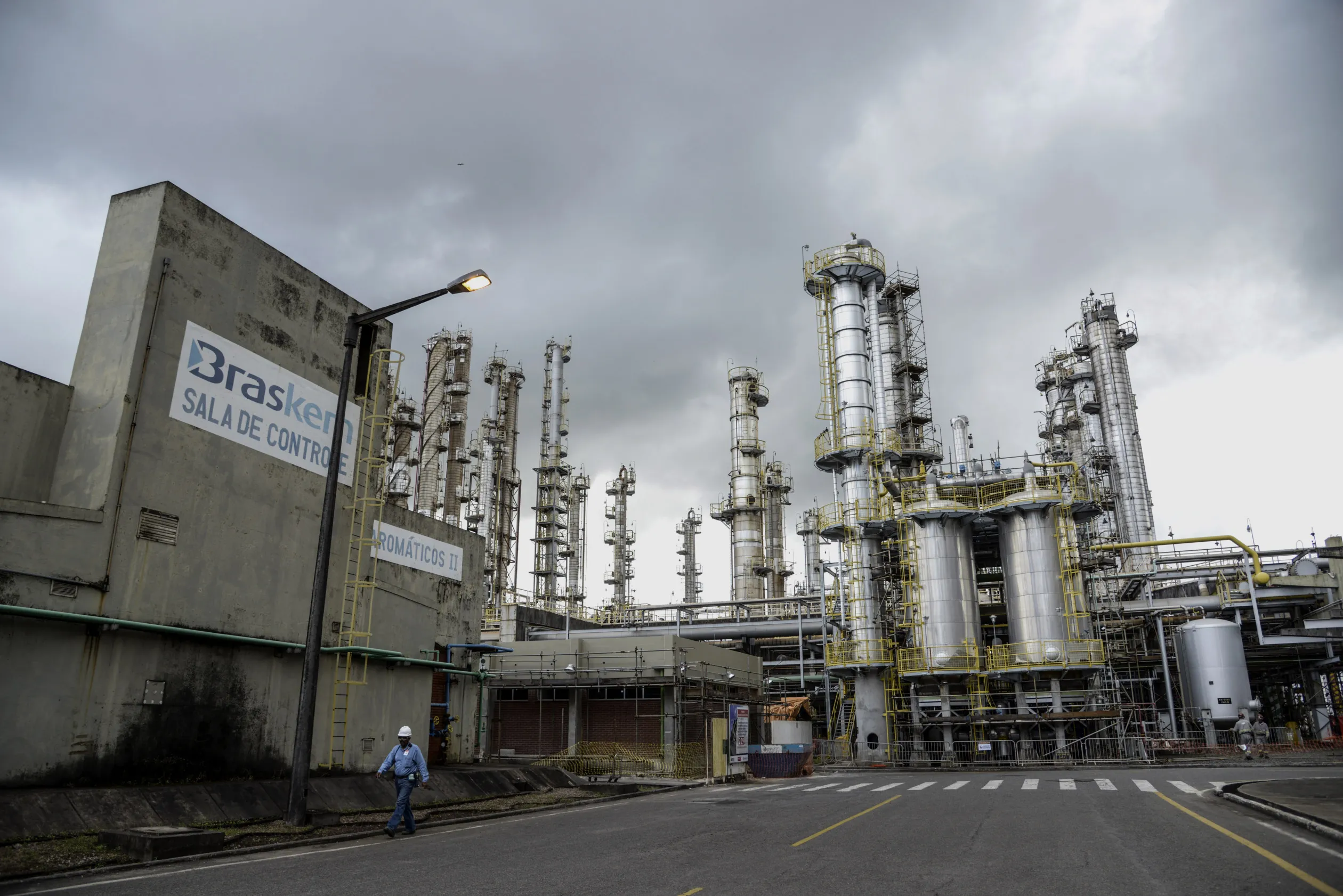
Brazil · Business
Key Facts
—The vote. Braskem, Latin America’s largest petrochemical maker, holds a shareholder meeting on June 8 to elect a new board.
—The shift. The meeting makes effective a shared-control pact between state oil firm Petrobras and private equity group IG4.
—The chair. Petrobras CEO Magda Chambriard is set to chair the new board; Novonor’s Héctor Nuñez is vice-chair.
—The exit. Former controller Novonor, the successor to Odebrecht, keeps about 4% in non-voting shares.
—The strain. Braskem ended the first quarter with about $1.06bn in cash against $1.46bn of debt due this year.
A corporate saga that began with the fall of Odebrecht is reaching its conclusion, handing Brazil’s state oil company real say over the country’s chemicals industry for the first time in over a decade.
Braskem, Latin America’s largest petrochemical producer, has called a shareholder meeting for June 8 that will formally seat a new board and put into effect the shared-control arrangement between Petrobras and the private equity firm IG4 Capital. The vote marks the practical completion of a long-running ownership transition that replaces Novonor, the renamed Odebrecht and Braskem’s controller since 2010, with a structure that elevates the state-controlled oil company to genuine operational influence.
How Petrobras took joint control of Braskem
The change of control runs through a fund structure called Shine I, advised by IG4, which acquired roughly R$20bn ($3.97bn) of Novonor debt that had been secured by Braskem shares and is converting it into equity. That gives IG4 control of Braskem’s voting capital, to be shared with Petrobras under a new shareholders’ agreement that requires consensus on board and general-meeting decisions and gives each side an equal number of appointees. Petrobras, which already held 47% of voting shares, declined to exercise its right of first refusal over the Novonor stake, opting instead for the joint-control framework. Novonor will retain about 4% of the company in non-voting shares. With Chambriard, the Petrobras chief executive, set to chair the board, the state company gains direct sway over day-to-day strategy it never had under the previous model, in which it funded the petrochemical chain but stayed out of management.
A company under financial strain
The new owners inherit a business in difficulty. Braskem has been battered by the worst downturn in the petrochemical cycle in decades, which has compressed margins industry-wide, and it still carries heavy environmental liabilities tied to a geological disaster in the city of Maceió. The company ended the first quarter with about $1.06bn in cash against roughly $1.46bn of debt maturing this year, a tight position that has fueled speculation about a possible restructuring even after the ownership change. Its Mexican joint venture, Braskem Idesa, is separately negotiating with creditors over financing for a potential Chapter 11 filing in the United States, adding another layer of distress to the group.
More: Brazil news in English, every day from The Rio Times.
Live Company IntelligencePetroleo Brasileiro Petrobras SA ADR — the full investor dossier
Wall Street view
Valuation & profitability
Price & risk
$10.6552-wk high
$24.76
Revenue trend · 6y
Ownership
Dividend
What changes after the vote
Investors have watched the transition for years as successive sale attempts collapsed, so the June 8 meeting offers a measure of resolution to who controls the company. Yet the governance reset does not by itself fix the balance sheet. Chambriard has signaled she wants synergies on feedstock supply, logistics and the expansion of the Duque de Caxias complex in Rio de Janeiro, framing the move as continuity of Petrobras’s broader petrochemical strategy. Crucially, Petrobras has not committed to a capital injection or to taking part in any debt restructuring, leaving open the central question of how a cash-strained Braskem will fund its way through the downturn. For now, the vote settles ownership; the financial repair is the harder task that follows.
Frequently Asked Questions
What happens at Braskem’s June 8 meeting?
Shareholders elect a new board, making effective the shared-control pact between Petrobras and IG4 and seating Petrobras CEO Magda Chambriard as chair.
How did Petrobras gain influence?
IG4’s Shine I fund is converting acquired Novonor debt into equity and will share control with Petrobras, which already held 47% of voting shares, under a new pact.
What happens to Novonor?
Novonor, the former Odebrecht and controller since 2010, keeps about 4% of Braskem in non-voting shares.
What financial problems does Braskem face?
A deep petrochemical downturn, Maceió environmental liabilities, tight cash versus near-term debt, and a Mexican unit weighing a U.S. Chapter 11 filing.
Connected Coverage
The vote completes a transition tracked from the binding IG4 control contract through the board reshape that gave Petrobras parity.
This article was produced by The Rio Times’ automated newsroom system. How we use AI · Report an error · Editorial responsibility: Matthias Camenzind, Editor-in-Chief
LatAm Markets: Live Signals → — real-time movers, turnover leaders and FX across Latin America.