Bolivia faces significant unrest as President Luis Arce and former President Evo Morales alert the nation about unusual military activities suggesting a potential coup.
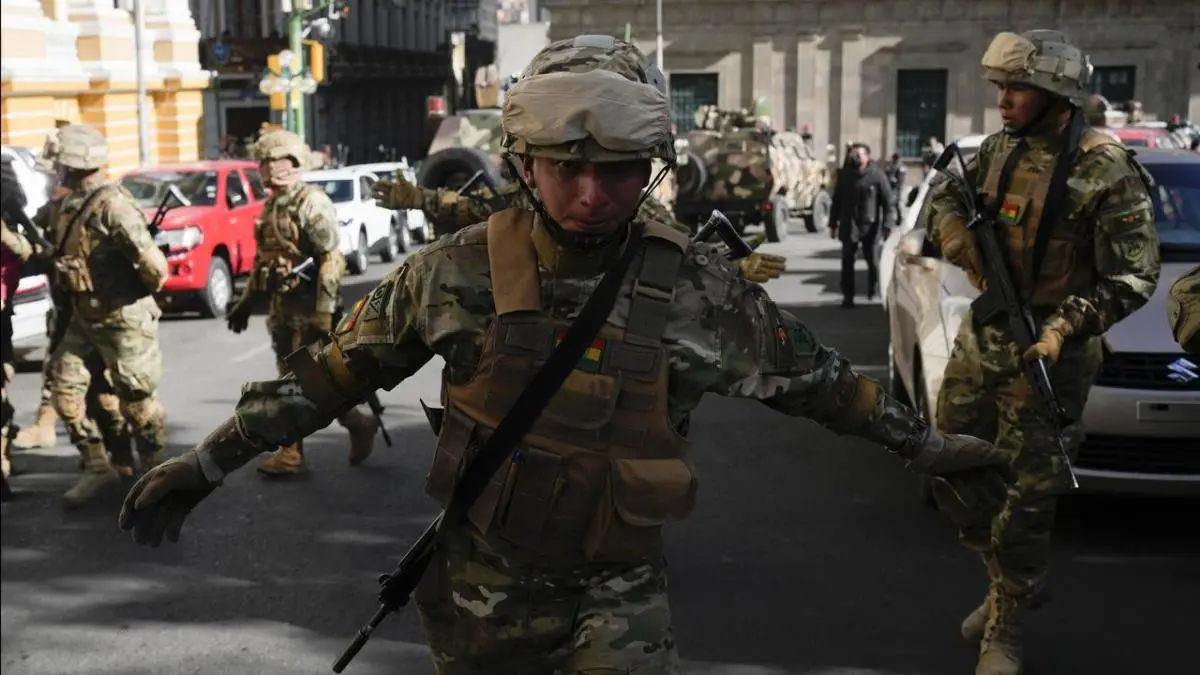
President Arce has denounced the mobilization of Bolivian army units and the presence of armed tanks, signaling the severity of the situation.
Evo Morales echoed these concerns, suggesting a coup driven by General Juan José Zúñiga.
Morales called for a national mobilization to defend democracy, emphasizing the need for Bolivians to stand against any military threats.
The Bolivian Foreign Ministry also urged international support for Bolivia’s democratic institutions and President Arce’s government, elected by the people’s sovereign will.
The crisis intensified after confrontations between the government and General Zúñiga, recently ousted as Army Chief for opposing Morales’ return to power.
The situation escalated when soldiers breached the government palace with a tank, prompting President Arce to demand their withdrawal.
This move was seen as a direct challenge to the civilian government and heightened tensions.
International reactions have been swift. Honduran President Xiomara Castro, leading the Community of Latin American and Caribbean States (CELAC), called an urgent meeting.
The purpose was to condemn the actions as fascist and demand respect for Bolivia’s constitutional order.
Former Argentine President Alberto Fernández condemned the anti-democratic actions, expressing strong support for President Arce and the preservation of democratic principles in Bolivia.
Amid escalating tension, key government figures voiced concerns about the coup attempt by a military faction.
These figures included Minister of the Presidency Marianela Prada and Public Works Minister Edgar Montaño.
They stressed the government’s commitment to upholding democracy despite the challenging circumstances.
Vice Minister Jorge Silva confirmed that the cabinet was coordinating efforts from a secure location to manage the crisis effectively.
Political Turmoil and Economic Challenges
Former Defense Minister Reymi Ferreira suggested that the upheaval stemmed more from Zúñiga’s personal vendetta than a cohesive coup effort.
However, the situation remains volatile, with Zúñiga emphasizing the military’s role as the nation’s guardian, suggesting a potential fracture within the armed forces.
This political turmoil occurs amid severe economic challenges, including dollar and fuel shortages, and social unrest led by Morales’ supporters.
The opposition-controlled legislative assembly faces operational hurdles due to judicial interventions and executive decisions, further complicating governance.
Bolivia stands at a critical crossroads, with democracy under threat from internal military dissent and political infighting.
In short, the situation demands urgent national and international efforts to restore stability and uphold democratic values.
More: Bolivia news in English, every day from The Rio Times.
This article was produced by The Rio Times’ automated newsroom system. How we use AI · Report an error · Editorial responsibility: Matthias Camenzind, Editor-in-Chief